The smell of warm ghee and crushed cardamom usually hits you before you even unlace your shoes.
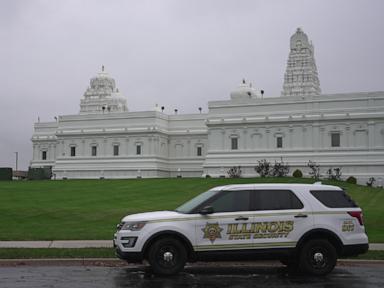
On a typical Sunday morning in a suburban Illinois temple, the foyer is a controlled chaos of ankle-high sneakers, silk dupattas catching the fluorescent light, and children darting between grandparents' legs toward the basement dining hall. There is the low, steady hum of Sanskrit chants vibrating through the floorboards. There is the clatter of stainless-steel plates being stacked for the afternoon langar. It is a place engineered entirely around surrender—the deliberate laying down of armor, shoes, and suspicion at the threshold.
Now imagine a cold steel barrel pressing against the glass of those same double doors.
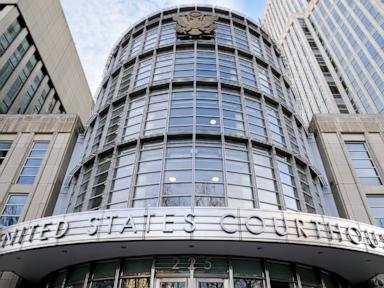
We almost didn’t get the chance to call it a "foiled" plot. In the sterile, fluorescent-lit language of a federal courthouse, the recent grand jury indictment of an Illinois man on terrorism and weapons charges reads like an inventory list. Prosecutors file paper. Clerks stamp dates. Headlines reduce a near-catastrophe to twelve dry words and move on to the next news cycle before your coffee gets cold.
Stop. Look closer at the space between the indictment and the altar.
When federal investigators intervened before a single shot could echo across a prayer hall in Illinois, they didn't just prevent a mass casualty event. They interrupted a specific, calculated attempt to shatter one of the last remaining sanctuaries of unguarded community life in the American Midwest. Yet, because no blood was spilled on the marble floors, the collective public reaction has been a muted nod—a brief, grateful exhale followed by immediate amnesia.
That amnesia is dangerous. When a tragedy is prevented, we treat the danger as theoretical. We file it under "what-ifs" and "near-misses," forgetting that for the families who worship in those halls, the threat wasn't an abstraction on a docket. It was a ticking clock aimed directly at their Sunday morning.
The Architecture of Vulnerability
To understand why a thwarted attack on a Hindu temple cuts so deeply, you have to understand what a temple actually is to an immigrant community.
Consider a hypothetical family—let’s call them the Patels, though their story belongs to tens of thousands of households across Naperville, Aurora, Schaumburg, and Downers Grove. For six days a week, Mr. Patel navigates the subtle friction of code-switching in corporate offices, explaining the pronunciation of his name, and carrying the quiet weight of being a visible minority in towns that still feel overwhelmingly homogenous. Mrs. Patel spends her week managing the silent logistics of raising first-generation kids caught between two worlds.
Sunday at the mandir is the exhale.
Unlike institutions built with high walls, armed perimeter guards, or airport-style magnetometers, Hindu temples in the American heartland were designed around an ancient theological mandate: Atithi Devo Bhava—the guest is God. Doors are unlocked. Strangers are welcomed with sweet prasad pressed into their palms before anyone asks their last name. Security, historically, was never part of the architectural blueprint because suspicion is antithetical to devotion.
I remember walking into a community temple just outside Chicago a few years ago during Diwali. The parking lot was overflowing onto the grass shoulder. Inside, three hundred people sat cross-legged on thin carpets, shoulder to shoulder, eyes closed during the evening aarti. Not a single person was looking at the exits. Nobody was scanning the crowd for bulges under heavy coats. That total lack of vigilance isn't naivete; it is the entire point of sacred space. You cannot pray with one eye on the door.
When an individual stockpiles weapons and maps out an assault on a space like that, they aren't just targeting bodies. They are targeting the psychological permission to be unguarded.
Anatomy of an Indictment
Let’s strip away the legal jargon of the federal grand jury indictment and look at the mechanics of what actually happened in Illinois.
In the American justice system, a grand jury doesn’t decide guilt or innocence; it decides whether prosecutors have enough evidence to bring a formal fight. When federal prosecutors seek terrorism and weapons charges in a foiled plot, the threshold of proof behind closed doors is staggering. You don't get a federal terrorism indictment over a stray angry tweet or a heated argument in a grocery store parking lot.
You get it when digital footprints turn into physical logistics.
In cases like this Illinois plot, the trajectory almost always follows a grim, recognizable pattern documented by counterterrorism researchers over the past decade. It begins in the dark corners of encrypted forums and algorithmic rabbit holes, where grievance is fermented into ideology. A lone actor—often isolated, nursing personal failures or manufactured racial and religious paranoia—begins looking for a visible symbol to blame.
Then comes the shift from consumption to acquisition.
The suspect stops merely reading hate and starts shopping for hardware. Firearms are purchased, modified, or illegally acquired. Ammunition is hoarded. Reconnaissance happens in broad daylight—driving past the temple on a Tuesday afternoon, noting when the parking lot fills up on weekends, checking whether the glass doors have reinforced frames or simple brass handles.
Think about the chilling asymmetry of that moment. On one side of the street sits a congregation organizing a youth Diwali dance rehearsal and debating whether to order extra samosas for the elderly devotees. Across the asphalt, someone is calculating sightlines and reload times.
Federal agents and local law enforcement stepped into that gap before the trigger could be pulled. Undercover operations, digital surveillance, or a tip from someone who noticed a sharp turn toward violence broke the chain. The arrests were made. The weapons were seized. The grand jury listened to the recordings, examined the arsenal, and handed down the charges that now sit in a federal court file.
Crisis averted. Technically.
Why "Foiled" Doesn't Mean "Finished"
Here is where the standard news coverage fails us entirely.
When a headline announces that a shooting was "foiled," our brains immediately categorize the story as a victory lap. Good guys win. Bad guy goes to jail. System works. We close the browser tab feeling vaguely reassured that the guardrails are holding.
Ask anyone who attends a temple, a mosque, or a synagogue in America today how reassured they feel.
You won't get relief. You’ll get a tight-lipped nod and a sudden glance toward the front entrance.
The psychological fallout of a foiled plot is a slow-acting poison. Even when the perpetrator is locked in a federal detention center awaiting trial, the invisible walls of the community begin to thicken. Board members who used to spend their Tuesday nights planning cultural festivals suddenly find themselves debating the cost of ballistic window film, hiring off-duty police officers at seventy dollars an hour, and installing steel bollards in front of the main steps.
Consider what happens next inside the homes of those worshippers.
A mother who used to drop her ten-year-old off at Sunday Hindi class and run errands at Target now sits in her idling car in the parking lot for two hours, watching every unfamiliar sedan that turns off the main road. A temple treasurer has to explain to the congregation why twenty percent of the annual donation budget—money meant for community kitchens, medical camps, and youth scholarships—is now going toward surveillance cameras and magnetic door locks.
The terrorist doesn't need to fire a bullet to alter the DNA of a community. The mere credibility of the threat forces a peaceful institution to militarize its perimeter. And once you put an armed guard at the door of a house of worship, the air inside never smells quite the same. The cardamom is still there, and the chants still rise, but a faint, metallic tang of hypervigilance lingers underneath it all.
The Blind Spot in How We Talk About Hate
Part of the reason these thwarted attacks vanish so quickly from the national conversation is a persistent, uncomfortable blind spot in how Western media covers anti-Hindu hate and South Asian communities.
For decades, Indian Americans and Hindu congregations were flattened into a convenient sociological stereotype: the "model minority." Quiet, prosperous, hyper-educated, politically invisible, and largely immune to the sharper edges of American bigotry. Because Hindu temples rarely made noise in municipal politics, outsiders assumed they existed in a bubble of suburban safety.
That bubble was always an illusion.
Over the last several years, federal civil rights data and community monitoring groups have tracked a steady, unsettling rise in vandalism, swastika graffiti, smashed statues, and explicit threats targeting Hindu temples from California to New York, and right across the Midwest. Yet, when these incidents happen, they rarely trigger the national soul-searching that accompanies other bias crimes. They are treated as isolated eccentricities—a "disturbed individual," a "local misunderstanding," a strange anomaly in an otherwise quiet suburb.
Calling a terrorism plot an anomaly is how we excuse ourselves from looking at the ecosystem that produced it.
When a grand jury indicts a man on terrorism and weapons charges over a Hindu temple plot, it is telling us something unmistakable: the hatred isn't random, and the intent isn't petty. Terrorism, by legal and moral definition, is violence designed to coerce, intimidate, and erase a civilian population's sense of safety. By bringing terrorism charges rather than simple weapons violations, federal prosecutors acknowledged that the target wasn't just a building in Illinois—it was an entire religious community's right to exist openly without fear.
I’ll be honest: writing about this carries a strange kind of helplessness. You want to believe that robust law enforcement and harsh federal sentences are enough to put the genie back in the bottle. You want to believe that exposing the plot in a courtroom drains it of its power.
But laws operate after the rot has already set in. Indictments punish the hand that reached for the rifle; they do very little to stop the machine that convinced him the people inside the temple were his enemies.
What Vigilance Actually Looks Like
If you don't belong to a Hindu congregation—if you’ve never taken off your shoes at the door of a mandir or tasted sweet rice pudding served in a small paper cup—it is easy to read about an Illinois indictment and feel disconnected from the stakes.
Don't make that mistake.
History is remarkably consistent on one point: extremism never stops at its first target. Hate is an appetite that grows by eating. The same ideological pipelines that convince a man in Illinois to target a Hindu temple are the exact ones feeding plots against Black churches in the South, synagogues in Pennsylvania, mosques in the Pacific Northwest, and LGBTQ+ spaces in Colorado. The targets rotate depending on whatever conspiracy theory is trending in the dark corners of the internet that month, but the weaponized grievance underneath is identical.
Protecting a community before the shooting starts requires a different kind of muscle than mourning one afterward.
First, it demands refusing the seduction of complacency when intelligence works. When federal agents and local police disrupt a plot, that success shouldn't breed silence—it should trigger transparent conversation. Neighbors need to know how close the fire came to their street. Local school boards, municipal leaders, and interfaith councils in Illinois and beyond have to treat threats against Hindu institutions with the exact same urgency and solidarity they would extend to any historic downtown church.
Second, it means supporting communities as they navigate the exhausting new reality of security without letting fear hollow them out. In towns across the Midwest, non-Hindu neighbors have begun showing up outside mosques and synagogues during high holidays—not as armed vigilantes, just as visible witnesses standing on the sidewalk with coffee cups, reminding worshippers that they are not alone on that block. That simple, human presence does something no surveillance camera ever can. It restores the social contract that extremism tries to sever.
And finally, it requires paying attention to the quiet signals before they become federal indictments. Almost every mass casualty plot leaves breadcrumbs in the real world—escalating rhetoric at family dinners, sudden obsession with tactical gear, dehumanizing language aimed at immigrants or religious minorities. People who pull triggers rarely go from zero to one hundred in a vacuum. Someone almost always sees the smoke before the fire.
Sunday Morning, Reclaimed
Next Sunday, somewhere in suburban Illinois, the doors of a Hindu temple will unlock just before dawn.
A priest will light the small brass lamps in front of the deities, watching the tiny flames steady themselves in the cool morning air. Volunteers will arrive early in sensible sneakers, hauling heavy pots of lentils and trays of warm flatbread into the kitchen. By ten o'clock, the foyer will be crowded again with mismatched shoes, silk scarves, and sleepy toddlers clinging to their mothers' shoulders.
There may be an unmarked police cruiser parked quietly near the edge of the lot now. The board members might glance a little more carefully at unfamiliar faces stepping across the threshold. Innocence, once bruised, doesn't snap back overnight.
Yet, inside the main hall, people will still take off their shoes. They will still sit down on the carpet, close their eyes, and press their palms together in the dark—betting everything, once again, on the radical idea that peace is stronger than the men who try to shoot it.