Dawn in Mississippi arrives heavy with moisture, the kind of fog that clings to your eyelashes and smells faintly of damp pine and river mud. If you stood still enough near the edge of the tree line, you would hear it. A tiny, rhythmic chittering. Almost like bird song, but sharper. More urgent.
It is the sound of hunger. And confusion. Learn more on a related issue: this related article.
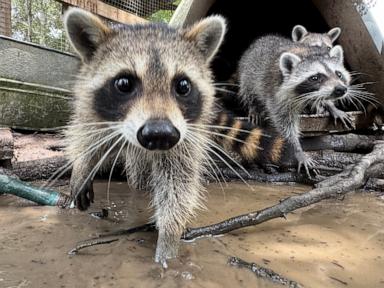
For an orphaned raccoon kit—a tiny ball of gray fur with a bandit mask that hasn't quite settled onto its face yet—dawn doesn't mean breakfast brought by a mother. It means cold wire. It means the absence of a heartbeat.
We forget how fragile things are until we hold them in the palm of a gloved hand. They fit entirely inside a pocket, weighing barely more than an apple, their claws like tiny needles catching on cotton. When they lose their way early, dropped from a nesting attic or separated by road and steel, human hands usually step in. And that is where the danger begins. Because the worst thing you can do to a wild animal is love it like a pet. More analysis by Cosmopolitan highlights comparable views on this issue.
Let us be honest about what happens when someone finds a litter of abandoned kits behind a shed. They look at those large, liquid eyes and the instinct kicks in. A bottle of warm milk. A soft blanket. A corner of the living room. It feels like mercy.
It is a slow sentence.
Raccoons are not born with a manual for survival encoded neatly into their DNA. They learn by watching. They learn by trailing behind a mother through creek beds, sniffing at turned-over stones, learning which grubs taste bitter and which freshwater clams require a specific, practiced twist of clever paws to open. A kit raised on sofa cushions and formula never learns the grammar of the forest. It expects food to appear in a ceramic bowl. It approaches humans not with the natural, cautious terror required to stay alive, but with a trusting waddle.
And in a world of passing cars, dogs, and people who do not look at wildlife with tenderness, trust is fatal.
This is why places like specialized wildlife rehabilitation centers in Mississippi exist. People call them boot camps, smiling at the mental image of tiny masked outlaws doing pushups in the mud. The reality is quieter. More deliberate. It is an institution of unlearning.
Step inside one of these enclosure yards, and the atmosphere changes. The human voice drops to a murmur. No names are given to the residents. No cuddles are offered.
Consider what happens next: A dozen orphaned kits are placed together in a large, heavily wooded enclosure. They are roughly the same age, thrust into a surrogate litter. At first, they huddle together in a shivering mass, seeking the warmth they lost. But warmth here isn't a heated blanket. It is each other.
Over weeks, the human presence fades into the background. Food is scattered, hidden under logs, tossed into shallow water, or suspended from low branches. The kits have to hunt for it. They have to work for it. They discover the satisfying crunch of a beetle underfoot. They learn that mud is not something to avoid, but something to dig through.
Watch them near a shallow artificial stream. A kit approaches a crayfish for the first time. It doesn't know what to do. It paws at it clumsily, gets pinched, and recoils with a sharp hiss. It tries again. Ten minutes later, the crayfish is subdued, washed in the water with that hypnotic, hand-wringing motion unique to their kind.
Success.
That single moment changes the chemistry of the animal. It transitions from a dependent infant into an independent predator. Or, more accurately, an omnivorous survivor equipped for the messy, brutal calculus of the woods.
There is a vulnerability in letting go. When rehabilitation workers finally open the gate of the enclosure deep in a protected state forest, there is no grand farewell. The wire simply lifts.
Some dash out immediately, low to the ground, disappearing into the underbrush with frantic energy. Others hesitate at the threshold, sniffing the heavy night air, one paw resting on the boundary between safety and the unknown. They look back once. Not at the human who fed them, because they were deliberately kept from knowing who fed them, but back at the shelter of the fence.
Then, the woods take them.
We build our cities outward, paving over hollow logs and ancient dens, pushing wildlife into the margins of our backyards. We create the very orphans we later try to fix. A mother raccoon nesting in a chimney doesn't understand zoning laws or suburban expansion; she just wants a dry place to raise her young before a homeowner calls pest control.
Rehabilitation is the bridge we build across the gap we carved out. It is expensive, exhausting work driven by volunteers who spend their summers covered in scratches, stained with formula, and working long hours for no applause. They do it because they understand a fundamental truth about living on this planet: to strip the wildness out of a creature is to break it.
When you see a raccoon dart across a dark suburban road, sleek, alert, and entirely self-sufficient, look closer past the headlights. Behind that familiar black mask lies a creature that survived twice. Once from the cruel lottery of early abandonment, and a second time from the dangerous kindness of humans who had to learn how to let go.
The forest is quiet again. The fog lifts, burning away under the rising sun. Out there, somewhere in the green shadows, a small bandit is washing its paws in a running stream, ready for the dark.