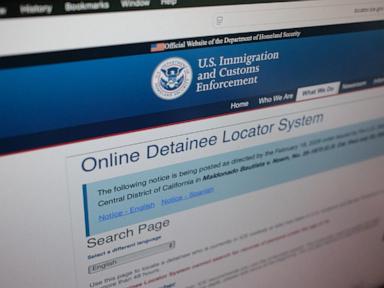
Every time a civil rights coalition files a Freedom of Information Act lawsuit against Immigration and Customs Enforcement over vanished detainee records, the legal press treats it like a thrilling courtroom drama. Good guys versus bad guys. Transparency versus a rogue agency operating in the shadows.
It is a comforting narrative. It is also completely detached from how federal administrative law actually works. For another look, consider: this related article.
The recent wave of litigation demanding that ICE stop hiding the locations of detainees with final removal orders rests on a massive, unexamined assumption: that the agency is running a sophisticated, intentional black-site concealment operation, and that a federal judge’s gavel will suddenly force a broken bureaucracy to produce real-time GPS coordinates.
Having spent years watching federal agencies drown in their own legacy databases while advocates burn millions in litigation fees chasing ghosts, I can tell you the uncomfortable truth. Suing ICE to update its public locator tool is like suing the post office to fix a broken telegraph. You are fighting the wrong statute, targeting the wrong bottleneck, and giving the government a massive procedural advantage in the process. Further reporting on this trend has been shared by USA Today.
The Myth of the Omniscient Black Site
Read the standard coverage of these lawsuits and you get the impression of a ruthless, hyper-efficient intelligence apparatus deliberately scrubbing names from a master ledger to thwart habeas corpus petitions.
Here is what actually happens on the ground.
ICE operates through a sprawling, fragmented network of field offices, private prison contractors, and local county jails governed by Intergovernmental Service Agreements. When a detainee receives a final order of removal from an immigration judge—meaning their administrative appeals are exhausted and they are legally subject to deportation—they enter a logistical meat grinder known as Enforcement and Removal Operations (ERO) staging.
During staging, individuals are shuffled rapidly between local holding facilities, regional transfer hubs like Alexandria Staging Facility in Louisiana, and charter flight manifests. The Online Detainee Locator System (ODLS), which these lawsuits aim to fix, is not a live tracking feed. It is a public-facing database that relies on manual data entry from overworked local jailers and contracted transport officers using software architectures built decades ago.
When a detainee disappears from the ODLS for 48 to 72 hours during transit, it is rarely because a shadowy official hit a "cloak" button. It is because the county jail in Texas logged them out at 4:00 AM, the private bus contractor does not have write-access to the federal database, and the staging facility in Louisiana will not process their intake paperwork until the next shift.
By framing a catastrophic administrative failure as a deliberate policy of enforced disappearance, litigants walk straight into a trap. In federal court, proving intentional bad faith by an agency requires clearing an almost impossible evidentiary bar. Meanwhile, the government’s attorneys from the Department of Justice’s Office of Immigration Litigation simply point to bureaucratic friction, cite operational security during physical prisoner transport, and watch the case stall for eighteen months.
What "Final Removal Order" Actually Means in Federal Court
To understand why these transparency lawsuits lose teeth before they even reach discovery, you have to strip away the emotional rhetoric and look at the statutory mechanics.
Most casual observers—and plenty of generalist reporters—conflate three entirely different legal statuses:
- Pre-hearing detention: The individual is awaiting a merits hearing before the Executive Office for Immigration Review (EOIR). Access to counsel here is heavily protected under the Fifth Amendment due process clause.
- Pending appeal: The individual has lost at the immigration court level, has filed a timely appeal with the Board of Immigration Appeals (BIA), and enjoys an automatic stay of removal.
- Final order of removal: The BIA has dismissed the appeal, or the window to appeal has closed. Under 8 U.S.C. § 1231, the Attorney General has a mandatory 90-day removal period to physically execute the deportation.
Once an individual crosses into that third category, the legal terrain shifts violently in the government's favor. The detainee no longer has a pending administrative case. Their primary remaining avenues for relief are emergency motions to reopen based on changed country conditions, or a petition for review in a federal circuit court paired with a motion for a stay of removal.
Here is the catch that advocacy groups hate admitting: the law does not require ICE to give a detainee's attorney advance notice of the exact date, time, or flight path of a deportation.
In fact, ICE’s own detention standards explicitly permit withholding transit details for security reasons—specifically to prevent escape attempts, physical interference at airports, or tactical disruptions by activist groups. When a lawsuit demands that ICE stop "hiding" the locations of people with final removal orders, DOJ lawyers immediately invoke law enforcement privilege and operational security under FOIA Exemption 7(E).
Federal judges, even sympathetic ones, are deeply reluctant to micromanage the physical logistics of prisoner transport. Asking a district court judge to order ICE to broadcast real-time transit locations of individuals slated for imminent deportation is a non-starter. You are asking the judiciary to override executive branch security protocols for people who, on paper, have already lost their legal right to remain in the country.
The FOIA Trap That Burns Millions
Let’s look at the actual weapon being deployed in these lawsuits: the Freedom of Information Act and the Administrative Procedure Act (APA).
On paper, suing under the APA to compel agency action "unlawfully withheld or unreasonably delayed" (5 U.S.C. § 706(1)) sounds muscular. In practice, it is a slog.
- The Mootness Guillotine: Habeas and locator lawsuits are uniquely vulnerable to strategic mooting. The moment a high-profile lawsuit threatens to expose a systemic flaw or force an unfavorable discovery order, ICE simply updates the specific plaintiffs' records, confirms their location, or puts them on a plane before the hearing date. Once the named plaintiffs are located or deported, the government moves to dismiss the case as moot. The underlying system remains untouched.
- The Norton v. SUWA Bottleneck: Under Supreme Court precedent in Norton v. Southern Utah Wilderness Alliance, an APA claim can only compel an agency to take a discrete action that it is legally required to take. You cannot use the APA to demand broad, programmatic improvements to how an agency manages its databases. If no statute explicitly mandates that ICE update its public website within six hours of a prisoner transfer, the court has zero authority to invent that deadline.
- The Discovery Black Hole: Administrative law cases are decided on the "administrative record"—the documents the agency itself curates and hands over to the court. Plaintiffs rarely get to depose officials or inspect internal servers unless they can make a strong preliminary showing of bad faith.
I have watched legal teams spend two years litigating motions to dismiss over whether a database lag constitutes a "final agency action," while thousands of detainees were quietly moved through staging hubs without a single phone call to their lawyers. The litigation becomes an end in itself—great for fundraising newsletters, terrible for actual crisis intervention.
The Contrarian Playbook: Stop Suing for Maps, Start Suing for Access
If the goal is preventing unlawful deportations—such as removing someone who has a pending stay motion, a valid fear of torture under the Convention Against Torture, or a legitimate claim to U.S. citizenship—obsessing over the public locator database is completely backward.
The real constitutional vulnerability is not that the public cannot see a dot on a map. It is that the detainee cannot reach the outside world while in transit.
Under the Fifth Amendment and the statutory right to counsel (8 U.S.C. § 1362), the government cannot erect deliberate barriers that sever an individual's ability to communicate with their legal representative, even after a final order is issued, particularly when statutory windows for motions to reopen are still ticking.
Smart litigators are abandoning the transparency angle and attacking the communication choke points directly:
- Target the Telecom Monopolies, Not Just the Agency: Detention facilities contract with private telecom providers (like Securus or Talton) that charge exorbitant rates and require pre-funded accounts before a detainee can place a call. When a detainee is moved to a staging facility, their existing phone account is tied to the old facility. They arrive at the new hub with zero access to free legal calls. Challenging the constructive denial of counsel through broken telecom transfers hits a far sharper constitutional nerve than complaining about a website lag.
- Enforce the Notice-to-Counsel Rule: Under federal regulations (8 C.F.R. § 292.5), when a person is represented by counsel of record (via Form G-28), notices must be served on the attorney. Rather than demanding public database updates, litigation should demand mandatory, automated electronic notification to the G-28 attorney of record before a detainee is transferred out of a judicial circuit. Moving a detainee from the Second Circuit (New York) to the Fifth Circuit (Louisiana) radically alters the controlling case law governing their emergency stay motion. Forcing the government to defend "forum shopping via prisoner transfer" puts DOJ on the defensive in ways a FOIA suit never will.
- Weaponize Emergency Rule 65 Injunctions: When an individual with a viable emergency claim vanishes into staging, waiting on a FOIA request is malpractice. Filing an immediate Emergency Petition for Writ of Habeas Corpus under 28 U.S.C. § 2241 in the district where the detainee was last confirmed—paired with a Temporary Restraining Order (TRO) under Federal Rule of Civil Procedure 65—freezes the board. Under the Ex parte Endo doctrine, a district court retains jurisdiction over a habeas petition even if the government physically moves the prisoner out of the district after the filing, provided the petition was filed while they were still there.
The Downside Nobody Wants to Admit
There is a hard truth embedded in this alternative strategy, and any honest practitioner will admit it: shifting from broad transparency lawsuits to targeted due-process injunctions does not scale easily.
A sweeping class-action lawsuit demanding a real-time public locator promises a systemic fix with a single court order. Filing individual habeas petitions and challenging circuit-transfer mechanics requires relentless, trench-warfare lawyering. It demands rapid-response networks on the ground in places like Oakdale, Louisiana, and Eloy, Arizona, where immigration attorneys are scarce and local federal benches are notoriously hostile to detainee claims.
Furthermore, forcing ICE to notify attorneys prior to transfer carries a real operational trade-off. Once defense counsel knows a flight is scheduled for Tuesday at 6:00 AM, the emergency docket at the circuit court gets flooded with last-minute stay motions on Monday at 11:59 PM. The government knows this. That is precisely why they fight advance-notice mandates with every procedural weapon in the DOJ arsenal.
Stop Confusing Press Releases With Leverage
The next time you see a headline celebrating a new lawsuit aimed at forcing ICE to reveal where it keeps detainees with final removal orders, look past the press release and read the actual complaint.
If the prayer for relief asks a federal judge to compel a sprawling, underfunded enforcement bureaucracy to maintain an accurate real-time public website, you are watching an expensive exercise in theater. The agency will cite operational security, blame legacy software, moot out the lead plaintiffs, and keep moving buses in the middle of the night.
If you want to stop the buses, stop asking the government for a better map. Lock down the phone lines, enforce the G-28 notice rules, and file the habeas petition before the wheels leave the tarmac.