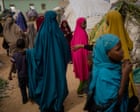
Millions of people across eastern Sudan woke up to dead power lines, silent hospitals, and failing water pumps after coordinated drone attacks tore through critical electrical infrastructure.
It wasn't an isolated grid failure. It was a deliberate tactical shift in a brutal conflict that started in April 2023 between the Sudanese Armed Forces (SAF) and the paramilitary Rapid Support Forces (RSF). When you knock out power stations in states like Kassala, Gedaref, and Red Sea State, you aren't just turning off lights. You're crippling the administrative heartland of the SAF-aligned government, including Port Sudan, which has served as the country's de facto wartime capital since fighting forced officials out of Khartoum.
Most headlines treat these blackouts like collateral damage. That's a massive misreading of how modern warfare works in East Africa.
How Drone Strikes Are Weaponizing Sudan's Power Grid
For the first year of the civil war, fighting centered heavily on Khartoum, Darfur, and the Kordofan regions. Eastern Sudan remained relatively insulated, absorbing hundreds of thousands of displaced families who fled the violence elsewhere. Port Sudan became the lifeline for international aid, diplomatic missions, and military logistics.
That buffer is gone.
By deploying long-range, one-way attack drones against high-voltage substations and power plants in eastern states, paramilitary forces found a way to project power hundreds of miles behind front lines without moving ground troops. You don't need an armored column to paralyze a city of a million people. You just need a few precision strikes on aging transformers that take months or years to replace under wartime sanctions and supply chain blockages.
Think about what happens the second a major substation goes offline in extreme heat:
- Water treatment plants stop pumping, forcing residents to rely on untreated river water or expensive trucked supplies.
- Hospital backup generators burn through scarce diesel reserves within days, putting intensive care units and surgical wards on the brink of closure.
- Telecommunications networks drop, cutting off families from mobile banking apps like Bankak, which has become Sudan's primary financial survival tool since physical cash vanished.
When the grid dies, the economy freezes instantly.
Why Eastern States Are So Vulnerable Right Now
If you look at the geography of Sudan's electrical network, the vulnerability makes total sense. Sudan's grid relies heavily on hydroelectric generation from major dams along the Nile—most notably the Merowe Dam in the north and the Roseires Dam in Blue Nile State—alongside thermal power plants near the coast.
Power travels across vast stretches of open desert and scrubland through long-distance transmission corridors to reach eastern cities like Gedaref, Kassala, and Port Sudan. Defending every mile of transmission line or every regional transformer station against low-flying, radar-evading drones is a nightmare for any military, let alone one stretched thin across multiple fronts.
Air defense systems built to intercept conventional fighter jets often struggle to track small unmanned aerial vehicles flying low over flat terrain. Even when anti-aircraft batteries fire back, shrapnel and misfires inside densely populated urban areas create secondary panic and damage.
There's also a brutal economic math behind these attacks. A basic long-range drone costs a fraction of what it takes to repair a high-capacity electrical substation. The RSF can launch repeated waves of inexpensive drones, forcing the military to expend costly air defense munitions while civilian infrastructure absorbs the blow.
The Humanitarian Ripple Effect Nobody Talks About
International coverage usually stops at the blackout itself. "Power cut in eastern Sudan" becomes a two-paragraph wire brief, and the news cycle moves on.
If you've ever tracked humanitarian logistics in conflict zones, you know the real crisis starts 48 hours after the transformers burn.
Eastern Sudan hosts massive concentrations of internally displaced persons (IDPs). Cities like Kassala and Gedaref saw their populations swell overnight as families escaped fighting in Gezira State and Khartoum. Municipal infrastructure that was barely coping before the war is now supporting double or triple its intended capacity.
Hospitals and Cold Chains Under Siege
Vaccines, insulin, and blood supplies require strict temperature control. Without grid electricity, clinics rely entirely on diesel generators. But diesel is already rationed and eye-wateringly expensive due to fuel blockades and currency collapse. Every hour a hospital runs on backup power drains fuel needed for ambulances and water trucking.
The Collapse of Digital Money
People outside Sudan rarely realize how dependent daily survival has become on smartphone banking. With physical bank branches looted or closed across much of the country, people buy bread, medicine, and bus tickets via mobile transfers. When cell towers lose grid power and their battery banks run dry, entire neighborhoods lose access to their own money. You can have savings in your account and still starve because the local network tower went dark.
Agricultural Disruption in Gedaref
Gedaref isn't just another eastern state—it's Sudan's breadbasket. Irrigated farming, grain milling, and cold storage depend on predictable power and fuel supplies. Disrupting energy infrastructure in the east directly threatens food production for the entire country, compounding famine conditions already documented by UN agencies across Darfur and Kordofan.
What Needs to Happen to Protect Civilian Infrastructure
Under international humanitarian law, specifically the Geneva Conventions, electrical grids and water systems are protected civilian objects. Attacking infrastructure indispensable to the survival of the civilian population is a clear violation of the rules of war.
Yet legal condemnations don't keep hospital ventilators running.
International mediators, donor agencies, and regional powers involved in peace talks need to push for immediate, verifiable moratoria on strikes targeting energy and water infrastructure. Aid organizations operating out of Port Sudan and Kassala must also shift away from centralized grid dependence by accelerating decentralized solar microgrids for hospitals, water wells, and telecommunications hubs—systems that are far harder to knock out with a single strike.
Until warring parties face real diplomatic and financial consequences for targeting power stations, eastern Sudan's grid will remain on the front line of a war that refuses to stay contained.