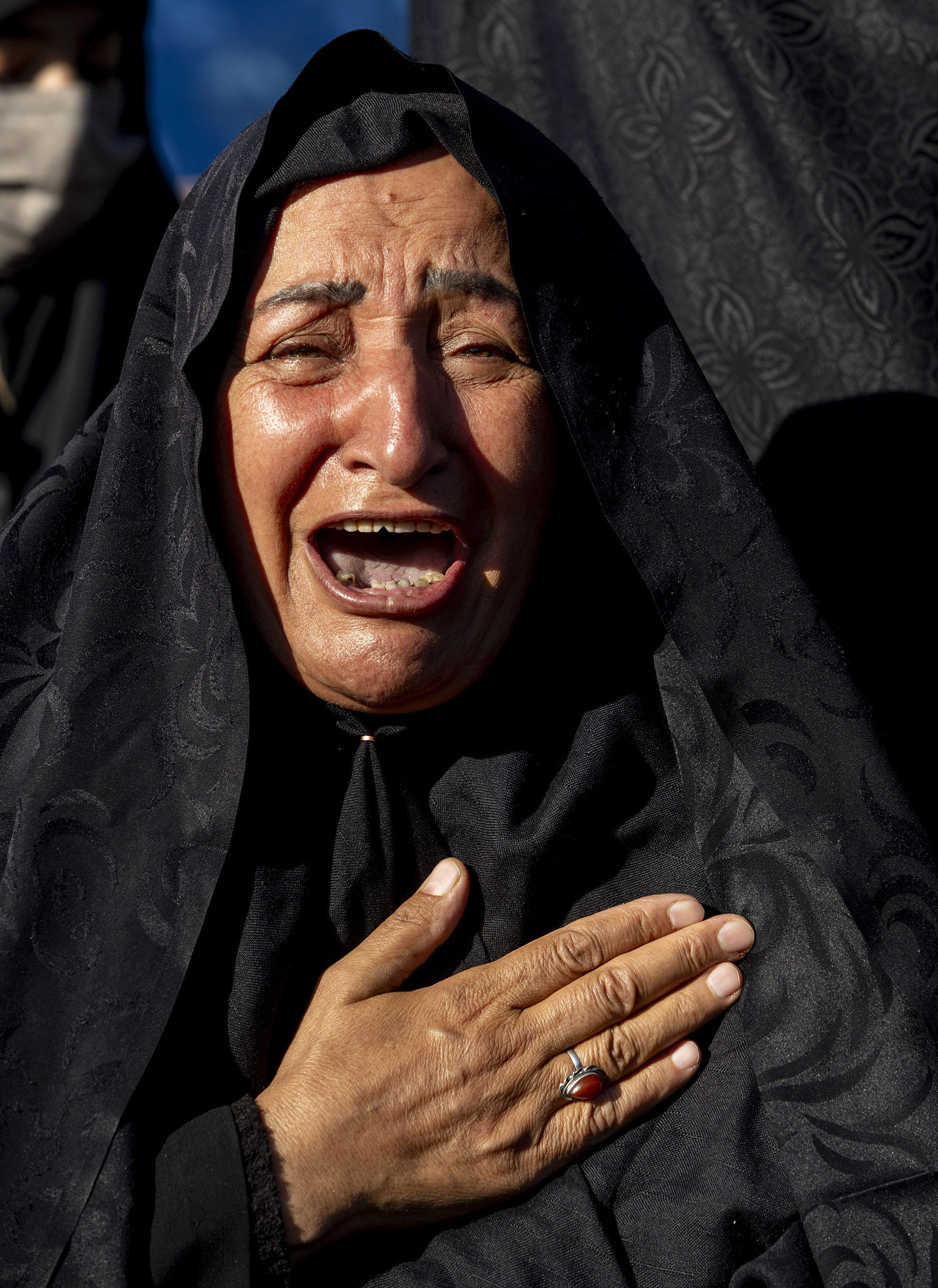
The streets of Tehran are currently choked with a calculated sea of black. To the casual observer or the surface-level news wire, the massive crowds gathering to mourn the death of Supreme Leader Ayatollah Ali Khamenei represent a unified nation in grief. This is a mirage. While the cameras capture the scale of the procession, they miss the frantic, high-stakes power struggle occurring behind the thick walls of the Assembly of Experts. The passing of Khamenei does not just end an era; it triggers a structural crisis for the Islamic Republic that has been decades in the making.
Understanding this moment requires looking past the spectacle of the funeral. The regime has spent forty years perfecting the art of the state-mandated crowd. These gatherings are as much about internal signaling as they are about public tribute. By flooding the capital with mourners, the security apparatus is projecting an image of stability to a nervous world and, more importantly, to a restive domestic population. But under the asphalt of Enghelab Street, the tectonic plates of Iranian power are shifting with violent unpredictability.
The Engineered Mourning and the Security State
Every logistical detail of the current mourning period is designed to mask a vacuum. The Islamic Revolutionary Guard Corps (IRGC) has taken total control of the capital’s perimeter. This isn’t just for the safety of visiting dignitaries. It is a preventative occupation. For the IRGC, the transition period is the most dangerous window for civil unrest or a potential "velvet" challenge to their economic and political dominance.
The crowd itself is a mosaic of genuine believers, government employees required to attend, and those who see the Supreme Leader as the only bulwark against total national collapse. Iran is a country of deep contradictions, and even those who despised Khamenei’s hardline policies often fear the chaos that follows a titan’s fall. The regime feeds on this fear. They use the funeral as a physical manifestation of the "Velayat-e Faqih"—the Guardianship of the Islamic Jurist—reminding everyone that the office is eternal even if the man is mortal.
The Succession Blueprint and the Empty Chair
The true story is not on the street but in the secret deliberations of the Assembly of Experts. For years, the two-way race for succession was thought to be between Ebrahim Raisi and Khamenei’s own son, Mojtaba. The sudden death of Raisi in a helicopter crash last year threw the carefully curated plan into the incinerator. This left Mojtaba Khamenei as the frontrunner, a move that risks turning the revolutionary republic into something it explicitly fought to destroy: a hereditary monarchy.
If Mojtaba is elevated, it breaks the ideological backbone of the 1979 Revolution. The revolutionaries overthrew a Shah to end dynastic rule. To install a son after the father would be a confession that the religious meritocracy is dead. Yet, the IRGC favors Mojtaba because he is a known quantity who will protect their sprawling business empires and "shadow state" operations.
There are other names, of course. Figures from the clerical establishment in Qom who possess the religious credentials Mojtaba lacks. But in modern Iran, theological brilliance matters less than the ability to command the bayonets of the Basij militia. The next Leader will not be chosen for his piety; he will be chosen for his ability to keep the various factions of the security state from turning on one another.
The Economic Scars Beneath the Ritual
While the state spends millions on the funeral rites, the average Iranian is struggling to buy meat. The rial is in a freefall. Sanctions have bitten deep, but internal corruption has bitten deeper. The mourning period provides a temporary distraction from the fact that the Iranian social contract is shredded.
The Supreme Leader held the ultimate veto over economic policy. He balanced the "bazaaris" (the traditional merchant class) against the IRGC’s industrial conglomerates. With him gone, the fight for the country's remaining resources will intensify. We are likely to see a wave of purges under the guise of "anti-corruption" drives as the winning faction in the succession struggle moves to bankrupt its rivals.
- The IRGC’s Holdings: The Guard controls up to 40% of the Iranian economy, from telecommunications to construction.
- The Foundations (Bonyads): These multi-billion dollar charities report only to the Supreme Leader. Their new overseer will effectively control the nation’s largest slush funds.
- The Energy Sector: Decisions on how to navigate oil sales to China will be frozen until a new leader consolidates power.
A Foreign Policy in Stasis
The world is watching Tehran with bated breath, particularly regarding the nuclear program. Khamenei was the final word on the "fatwa" against nuclear weapons—a theological shield that many Western analysts viewed as a tactical ruse. Without his specific brand of revolutionary pragmatism, the decision-making process becomes decentralized and dangerous.
The "Axis of Resistance"—stretching from Hezbollah in Lebanon to the Houthis in Yemen—now finds its primary patron in a state of transition. These proxy groups rely on the Supreme Leader for both material support and ideological direction. A prolonged or contested succession in Tehran could lead to these groups acting more autonomously, increasing the risk of a regional miscalculation that sparks a broader conflict.
The Silence of the Disenchanted
The most significant demographic in Iran today is the one not pictured in the official funeral photos. It is the millions of young Iranians who stayed home. For them, the death of the Leader is neither a tragedy nor a triumph, but a moment of profound uncertainty. They lived through the "Woman, Life, Freedom" protests and saw the brutality of the state firsthand.
The security forces are currently at their highest level of readiness. Every street corner has a presence. This is because the regime knows that the transition is the moment of maximum vulnerability. If a protest movement were to ignite now, the chain of command might hesitate. Who would give the order to fire if it’s unclear who will be in charge tomorrow? That hesitation is the regime’s greatest nightmare.
The funeral is a performance of strength designed to hide this fragility. The chants of the crowd are loud, but the silence from the suburbs and the universities is deafening.
The Narrow Path Forward
The Islamic Republic is at its most perilous junction since the death of Ayatollah Khomeini in 1989. Back then, Khamenei was a compromise candidate, a middle-ranking cleric elevated to a position he wasn't technically qualified for under the original constitution. He spent three decades proving his critics wrong by outmaneuvering every rival.
The current crop of candidates lacks his political instinct. They are products of a system that has become increasingly insular and paranoid. If the Assembly of Experts picks a weak leader, the IRGC will move from being the "protectors" of the state to its outright rulers, effectively ending the clerical nature of the government. If they pick a hardliner like Mojtaba, they risk a permanent divorce from the Iranian people.
The mourning will end. The black banners will be taken down. The crowds will disperse. What remains will be a hollowed-out institution searching for a way to justify its existence to a population that has largely moved on. The successor will inherit a throne of bayonets, and as the old saying goes, you can do anything with bayonets except sit on them.
Check the official state media broadcasts against social media reports from the provinces to see where the narrative is cracking.