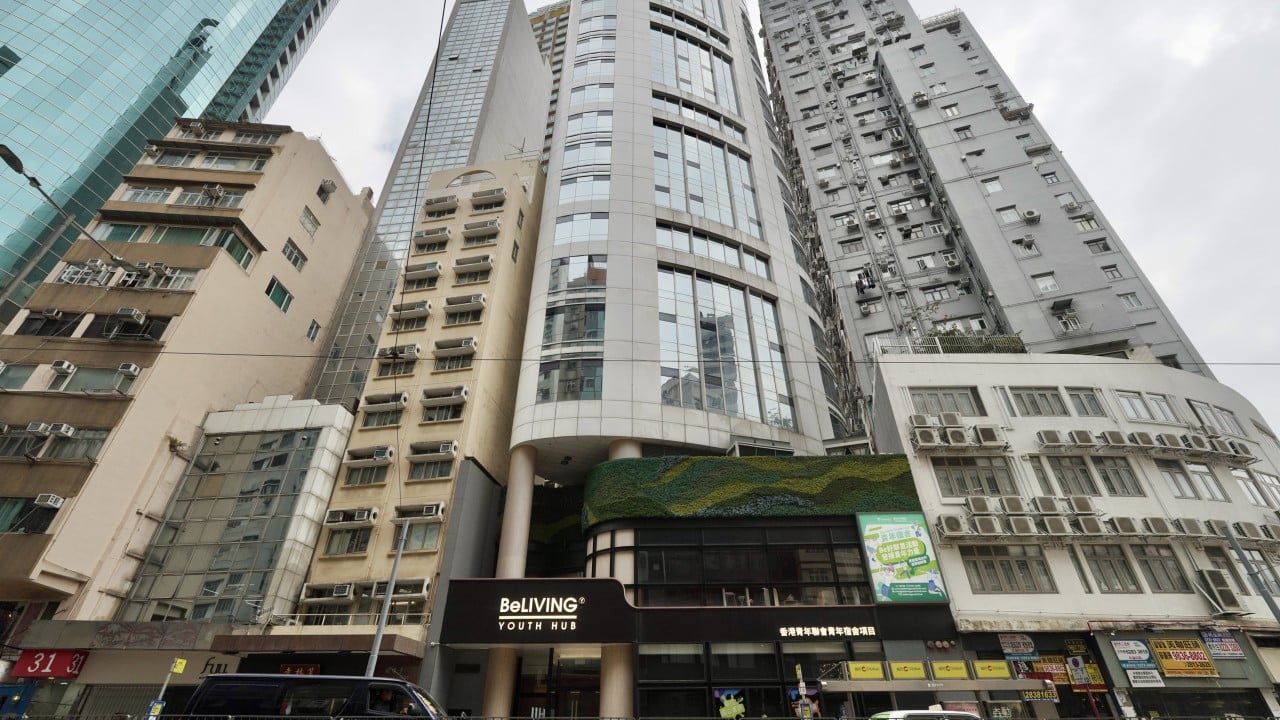
The mainstream financial press has found its latest savior for Hong Kong’s battered property market: institutional student housing.
The narrative is comforting. Mainland Chinese students are flooding into Hong Kong universities. Enrolment caps are loosening. Capital is flowing from distressed office and retail sectors into converted hotels and purpose-built student accommodation (PBSA). On paper, it looks like a masterstroke of asset repurposing.
It is actually a structural trap.
Brokers and analysts are celebrating a few high-profile en-bloc transactions as a sign of broader market recovery. They are confusing a highly specialized, operational niche with a systemic rebound. I have spent years analyzing real estate capital flows through macroeconomic shifts, and I can tell you that underwriting student housing as a proxy for a macro property recovery is a fundamental miscalculation.
The thesis is built on a house of cards. Here is why the lazy consensus is wrong, and what the smart money is actually doing behind closed doors.
The Flawed Math of the Conversion Craze
The current hype relies on a simplistic equation: conversion equals yield. Institutional investors are buying up underperforming three-star hotels in districts like Hung Hom, Yau Ma Tei, and Sham Shui Po, spending capital expenditure to add study desks, and expecting double-digit returns based on per-bed pricing.
This ignores the brutal reality of operational expenditure.
Residential real estate is a passive or semi-passive play. Student housing is a hospitality business disguised as real estate. The moment you shift from traditional leasing to a per-bed model, your operational friction skyrockets.
- Turnover Costs: You are facing near-100% turnover every 10 to 12 months. The marketing, cleaning, repair, and leasing velocity required to maintain full occupancy every September is relentless.
- Asset Degradation: Student tenants treat properties with a level of wear and tear that standard residential tenants rarely match. The capital reserves required to maintain these assets over a five-year hold eat deeply into the projected net operating income (NOI).
- The Amenity Arms Race: To command premium rents from affluent mainland students, operators cannot just offer a bed and a shared kitchen. They are building gyms, study lounges, and social hubs. This non-revenue-generating space slashes the efficiency ratio of the building floor plate.
When you factor in localized management fees, specialized student housing platforms taking their cut, and aggressive depreciation, the mouth-watering yields quoted in broker marketing brochures quickly evaporate.
The Geopolitical Risk Nobody Wants to Underwrite
Every bull case for Hong Kong student housing cites the exact same driver: the Non-local Student Quota expansion. The government raised the admission quota for non-local students at publicly funded universities from 20% to 40%.
Relying entirely on a single demand funnel controlled by policy levers is highly dangerous.
The target demographic is not diversified. It is overwhelmingly dependent on Mainland Chinese students. If you think this demand is immune to broader macroeconomic headwinds, you are not paying attention to Chinese consumer sentiment or demographic trends.
Consider this thought experiment: Imagine a scenario where the Chinese mainland experiences a prolonged economic cooling that compresses middle-class disposable income, or where regional mainland universities launch competing high-end international campuses at a third of the cost. The premium pool of students willing to pay HK$8,000 to HK$12,000 a month for a tiny room in Kowloon shrinks instantly.
Furthermore, student housing demand is completely decoupled from the local economy. It does not boost local consumption long-term. It does not stabilize the office sector. It is a transient population. When a fund buys an asset based entirely on a temporary visa policy, they are taking regulatory risks that traditional property funds are ill-equipped to hedge.
The Yield Illusion vs. High Interest Rates
The consensus argues that as institutional capital enters the market, cap rates will compress, driving up valuations.
Let us look at the actual macro environment. The Hong Kong Dollar peg means local interest rates track the US Federal Reserve. Even with minor rate cuts, the era of free money is gone. Cost of debt remains stubbornly elevated.
Traditional Residential Yield: 2.5% - 3.0%
Target Student Housing Yield:  4.5% - 5.5% (Projected)
Current Cost of Debt (HIBOR+): 4.5% - 5.0%
When your cost of borrowing matches or exceeds your property yield, you have neutral or negative leverage. To generate a return for limited partners, operators must push rents to unprecedented levels.
But student budgets are not elastic. There is a hard ceiling on what a mainland family will pay for a converted hotel room when they can split a standard three-bedroom apartment in Sha Tin with four classmates for a fraction of the price. The co-living sector in Hong Kong tried this exact model a few years ago. It implanted premium branding onto shared spaces, failed to scale, and left investors holding illiquid, heavily depreciated assets. PBSA is making the exact same structural mistakes under a different name.
The Wrong Definition of Liquidity
Brokers point to institutional deals involving firms like Centaline, Wang On, or global private equity funds as proof of deep market liquidity.
This is an illusion.
These deals are happening because distress in other sectors has forced developers and hotel owners to liquidate assets at a massive discount. They are capitulation trades, not growth plays.
True liquidity means having a clear, deep exit market. Who buys these student housing assets five to seven years from now when the private equity funds need to exit?
- Real Estate Investment Trusts (REITs): Hong Kong’s REIT market is notoriously conservative and heavily weighted toward retail and office. There is no established, liquid public market for specialized residential alternatives.
- Local Tycoons: Traditional Hong Kong property syndicates understand land value and luxury residential. They generally avoid operationally complex hospitality plays.
- Global Pension Funds: These institutional buyers require massive scale, standardized assets, and predictable regulatory environments—none of which describe the fragmented, conversion-heavy Hong Kong student housing market.
You are buying into an entry gateway with no viable exit door. You are locked in.
How to Play the Real Shift
If you want to capitalize on Hong Kong’s evolving demographics, stop buying old hotels and pretending you are a student housing mogul. Stop asking how to wring a 5% yield out of a converted asset.
The real opportunity lies in the infrastructure and logistics supporting the broader integration of the Greater Bay Area. The inflow of talent isn’t just students; it is researchers, professors, and tech workers who need flexible, mid-term, institutional-grade housing that behaves like standard residential real estate, not student dormitories.
Focus on scale. Look at trans-border infrastructure links where land values are still depressed, rather than overpaying for cramped footprints in urban Kowloon.
The mainstream press will continue to cheerlead every hotel conversion as a sign that the Hong Kong property market has found its bottom. Let them. While they track the transient student population, the smart money is conserving capital, avoiding the operational meat grinder of PBSA, and waiting for the actual structural bottom of the commercial market.
The student housing boom isn't a recovery. It is a distraction.

