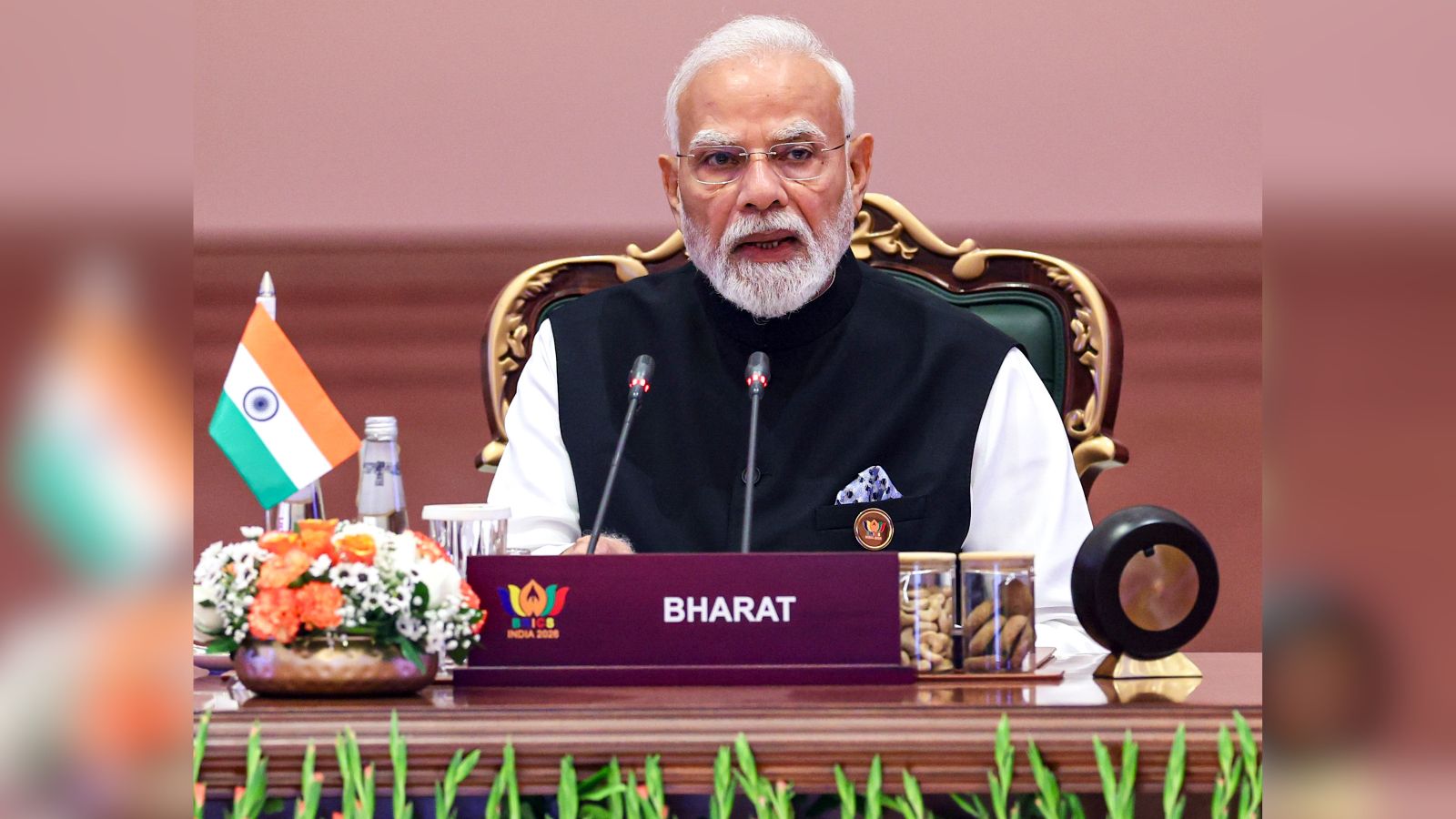
Global supply chains treat human labor as a fixed, elastic input until a systemic shock fractures the logistics chain. When geopolitical chokepoints close, regulatory jurisdictions overlap, or security incidents strand commercial crews in hostile waters, the invisible cost architecture of international shipping becomes immediately visible. Prime Minister Narendra Modi’s proposal at the 2026 BRICS Summit for a Seafarers Emergency Support Network attempts to address a structural void in maritime logistics. Commercial shipping moves over eighty percent of global trade volume by weight, yet the welfare, legal protection, and extraction mechanisms for the two million active seafarers remain fragmented across flags of convenience, coastal state jurisdictions, and archaic labor conventions.
To evaluate the operational utility of this proposed network, one must map the economic and institutional mechanics that currently govern stranded maritime workers. The international shipping market operates on regulatory arbitrage. Shipowners routinely register vessels in open registries such as Panama, Liberia, or the Marshall Islands to minimize tax liabilities and circumvent stringent domestic labor laws. This practice creates an enforcement vacuum. When a vessel is abandoned by its owner—a phenomenon tracked closely by the International Labour Organization through cases of maritime abandonment—the flag state frequently abdicates financial and operational responsibility, while the port state denies entry or shore leave due to immigration constraints and financial liability.
The economic cost function of abandoned or stranded labor comprises three primary variables. First is the immediate liquidity constraint: crews cut off from payroll accumulate months of unpaid wages while consuming dwindling onboard stores of potable water and nutrition. Second is the legal immobilization vector, where passport retention by shipowners or local judicial proceedings traps workers in foreign jurisdictions without representation. Third is the psychological and operational hazard coefficient, which degrades vessel safety management systems as demoralized crews execute critical navigation and cargo operations under severe distress.
Within this framework, the institutional architecture of existing maritime safety frameworks reveals critical failure points. The Maritime Labour Convention of 2006 mandates financial security systems for repatriation and up to four months of outstanding wages. However, enforcement mechanisms rely heavily on port state control inspections. If a vessel remains at sea, drops anchor outside territorial waters, or docks in a jurisdiction lacking enforcement capacity, the convention’s protections become unenforceable paper.
The Mechanics of Multilateral State Intervention
A state-backed emergency support network operating through the BRICS coalition introduces a novel countervailing mechanism to commercial abandonment. By pooling diplomatic, consular, and financial resources across major emerging economies, the network alters the bargaining power asymmetry between impoverished or unrepresented mariners and transnational shipping conglomerates.
The primary operational challenge facing any such network involves jurisdictional friction. International maritime law is governed by the United Nations Convention on the Law of the Sea, which grants flag states primary jurisdiction over labor conditions aboard ships flying their flag. However, when flag states fail to intervene, coastal and port states claim jurisdiction based on territorial sovereignty or humanitarian imperatives. The proposed network must navigate these legal boundaries without violating sovereign prerogatives or triggering diplomatic friction between non-aligned maritime nations.
Operationalizing the network requires establishing three distinct functional layers: rapid consular deployment, emergency escrow financing, and repatriation logistics corridors. Consular deployment addresses the immediate legal isolation of detained or abandoned crews. When a vessel encounters distress or abandonment, designated member state missions must bypass traditional bureaucratic inertia to secure emergency visas, legal counsel, and medical evacuation.
Emergency escrow financing solves the liquidity crisis inherent in maritime abandonment. Standard judicial sale procedures for arrested ships take months or years to resolve, during which time crew members remain trapped on board. A dedicated liquidity facility funded through multilateral contributions allows for immediate repatriation and back-pay disbursement to stranded workers, subrogating the financial claim against the defaulting shipowner or insurer after the fact. This shifts the cash-flow burden away from the vulnerable worker and onto the collective balance sheet of the coalition, fundamentally altering the risk profile of maritime employment.
Repatriation logistics corridors represent the third structural requirement. Seafarers hail predominantly from developing economies, including India, the Philippines, China, Russia, and Ukraine. Establishing multilateral transit agreements that exempt distressed mariners from standard immigration backlogs ensures that extraction from high-risk zones can occur within hours rather than weeks.
Geopolitical Alignment and Trade Route Security
The timing of the 2026 BRICS proposal corresponds directly with heightened vulnerabilities along critical maritime choke points. Disruptions in the Red Sea, the Bab el-Mandeb Strait, and the Strait of Malacca have demonstrated that commercial shipping lanes are increasingly susceptible to asymmetric kinetic threats and geopolitical blockades. When commercial vessels are targeted or forced to reroute around the Cape of Good Hope, the voyage duration extends by ten to fourteen days, compounding fuel consumption and psychological fatigue among crews.
Traditional Western-led maritime coalitions focus primarily on freedom of navigation and kinetic security for cargo vessels. They treat labor as a secondary derivative of asset protection. Conversely, emerging economies supply the vast majority of the global seafaring workforce. India alone accounts for a significant percentage of the officer and rating ranks. For these nations, protecting maritime workers is not merely a humanitarian objective; it is a critical labor supply chain security requirement. If maritime careers become increasingly hazardous due to inadequate institutional protection, recruitment pipelines will contract, driving up labor costs and inducing structural bottlenecks in global trade delivery timelines.
The expansion of the BRICS bloc incorporates major energy producers and transit hub nations. This geographic distribution places member states adjacent to the world's most critical maritime bottlenecks. Consequently, a seafarers support network can leverage local port access, regional intelligence sharing, and diplomatic channels that traditional Western maritime authorities cannot easily access or influence.
Economic Implications for Shipowners and Insurers
The introduction of a rigorous, state-backed emergency network alters the underwriting models used by Protection and Indemnity clubs and marine insurers. Currently, insurance coverage for crew abandonment is frequently capped or subject to protracted litigation delays. If a multilateral entity aggressively pursues asset seizure and blacklisting of non-compliant shipowners, the cost of capital and insurance for substandard operators will rise precipitously.
This dynamic creates a market correction mechanism. Shipowners who maintain high safety and labor standards will experience lower operational friction, while fringe operators utilizing flags of convenience to bypass crew welfare obligations will face systemic exclusion from major ports and financial clearing systems. The economic penalty for labor exploitation must exceed the marginal profit gained by cutting corners on crew maintenance and repatriation insurance.
However, the strategy carries inherent implementation risks. Overlapping jurisdictions could lead to diplomatic disputes if one BRICS member intervenes in a port controlled by a geopolitical rival or an unaligned state. Furthermore, moral hazard remains a theoretical concern: if rescue and repatriation are guaranteed by a sovereign-backed fund, marginal operators might underinvest in private insurance schemes, shifting the tail risk of maritime operations onto public balance sheets. To mitigate this, the network must enforce strict subrogation protocols, ensuring that defaulting owners face asset liquidation and criminal liability in all participating jurisdictions.
Strategic Execution Pathways
Execution of the Seafarers Emergency Support Network requires abandoning voluntary compliance models in favor of mandatory multilateral enforcement protocols. The operational blueprint must bypass slow-moving international treaty negotiations through bilateral and multilateral memoranda of understanding among BRICS member states and key labor-supplying nations.
The immediate priority involves establishing a centralized digital registry of active maritime labor contracts linked to real-time vessel tracking systems. This allows the network to detect abandonment indicators—such as prolonged stationary periods outside commercial ports, AIS transponder manipulation, and missed payroll cycles—before crews reach a point of acute crisis. Predictive monitoring transforms the initiative from a reactive rescue operation into an active risk management framework.
Port authorities within the network must implement fast-track legal mechanisms that permit the immediate arrest and judicial sale of vessels whose operators fail to maintain accredited financial security for crew repatriation. By decoupling crew welfare claims from complex commercial debt restructuring proceedings, port states can clear vessels and personnel from maritime choke points without judicial delay.
The long-term viability of globalized commerce depends on recognizing that human capital is the primary load-bearing pillar of the maritime supply chain. By internalizing the externalized costs of labor abandonment and establishing a multi-state mechanism for immediate intervention, the proposed network moves beyond diplomatic rhetoric to construct a resilient operational floor for international trade.


