The virulence of the Ebola virus (EVD) is a biological constant, but the scale of an outbreak is a variable dictated by the intersection of three structural failure points: geographical mobility, institutional trust deficits, and the biological latency of the Zaire ebolavirus strain. While traditional reporting focuses on mortality rates, a rigorous analysis of "worst-case" outbreaks reveals that the primary driver is not the pathogen’s lethality, but the breakdown of the containment-to-infection ratio. When the rate of secondary transmission ($R_0$) exceeds the operational capacity for contact tracing, the outbreak transitions from a manageable medical event to a systemic crisis.
The Triple Threat Framework of Viral Expansion
To understand why specific outbreaks escalate while others remain localized, we must evaluate the ecosystem through the Triple Threat Framework. This model categorizes risk into independent yet reinforcing vectors.
1. The Urbanization of Pathogen Transmission
Historically, Ebola outbreaks were self-limiting because they occurred in isolated, rural clusters. The "burn-out" effect happened when the virus killed its hosts faster than they could reach new population centers. In modern high-risk scenarios, the integration of rural hinterlands with dense urban hubs creates a "viral highway."
The shift from rural isolation to urban density fundamentally alters the transmission mathematics. In a village, a single infected individual might interact with 10 people. In a city like Goma or Monrovia, that same individual interacts with hundreds via public transport, markets, and informal housing. This density ensures that the contact tracing requirements grow exponentially rather than linearly, eventually decapitating the response effort.
2. The Trust Deficit and Response Resistance
Epidemiological success relies on the voluntary compliance of the population. In regions marked by prolonged conflict or administrative neglect, the arrival of international health workers in "spacesuits" (Personal Protective Equipment) triggers a psychological defense mechanism.
This resistance manifests in three distinct phases:
- Active Avoidance: Symptomatic individuals hide to avoid forced isolation in Treatment Centers, which are often perceived as "death houses" rather than places of healing.
- Safe Burial Evasion: Traditional burial practices involving contact with the deceased are high-risk events. When these are banned, families perform "secret burials," creating invisible transmission chains that the surveillance system cannot see.
- Direct Hostility: Violence against health workers halts vaccination campaigns and surveillance, allowing the virus to regain a foothold in previously cleared zones.
3. Nosocomial Amplification via Fragile Infrastructure
The most efficient "super-spreader" events often occur within the healthcare system itself. When clinics lack basic infection prevention and control (IPC) protocols, they function as incubators. A patient presenting with "dry" symptoms (fever, headache) is often misdiagnosed with malaria or typhoid. During the subsequent "wet" phase (vomiting, diarrhea, hemorrhaging), the lack of gloves, clean water, and isolation wards ensures the infection of multiple nurses and doctors. The loss of medical personnel does more than reduce the workforce; it destroys the community's primary line of defense and further erodes trust.
Quantifying the Latency Gap
The danger of a major Ebola outbreak is hidden in the Latency Gap—the time between the first "spillover" event from a zoonotic reservoir (likely bats) and the official declaration of an outbreak.
If the gap exceeds 30 days, the virus has likely reached its third or fourth generation of transmission. By the time the first laboratory-confirmed case is recorded, the "cinder" has already become a "forest fire." This delay is often driven by a lack of diagnostic throughput in regional labs. Without rapid, decentralized testing, the response remains reactive, chasing the virus rather than intercepting it.
The Mathematics of the rVSV-ZEBOV Vaccine
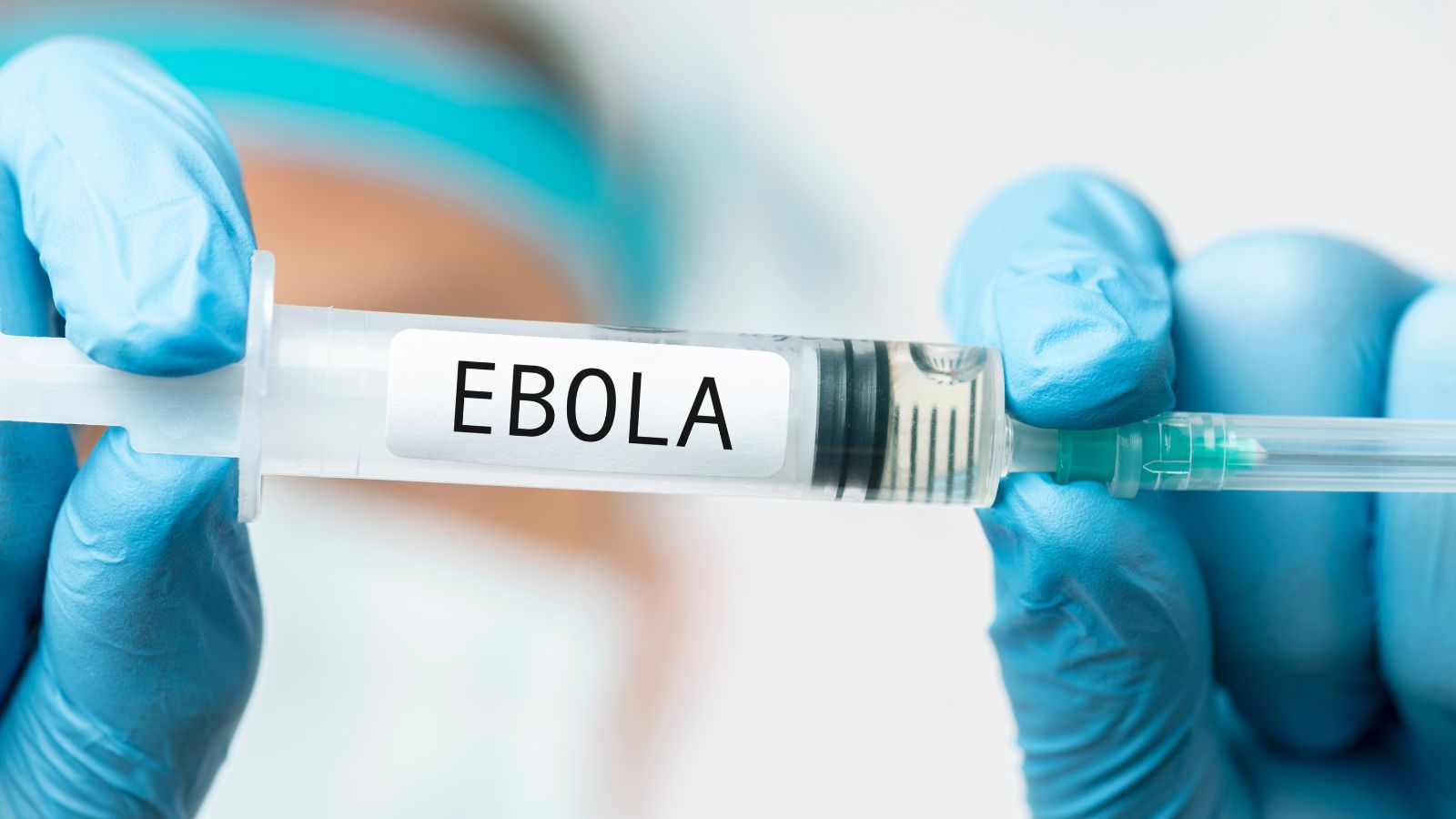
The introduction of the rVSV-ZEBOV vaccine has changed the strategic landscape, but it is not a panacea. Its effectiveness is governed by the Ring Vaccination Strategy.
- Primary Ring: Vaccinating the immediate contacts of a confirmed case.
- Secondary Ring: Vaccinating the "contacts of contacts."
The success of this strategy is highly sensitive to the accuracy of contact tracing. If a response team identifies only 70% of a patient’s contacts, the remaining 30% continue the transmission chain outside the protected ring. In high-conflict zones, reaching the 90%+ identification threshold required for "herd-effect" containment is functionally impossible. Furthermore, the "cold chain" requirements—maintaining the vaccine at $-60^{\circ}C$ to $-80^{\circ}C$—create a massive logistical bottleneck in tropical climates with unreliable power grids.
The Cost Function of Delayed Intervention
The financial and human cost of an Ebola outbreak follows a power-law distribution. Doubling the response time does not double the cost; it increases it by an order of magnitude.
- Phase I (Containment): Costs are centered on localized surveillance and a few hundred vaccine doses.
- Phase II (Mitigation): Costs escalate to include massive Treatment Centers, international logistics, and regional travel restrictions.
- Phase III (Systemic Crisis): The cost includes the total collapse of the local economy, the cessation of routine immunization for other diseases (measles, polio), and a spike in maternal mortality as hospitals shut down.
The current global health architecture is biased toward Phase II and III funding. There is a systemic "procrastination penalty" where donors wait for a crisis to become visible on international news before releasing the capital required for effective Phase I intervention.
Structural Bottlenecks in the "Worst-Case" Scenario
What makes an outbreak "the worst" is the convergence of high viral load, high mobility, and low institutional visibility. When these factors align, the standard epidemiological toolkit—trace, isolate, treat—is overwhelmed.
- Border Porosity: In regions like the Mano River Union or the Eastern DRC, borders are political constructs, not physical barriers. Daily cross-border trade ensures that an outbreak in one country is effectively an outbreak in three.
- Symptom Overlap: In the early stages, Ebola is indistinguishable from common endemic diseases. This creates a "noise" problem in the surveillance data, where thousands of "false alarms" (malaria cases) must be investigated to find the one "true signal" (Ebola).
- The Persistence Factor: Recent data suggests that the virus can persist in "sanctuary sites" in the body (such as the eyes or testes) for months after recovery. This introduces the risk of "flare-ups" long after the initial outbreak is declared over, necessitating a transition from "outbreak response" to "long-term survivor care."
Strategic Imperatives for Containment
To prevent the next "worst" outbreak, the focus must shift from reactive crisis management to structural fortification.
Decentralized Diagnostics: The deployment of rapid, point-of-care molecular testing is mandatory. Relying on central labs in capital cities creates a 48-to-72-hour intelligence lag that the virus exploits. Every district hospital in high-risk zones requires the capability to run a GeneXpert or similar assay.
Integration of Social Science into Bio-Surveillance: Anthropologists are as critical as epidemiologists. Understanding the "why" behind burial practices or healthcare avoidance allows the response to be tailored to the cultural logic of the community, turning a hostile population into a diagnostic partner.
The Pre-emptive "Cold Chain": Investing in solar-powered refrigeration and "last-mile" logistics before an outbreak occurs is the only way to ensure the rVSV-ZEBOV vaccine can be deployed within 24 hours of the first confirmed case.
The severity of an Ebola outbreak is a choice made by the global health community months before the first patient falls ill. If the infrastructure for rapid detection and trust-based engagement is not present, the virus will inevitably find the path of least resistance through the gaps in our social and clinical defenses. The objective is not to fight the virus better, but to make the environment more hostile to its transmission.