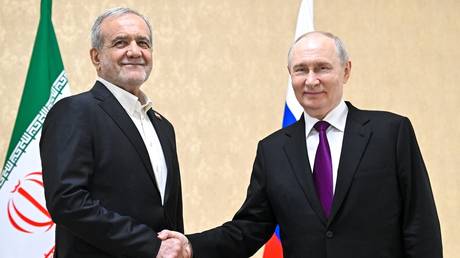
Geopolitical conflict resolution is governed by strict cost-benefit equations rather than diplomatic rhetoric. When external actors such as Moscow assert that Tehran is executing operational steps to defuse tensions with Washington, analysts must strip away the diplomatic signaling to examine the underlying structural constraints. De-escalation between asymmetric state adversaries does not emerge from sudden goodwill; it is the forced byproduct of capital depletion, military attrition, and systemic supply chain vulnerabilities.
The Triangular Incentive Matrix
To understand the mechanics of the current diplomatic posture, one must map the three competing optimization functions driving the actors involved:
- The Iranian Optimization Function: Tehran faces simultaneous multi-domain pressures, combining long-term financial sanctions, infrastructure bottlenecks, and military friction in strategic waterways like the Strait of Hormuz. The primary goal is structural survival and the removal of capital restrictions without signaling a collapse of deterrence. Conceding on minor negotiating parameters while protecting core security infrastructure is a calculated trade-off to lower the risk of total kinetic escalation.
- The Russian Mediation Calculus: Moscow operates as a structural intermediary driven by transactional utility. By positioning itself as an indispensable diplomatic broker between Iran and the United States, the Kremlin extracts economic concessions, secures logistics corridors across the Caspian Sea, and projects global relevance. However, Moscow's capacity to deliver absolute security guarantees is bounded by its own resource allocation constraints tied to ongoing domestic conflicts.
- The Washington-Jerusalem Strategic Calculus: Western and regional planners evaluate de-escalation through the lens of deterrence thresholds and maritime security. The primary risk metric is the disruption of global energy commodities and transit choke points. Talks of diplomatic engagement are frequently balanced against contingency planning for high-intensity containment operations, meaning negotiations are treated as a pressure valve rather than a permanent settlement.
The Friction of Intermediary Diplomacy
Relying on external state brokers introduces distinct informational hazards. When a third party relays compliance metrics between hostile capitals, the risk of signal distortion increases exponentially.
The primary friction points in this mediation architecture include:
- Asymmetric Verification: Without direct, verifiable bilateral channels, both Washington and Tehran rely on third-party assertions regarding compliance. This creates a verification vacuum where minor operational infractions can be weaponized to stall negotiations.
- Domestic Hardliner Vetos: Within both political systems, factions benefit from sustained crisis states. In Tehran, institutional hardliners view engagement with suspicion, often imposing hard constraints on the flexibility of negotiating teams. In Western capitals, domestic electoral cycles and alliance commitments impose strict ceilings on what concessions can be offered publicly.
- The Logistics-Sanctions Loop: Economic integration between Moscow
The Structural Mechanics of US-Iran De-escalation Under Russian Mediation
news, business
Geopolitical realignment rarely occurs through sudden, uncalculated shifts in foreign policy; rather, it follows predictable structural incentives dictated by resource constraints, economic attrition, and shifting security architectures. Recent declarations by Russian leadership concerning tangible diplomatic efforts by Iran to resolve ongoing friction with the United States must be evaluated not through the lens of rhetorical diplomacy, but through the underlying cost functions driving each state actor. The strategic friction points between Washington and Tehran are governed by a complex matrix of sanctions enforcement, regional proxy network sustainability, and domestic regime preservation metrics.
The Economic Attrition Function
Sanctions regimes against energy-producing states operate on a logarithmic decay curve regarding their behavioral modification efficacy. While initial financial isolation imposes immediate liquidity crises, target states systematically engineer structural workarounds, including decentralized maritime transfer networks, bilateral currency swaps, and deep integration into alternative trade corridors.
[Sanctions Pressure] ---> [Liquidity Contraction] ---> [Fiscal Adaptation via Illicit Networks] ---> [Diminishing Returns on Coercion]
The Iranian fiscal apparatus has adapted to long-term economic exclusion by optimizing non-hydrocarbon revenue streams and securing consistent baseline crude export volumes through opaque sovereign-to-sovereign agreements. However, structural inflation, currency devaluation, and infrastructural degradation impose a compounding domestic political cost.
- Capital Expenditure Deficits: National oil and gas extraction infrastructure requires advanced foreign engineering and consistent capital reinvestment. Without access to international debt markets and proprietary Western extraction technology, production capacity degrades over multi-year horizons.
- Subsidy Rationalization Pressures: Maintaining comprehensive domestic energy and food subsidies places an unsustainable burden on the central bank ledger, forcing difficult trade-offs between military expenditures and internal civil stability.
- Foreign Exchange Volatility: Reliance on volatile unofficial exchange markets impedes predictable long-term industrial planning, accelerating brain drain and undermining domestic manufacturing competitiveness.
These fiscal realities establish the baseline incentive structure for exploring diplomatic normalization or, at minimum, tactical de-escalation. The objective is not ideological alignment with Western governance models, but the targeted lifting of specific sectoral sanctions that impede capital accumulation and industrial modernization.
The Tripartite Strategic Calculus
Evaluating the mechanics of this diplomatic pivot requires analyzing the divergent interests of the three primary nodes involved: Tehran, Washington, and Moscow.
+--------------------+        Sanctions Relief &      +--------------------+
|                    |      Regional Containment      |                    |
|   United States    | <----------------------------> |       Iran         |
|                    |                                |                    |
+--------------------+                                +--------------------+
          ^                                                      ^
          |                                                      |
          |           Maintains Leverage via Energy              |
          +------------------------------------------------------+
                                     |
                                     v
                           +--------------------+
                           |                    |
                           |       Russia       |
                           |                    |
                           +--------------------+
The Iranian Objective Function
Tehran seeks maximum economic integration with global markets while retaining sovereign deterrence capabilities across the Levant and the Persian Gulf. The primary constraint is asymmetrical vulnerability: total economic isolation threatens regime longevity, whereas unmitigated integration risks cultural and political exposure. Tactical engagement with the United States represents an attempt to negotiate structural sanctions relief while preserving asymmetric deterrence frameworks maintained via regional allies.
The Washington Posture
United States foreign policy in the Middle East operates under a strategic mandate to minimize direct military entanglements while preventing regional hegemony by adversarial powers or nuclear proliferation. Washington's cost function revolves around domestic political vulnerability to oil price shocks and the opportunity cost of maintaining carrier strike groups in the Central Command area of operations. Direct bilateral engagement faces severe legislative friction, making indirect signaling via third-party intermediaries the preferred mechanism for managing escalation dominance.
The Moscow Intermediary Role
Russian leadership functions as both an economic beneficiary of current Iranian isolation and a diplomatic facilitator. By positioning Moscow as the indispensable diplomatic conduit between Tehran and Western capitals, the Kremlin extracts leverage across multiple geopolitical theatres. Economic ties between Moscow and Tehran have deepened through bilateral defense trade, logistics corridors circumventing European sanctions, and joint energy infrastructure projects. Consequently, any diplomatic resolution that brings Iran closer to Western markets alters Russia's relative influence over Iranian resource flows.
Information Asymmetries and Verification Mechanisms
A primary obstacle in resolving protracted state-to-state conflict is the verification deficit. Declaratory statements regarding concrete steps toward conflict resolution often founder on the absence of verifiable, step-by-step trust-building measures.
In intelligence and strategic analysis, credible commitments require costly signaling—actions that impose immediate domestic or strategic costs on the actor executing them, rendering hollow bluffs economically or politically non-viable. For Iran, signaling genuine intent to alter regional friction requires modifying operational parameters regarding regional proxies and nuclear enrichment thresholds. Conversely, for the United States, credible signaling requires offering phased, legally binding sanctions waivers rather than temporary executive waivers subject to domestic electoral volatility.
The absence of institutionalized bilateral communication channels forces both capitals to rely on third-party verification, primarily intelligence-sharing networks or diplomatic missions operating through protecting powers. This introduces signal degradation, where strategic intent is frequently misinterpreted as tactical posturing, increasing the probability of miscalculation during regional crises.
Regional Spillover Dynamics and Network Effects
Bilateral US-Iran dynamics cannot be isolated from surrounding regional sub-systems. The security architecture of the Persian Gulf is interconnected with maritime choke points, international shipping insurance rates, and global energy supply stability.
- Maritime Transit Risk: Unresolved friction directly impacts insurance premiums for commercial vessels navigating the Strait of Hormuz, translating immediately into global inflationary pressures on refined petroleum products.
- Proxy Network Calibration: The operational tempo of regional militias acts as a variable valve for Iranian leverage. Dialing down kinetic activity serves as a primary non-verbal indicator of diplomatic goodwill.
- Intelligence Interoperability: Third-party intelligence agencies monitor these proxy command structures to determine whether diplomatic pronouncements match tactical directives on the ground.
When regional actors observe systemic efforts to lower tensions, capital markets reprice geopolitical risk premiums across Middle Eastern sovereign debt and equity indices. These macroeconomic signals often precede official diplomatic breakthroughs, acting as early indicators of structural policy changes.
Strategic Outlook and Implementation Playbook
Evaluating the trajectory of US-Iran relations necessitates looking past diplomatic rhetoric to monitor specific, quantifiable metrics of change. The realization of substantive diplomatic progress depends on whether both states can construct an institutional framework capable of withstanding domestic political opposition in Washington and factional hardline resistance in Tehran.
- Monitor Licensing Waivers: Track the issuance of specific Office of Foreign Assets Control (OFAC) general licenses for humanitarian, medical, or targeted infrastructure imports as a proxy for tangible US policy shifts.
- Observe Asset Unfreezing Mechanisms: Track the establishment and auditing of restricted escrow accounts utilized for bilateral trade settlements, which indicate functional financial channels.
- Audit Nuclear and Regional Ceasefire Compliance: Measure changes in regional kinetic incidents against stated milestones in back-channel negotiations to establish whether de-escalation is operational or merely rhetorical.
The structural imperative for economic normalization remains high for Iran, while the strategic imperative for regional stabilization persists for the United States. Progress will not be linear, but will advance through discrete, transactional bargains dictated by the inescapable logic of mutual economic and geopolitical constraint.