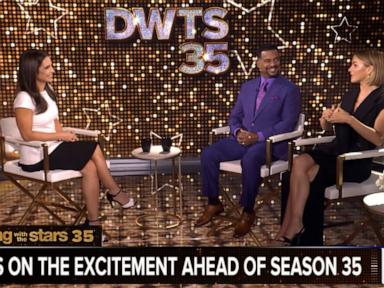
Long-running reality television franchises survive not by reinventing their core mechanics, but by executing a precise equilibrium between operational continuity and cast variance. As Dancing with the Stars approaches its thirty-fifth season premiere on ABC and Disney+, the return of hosts Julianne Hough and Alfonso Ribeiro alongside judges Carrie Ann Inaba, Derek Hough, and Bruno Tonioli signals a deliberate commitment to institutional stability. Analyzing this structural persistence reveals how a legacy format maintains viewer retention across two decades of shifting media consumption patterns.
The Tripartite Architecture of Franchise Longevity
The durability of any competitive unscripted format relies on three distinct operational pillars that govern production value, audience capture, and talent retention.
- The Continuity Vector: Preserving core personnel minimizes cognitive friction for long-term viewers. Inaba and Tonioli have maintained their positions on the judging panel since the 2005 inception, establishing a baseline evaluative metric. When veteran anchors or judges remain embedded in the infrastructure, audience trust compounds.
- The Variance Engine: Introducing an asymmetric talent roster injects unpredictability into the scoring distribution. Season thirty-five leverages a heterogeneous mix of cultural verticals—spanning reality television veterans from properties like Summer House and The Traitors, professional athletes including Savannah Bananas players, and traditional actors. This broadens the demographic acquisition funnel.
- Simulcast Distribution Dynamics: Operating a dual-delivery model via linear broadcast on ABC and simultaneous streaming on Disney+, followed by next-day availability on Hulu, addresses fragmented viewing habits without fracturing the live event economy.
The Cost Function of Celebrity-Professional Pairing
Alfonso Ribeiro noted during the pre-season rollout that the core equity of the production rests on strategic casting pairings. From an analytical perspective, pairing a celebrity with a professional dance partner functions as a resource allocation problem.
The primary constraints involve balancing technical proficiency with audience emotional investment. A professional partner acts as both a technical instructor and a risk mitigation asset. If a celebrity contestant exhibits low baseline kinetic aptitude, the professional must construct choreography that maximizes visual impact while masking mechanical deficits.
[Celebrity Baseline Skill] + [Professional Choreographic Optimization] = Audience Retention Score
When production teams orchestrate these pairings, they calculate variance. Pairing an entirely uncoordinated public figure with an elite professional creates an upward trajectory narrative arc, which historically yields higher viewer engagement metrics than flat performance distributions where a talented contestant dominates from week one.
The Risk Architecture of Live Multi-Platform Execution
Executing a live dual-network broadcast introduces systemic vulnerabilities that pre-taped formats avoid. The synchronous transmission across ABC and Disney+ requires absolute temporal precision.
- Technical Latency: Streaming protocols introduce variable delays compared to traditional cable or terrestrial broadcast. Production booths must manage real-time voting windows that accommodate these millisecond discrepancies to preserve voting integrity across digital and linear cohorts.
- Adjudication Variance: Subjective scoring panels inherently suffer from calibration drift over a multi-month schedule. To counteract this, veteran judges like Derek Hough and Carrie Ann Inaba rely on standardized technical lexicon rather than purely emotional critique, though the entertainment imperative frequently pulls scores toward crowd-pleasing inflation in later rounds.
Strategic Outlook for the Thirtieth-Five Iteration
The operational blueprint for season thirty-five relies heavily on exploiting compressed promotional windows. By teasing specific elements—such as Julianne Hough highlighting theme-night fashion metrics and selective early cast leaks via morning broadcast segments—the network creates an artificial scarcity of information that drives search volume and social media share of voice prior to the official premiere.
To maximize retention past the initial two-night premiere block, production must rapidly convert casual viewers acquired via internet-adjacent celebrity casting into habitual weekly voters. The structural integration of multi-generational stars ensures that the top of the funnel remains wide, but the conversion rate depends entirely on the narrative tension established during the first elimination cycle. Focus resources on monitoring how quickly the judging criteria tighten from lenient baseline scoring to strict technical accountability by week four.