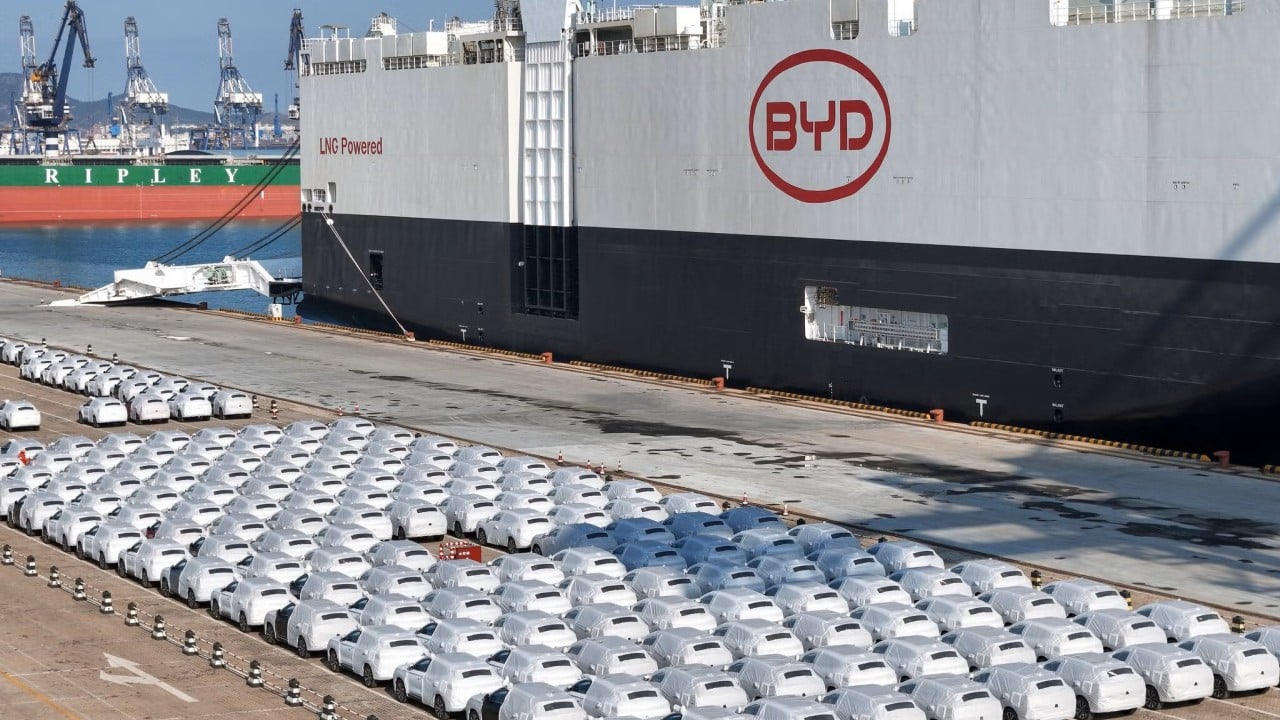
Trade policy operates on the assumption that open markets distribute capital efficiently across borders. When asymmetric state subsidies distort this distribution, the theoretical foundation of comparative advantage fractures. The European Union faces a structural crisis born of industrial overcapacity in partner economies, specifically regarding advanced manufacturing sectors where domestic demand fails to absorb domestic output. This imbalance forces excess production onto international markets at suppressed price points. Traditional tariff mechanisms designed to catch standard dumping practices move too slowly to preserve capital-intensive domestic industries facing rapid market erosion. Consequently, institutional pressure mounts to overhaul the architecture of defensive trade instruments.
The legislative response centers on constructing defensive tools that bypass traditional, protracted investigation timelines. Standard anti-dumping proceedings require months of data collection, profit-margin analysis, and injury verification. By the time remedies are enacted, the targeted domestic sector may have suffered irreversible capital flight or capacity liquidation. Modern industrial policy requires proactive intervention thresholds. These instruments target market distortions at the origin point of state-backed subsidization rather than merely penalizing the resulting export price. The operational challenge lies in designing measures that comply with international trade law while neutralizing state-directed economic competition.
Market distortion assessment relies on isolating the inputs that artificially deflate final product pricing. Energy subsidies, preferential land allocation, state-directed credit, and suppressed labor costs create a cost structure that independent market actors cannot replicate. When economies of scale combine with non-market financing, foreign competitors achieve structural cost advantages that render conventional efficiency metrics obsolete. European industrial strategy is pivoting toward quantifying these hidden state inputs to justify preemptive protective measures. The calculation shifts from tracking price variance to auditing the structural anatomy of foreign production costs.
The institutional framework governing trade defense historically treated national interventions as temporary market corrections. Current economic pressures treat protection not as a temporary correction, but as a permanent mechanism for industrial preservation. This strategic realignment creates friction with global trade organizations built on multilateral consensus. As unilateral defensive tools proliferate, the risk of retaliatory friction escalates. Capital flows respond to regulatory uncertainty by reallocating toward jurisdictions with predictable trade architectures, changing the geography of global investment.
Strategic autonomy in manufacturing requires retaining domestic capacity in critical supply chains, regardless of short-term cost inefficiencies. The economic cost of losing foundational manufacturing capabilities—such as chemical processing, semiconductor fabrication, and green technology components—extends far beyond immediate sector-specific job losses. Downstream industries rely on domestic inputs to maintain innovation feedback loops. When upstream production migrates overseas due to predatory pricing, domestic research and development ecosystems lose their industrial anchor. Policymakers now weigh the inflationary impact of defensive tariffs against the systemic vulnerability of industrial hollowing.
The implementation of these new trade instruments depends on bureaucratic velocity. Regulatory agencies must expand their analytical capabilities to audit complex corporate ownership structures and state-backed financial vehicles. Transparency regarding foreign subsidies remains low, forcing trade authorities to rely on indirect econometric modeling to estimate the scale of market distortion. This reliance introduces legal vulnerabilities, as targeted nations challenge the methodology used to calculate protective duties in international dispute panels. The durability of any new trade weapon rests on its defensibility under intense legal scrutiny.
Capital allocation decisions within the union will shift as these defensive measures take effect. Firms previously incentivized to offshore production to lower-cost jurisdictions must now factor potential trade friction and retroactive subsidy penalties into their supply chain calculations. Nearshoring and regionalization cease to be mere risk-management buzzwords and become mandatory operational constraints. The ultimate test of this policy shift is whether it successfully modernizes domestic industrial capacity or merely insulates inefficient producers behind a permanent regulatory wall, ultimately stifling downstream competitiveness.