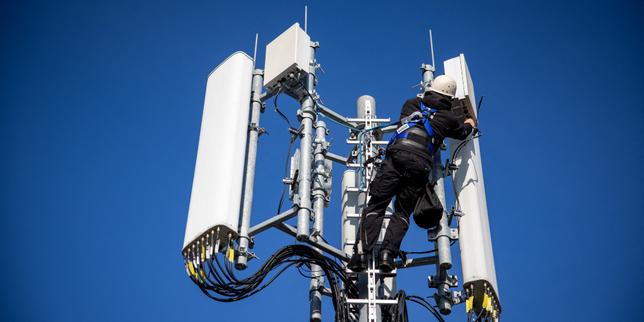
Geopolitical mandates collide with capital expenditure realities when regulatory bodies enforce supply chain exclusions on critical infrastructure. The ongoing friction between the European Commission and regional telecommunications operators regarding the systematic phase-out of high-risk vendors such as Huawei exposes a fundamental misalignment between top-down digital sovereignty directives and bottom-up network economics.
The friction centers on a transition from voluntary security toolboxes to legally binding mandates. Understanding this divergence requires evaluating the cost function, architectural dependencies, and market concentration effects that policymakers routinely underestimate.
The Cost Function of Rip and Replace Operations
The economic friction of removing integrated hardware layers from live telecommunications architectures cannot be modeled as a simple procurement swap. Radio access networks, fixed broadband connections, and core transport backbones form an interdependent stack where vendor software and hardware are tightly coupled.
Initial estimates provided by regulatory bodies frequently miss the total cost of ownership associated with forced displacement. Industry analysis from groups such as the GSMA indicates that stripping high-risk components from mobile infrastructure alone demands between sixteen billion and twenty-two billion euros. Expanding this scope to fixed networks and transport layers drives total expenditure projections between thirty billion and forty billion euros. This economic reality diverges sharply from early administrative models which assumed minimal financial friction.
The financial burden distributes unevenly across market actors. Tier-one carriers with robust balance sheets absorb capital expenditure reallocations more easily than regional operators or smaller member-state markets. For smaller entities, forced replacement cycles divert capital away from next-generation network densification, creating internal digital divides within the single market.
The Three Structural Layers of Network Dependency
Telecommunications infrastructure operates across three distinct tiers, each presenting unique operational hurdles during a vendor substitution cycle.
The first tier is the radio access network. Because base stations, antennas, and local processing units from specific manufacturers utilize proprietary baseband algorithms, swapping them out requires physical site visits, reconfiguration, and prolonged operational downtime.
The second tier involves the core network, where signaling, authentication, and data routing occur. This layer presents the highest security sensitivity but also the highest switching complexity. Integration testing between a new vendor's core and legacy radio elements introduces multi-vendor interoperability risks that can compromise service reliability.
The third tier encompasses transport and backhaul infrastructure. Fiber-optic transmission systems and microwave links connecting cell sites to core exchanges must maintain synchronization. Replacing vendor-specific optical transceivers involves recalculating link budgets and optical loss parameters across thousands of kilometers of physical plant.
Market Concentration and Vendor Lock-in Dynamics
A regulatory mandate designed to eliminate dependency on a single external supplier paradoxically accelerates structural dependency on a shrinking oligopoly of alternative Western equipment manufacturers, primarily Ericsson and Nokia.
When a regulatory framework eliminates competitive bidding options, the remaining equipment providers gain structural pricing power. Industry data suggests that reduced vendor competition adds billions in secondary costs through inflated hardware and maintenance pricing over multi-year deployment horizons.
Furthermore, supply chain elasticity in the telecommunications sector remains constrained. Manufacturing lines for advanced radio units require specialized semiconductor components and long lead times. Scaling production to meet the simultaneous replacement demands of twenty-seven member states creates structural bottlenecks. Equipment shortages stretch procurement cycles, leaving operators paying maintenance premiums to keep legacy high-risk hardware operational past its optimal lifecycle.
Asymmetric Geopolitical Exposure
The regulatory push toward infrastructure isolation operates within a wider sphere of international trade friction. European industrial sectors heavily exposed to export markets face direct retaliatory vulnerabilities.
Automotive, industrial machinery, and luxury goods manufacturers rely on foreign consumption markets where administrative retaliation can manifest as targeted non-tariff barriers or regulatory hurdles. While Brussels formulates digital policy through a security lens, the operational feedback loop lands squarely on industrial exporters who absorb the brunt of retaliatory friction.
Member states with large export economies navigate these negotiations by pushing back against rigid statutory enforcement mechanisms. Their resistance is driven by economic self-preservation rather than technical disagreement over network vulnerabilities.
Strategic Execution Blueprint
Telecommunications operators navigating this regulatory transition must execute a multi-phase operational mitigation strategy to protect capital efficiency and service continuity.
First, conduct an asset-level inventory audit to classify network elements by functional criticality. Isolate high-risk components in non-core layers where risk mitigation through software monitoring can satisfy regulatory intent without incurring immediate hardware replacement costs.
Second, restructure procurement contracts with alternative vendors to enforce multi-vendor interoperability standards, specifically open radio access network architectures where applicable, to dilute single-vendor pricing leverage.
Third, stage capital expenditure outlays across multi-year depreciation schedules to align equipment retirement dates with natural hardware refresh cycles, avoiding accelerated write-downs that impair operational cash flow.
EU Eyes Huawei, ZTE Ban in Members' Mobile Networks
This discussion provides context on the regulatory and legislative measures being evaluated by European authorities to phase out specific vendors from mobile infrastructure.
http://googleusercontent.com/youtube_content/1