Record high beef prices at grocery store checkouts have transformed livestock logistics into a prominent political battleground. Policy interventions targeting trade restrictions assume that reopening international supply lines can quickly reverse consumer costs. Yet, analyzing the mechanics of the North American cattle market reveals that administrative policy adjustments cannot override biological timelines, structural herd liquidation, and processing capacity bottlenecks.
The Macroeconomic Baseline of Herd Depletion
The domestic cattle inventory has contracted to its lowest point in 75 years, dropping to 86.2 million head. This contraction is the cumulative output of two distinct structural pressures acting over a two-decade timeline. Extended periods of low historical returns forced early liquidation, while multi-year droughts across primary grazing regions stripped ranchers of pasture viability. When forage vanishes, maintaining herd size becomes economically impossible, driving forced liquidation events that flood short-term markets before creating long-term scarcity.
Retail price movements reflect this severe supply deficit. Bureau of Labor Statistics data demonstrates that ground beef prices climbed nearly 57 percent over a five-year window, reaching $6.89 per pound, while uncooked steak averages surpassed $13.06 per pound. These spikes outpace broader food price inflation by a wide margin, driven directly by the absolute scarcity of slaughter-ready animals.
The Anatomy of the Trade Interruption
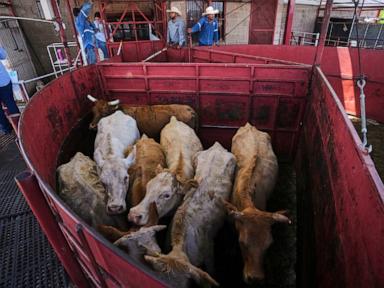
In May 2025, federal authorities closed the border to live cattle imports from Mexico to contain the spread of the New World screwworm, a parasitic insect whose larvae inflict fatal tissue damage on livestock. While this sanitary mandate protected national livestock health, it severed a vital pipeline for American feedlots.
Historically, Mexico supplied approximately 1.1 million head of cattle annually to the United States, representing roughly 3 percent of the total supply. These animals typically arrived as feeder cattle destined for southwestern finishing operations. Halting this influx removed roughly 26,000 head per week from commercial channels. The sudden evaporation of this throughput left feedlots operating below capacity and forced processing facilities to idle lines or shutter plants entirely due to insufficient animal volume.
The Phased Reopening Bottleneck
The decision by the United States Department of Agriculture to reopen the border crossing in Douglas, Arizona, represents a calibrated attempt to restore historical trade channels. However, the economic relief valve promised by this policy is constrained by operational reality.
Phased protocols require rigorous veterinary inspections at single points of entry, ensuring that every crossing animal from northern states like Sonora or Chihuahua is certified free of parasites. This inspection friction means trade volume cannot return to historical baselines overnight. Even under optimal logistical acceleration, months will pass before feeder cattle volumes approach pre-closure rates. Because these animals must undergo a multi-month finishing cycle in feedlots before reaching processing plants, any volume recovery is temporally distant from the immediate retail market.
Biological Constraints on Supply Elasticity
Political announcements aiming to inject relief into consumer markets often rely on short-term fixes, such as tariff-free quotas for imported ground beef. These mechanisms bypass feedlots to target immediate supply shortfalls, but they collide with the immutable laws of livestock biology.
Rebuilding the domestic breeding herd requires biological investment that defies quick regulatory adjustment. Cattle exhibit a low reproductive rate, with a cow typically producing a single calf per year. When ranchers attempt to expand their herds, they must retain heifers for breeding rather than sending them to slaughter, which introduces an immediate contraction in current beef supply to achieve future inventory growth. Consequently, any market intervention that attempts to force prices down too aggressively can distort the incentives required for domestic herd retention, undermining long-term stability for short-term political messaging.
Strategic Industry Outlook
Market participants must evaluate current pricing not as a temporary anomaly, but as a structural equilibrium dictated by resource availability. Feedlots and meat packers will continue to experience margin compression as they compete for a historically diminished pool of livestock. Procurement strategies must account for sustained high protein costs well into the medium term, as biological lag times prevent any rapid supply-side correction regardless of trade policy adjustments.
To navigate this high-cost operating environment, supply chain operators should decouple near-term procurement models from historical pricing baselines, shifting instead toward flexible inventory hedging and regional sourcing diversification that insulates operations from regulatory border shifts.
US to import 660 million pounds of beef to lower prices, raising concerns for ranchers
This video provides a direct visual overview of the federal policy actions aimed at lowering beef prices and the corresponding concerns raised by agricultural producers.
http://googleusercontent.com/youtube_content/1