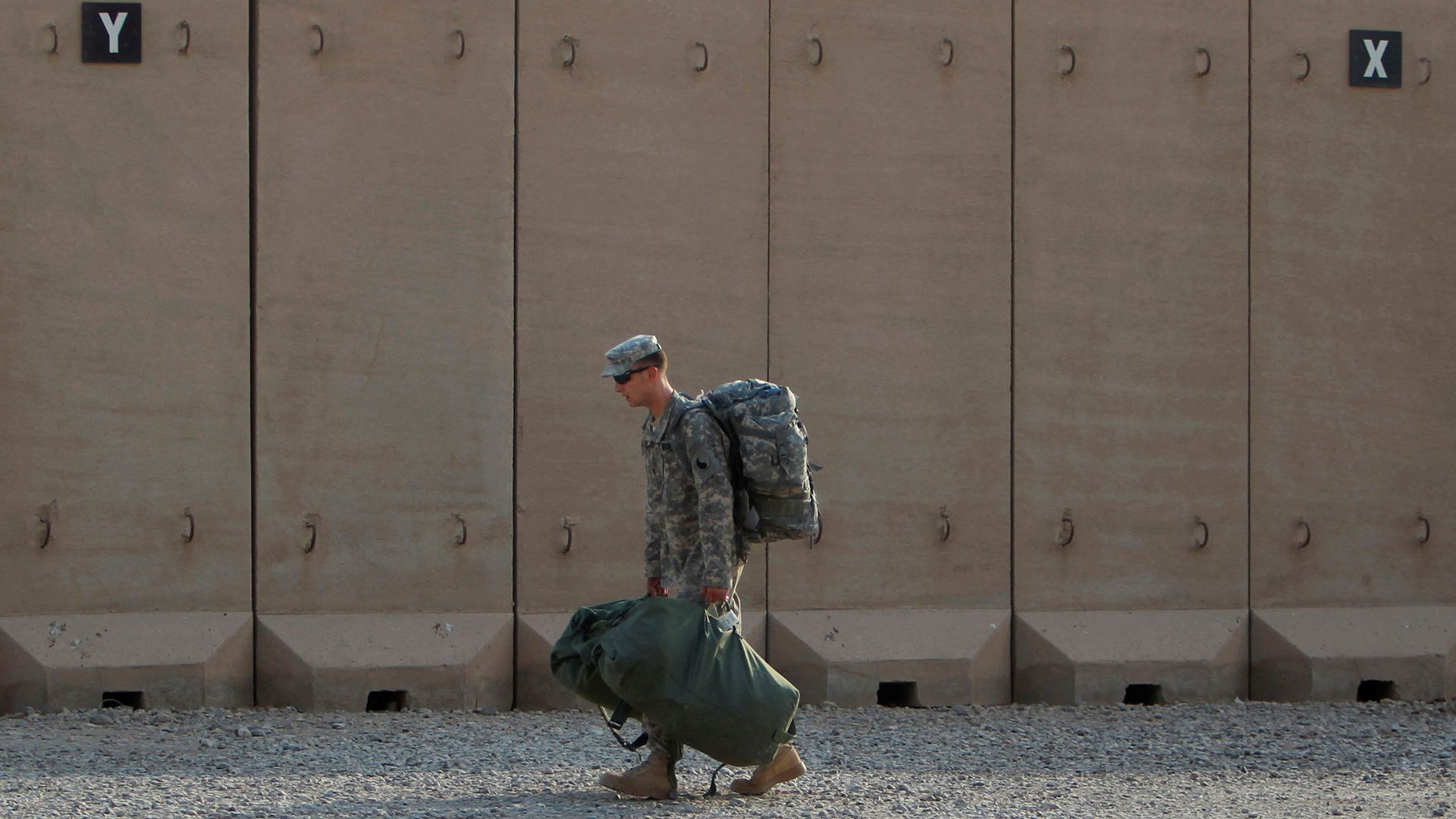
The formal conclusion of Operation Inherent Resolve and the departure of United States forces from Iraq mark the end of a twenty-three-year military entanglement that reshaped the architecture of the Middle East. Beneath the surface of diplomatic communiques and local celebrations lies a complex operational reality. Military withdrawals are not merely political concessions; they represent a fundamental recalculation of risk, resource allocation, and strategic priority. Deconstructing the mechanics of this exit reveals the underlying variables governing regional security, the friction of state-building, and the shifting calculus of regional hegemony.
The Economics of Long Term Military Deployment
To understand the decision to vacate bases such as Al-Asad and Erbil, one must analyze the cost function of sustaining an expeditionary footprint in a hostile operating environment. Permanent military installations require an enormous logistical tail. Supply lines, force protection infrastructure, counter-rocket artillery mortar systems, and aerial defense networks demand continuous capital expenditure and expose personnel to asymmetric attrition.
When the marginal utility of a base falls below its operational risk threshold, rational strategy dictates divestment. For over two decades, the rationale for maintaining boots on the ground in Iraq transitioned from counter-insurgency and state reconstruction to counter-terrorism against residual Islamic State cells. However, intelligence assessments confirmed that the operational capability of these insurgent networks had degraded to a negligible level. Consequently, the maintenance of hundreds of military personnel in isolated outposts transformed from a strategic asset into a fixed liability.
The security environment inside Iraqi territory grew increasingly volatile due to cross-border dynamics involving Iran and its regional proxies. Every installation became a static target, requiring disproportionate defensive resource allocation to safeguard personnel against drone and rocket strikes. By executing a complete withdrawal, the United States removed high-value stationary targets from the tactical chessboard, effectively neutralizing a recurring vulnerability without sacrificing core intelligence-gathering objectives, which can be managed via over-the-horizon capabilities and partner-nation coordination from adjacent countries like Jordan.
The Security Vacuum and State Monopoly on Violence
A core tenet of political science dictates that a stable sovereign state must maintain a strict monopoly on the legitimate use of physical force. The Iraqi state has struggled to fulfill this condition since the 2003 coalition invasion. The presence of powerful non-state armed groups, particularly Iran-aligned militias operating under the institutional umbrella of the Popular Mobilization Forces, complicates Baghdad's internal security architecture.
The Iraqi government faced a dual pressure test: negotiating the complete exit of foreign coalition forces while concurrently attempting to enforce the disarmament of militias that view themselves as primary defenders of national sovereignty. The timeline set for foreign withdrawal was tightly coupled with internal political ultimatums requiring these armed factions to integrate fully under state command or surrender their heavy weaponry.
Without the physical presence of Western forces acting as an independent counterweight, the internal power dynamic within Baghdad shifts dramatically. The Iraqi Security Forces possess conventional capability, but they operate within a deeply factionalized political ecosystem. When foreign deterrents vanish, the internal cost of suppressing well-armed non-state actors rises exponentially. The primary variable determining Iraq's internal stability is whether the central government can project coercive authority across its borders before competing domestic factions fill the power void.
The Regional Power Calculus and Tehran's Strategic Horizon
The strategic anxiety surrounding the American departure centers on the expansion of Iranian influence. Tehran views its western neighbor through a security lens focused on strategic depth, economic corridors, and the maintenance of the so-called axis of resistance. For years, the presence of American garrisons in western and northern Iraq acted as a physical barrier disrupting the direct overland projection of Iranian power from the Zagros Mountains to the Levant.
With these bases shuttered, Tehran gains structural advantages in regional logistics and intelligence dominance. The vacuum left by coalition forces permits Iran-aligned factions to consolidate control over transit routes connecting Iraq to Syria and Lebanon. However, viewing this solely as an unmitigated victory for Tehran ignores internal contradictions within Iraqi nationalism. While factions within the Iraqi security apparatus and political class maintain close ties to Iran, a substantial segment of the population and political elite desires genuine strategic autonomy.
Tehran faces its own operational friction. Direct control over fractured governance structures invites economic and social blowback. If the Iraqi state fails to deliver public services or economic stability post-withdrawal, public discontent will target whichever political entities hold domestic hegemony. The withdrawal does not guarantee unhindered Iranian dominance; rather, it transitions the competition from a military standoff to a complex political contest for institutional capture.
The Kurdistan Vulnerability Vector
Nowhere is the structural impact of the withdrawal felt more acutely than in the Kurdistan Region of Iraq. For decades, Erbil relied heavily on the security umbrella provided by coalition forces stationed at Erbil Air Base. This presence offered a dual defense: deterring aggressive incursions by regional rivals and providing an indispensable shield against asymmetric aerial attacks.
The closure of these northern facilities exposes Kurdish authorities to heightened strategic exposure. Regional actors with hostile intentions toward Kurdish autonomy no longer need to calculate the risk of collateral conflict with embedded American personnel. The removal of advanced air defense systems and radar infrastructure strips away a critical layer of early warning and interception capability.
Kurdish leadership must now pivot toward bilateral security arrangements and diplomatic equilibration with both Baghdad and neighboring states. The absence of an external military backstop forces a rapid recalibration of local defense doctrines. Security in the post-withdrawal era relies on diplomatic flexibility and integration into federal security frameworks rather than reliance on a foreign garrison.
Strategic Realignment and Forward Posture in the Levant
Military withdrawals rarely signify total strategic abandonment; instead, they represent a geographic contraction and a pivot toward more sustainable force postures. The redeployment of personnel and equipment to regional allies such as Jordan illustrates a transition toward an agile, over-the-horizon architecture.
By repositioning assets outside the immediate friction zone of Iraqi domestic politics, defense planners retain rapid-response capabilities without absorbing the static vulnerability of occupying permanent bases inside a volatile sovereign territory. This posture shifts the burden of internal security back onto local governance while preserving regional deterrence through mobile air and naval assets stationed in international waters and allied airspace.
Future regional stability hinges on the operational effectiveness of this distributed posture. Intelligence sharing, specialized counter-terrorism training conducted abroad, and rapid deployment frameworks will determine whether external actors can project power effectively without physical footprints. The exit from Iraqi bases signals the conclusion of an era of heavy, stationary nation-building interventions, replaced by a cold calculus of targeted containment and offshore balancing.