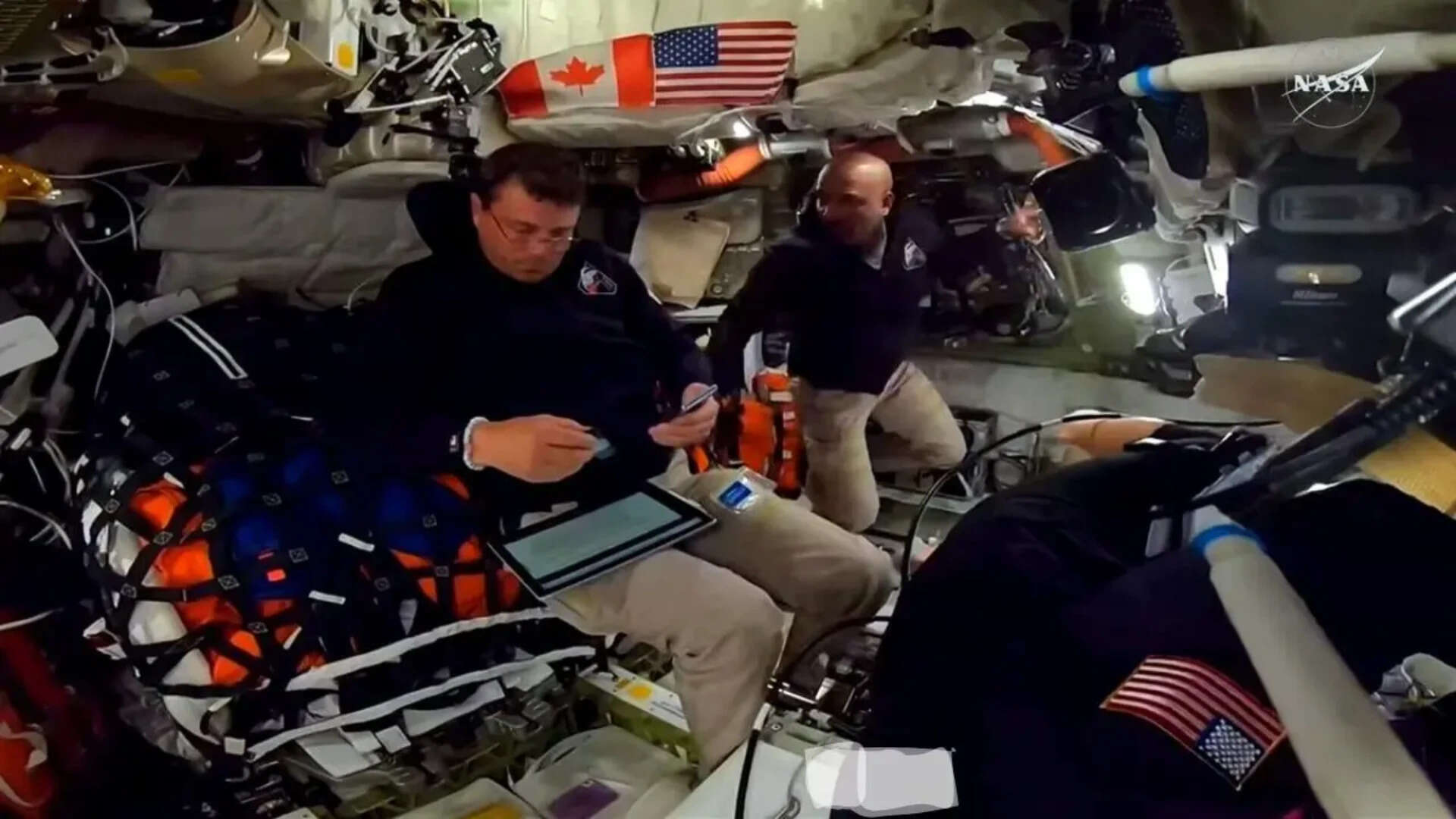
The failure of the Universal Waste Management System (UWMS) aboard the Orion capsule during the Artemis II mission represents a critical bottleneck in deep-space logistics. Beyond the immediate physiological discomfort of the four-person crew, the recurrence of "toilet malfunctions" past the lunar transit midpoint exposes a fundamental fragility in current human-rated spacecraft design: the inability to maintain mechanical reliability in a microgravity fluid-handling environment. This is not a secondary inconvenience; it is a mission-ending risk factor that threatens the feasibility of the subsequent Artemis III landing.
The Triad of Waste Management Constraints
To understand why a seemingly mundane plumbing issue persists in a multi-billion-dollar spacecraft, one must analyze the three competing pressures that define the Orion life support architecture.
- Mass and Volume Density: Every gram of hardware added to the Orion capsule requires an exponential increase in propellant to escape Earth's gravity well. The UWMS was designed to be 65% smaller and 40% lighter than the previous Space Shuttle iterations. This compression of components increases the complexity of the internal pathways, making the system more prone to clogs and mechanical fatigue.
- Fluid Dynamics in Microgravity: In the absence of gravity, fluids behave as "clinging" entities governed by surface tension rather than weight. The system relies on high-speed fans to create airflow that mimics gravity, directing waste into the separator. When the separator fails—as it has during this mission—the risk of "free-floating" biohazards increases, which can migrate into sensitive avionics or the cabin's atmosphere.
- Cross-Contamination Mitigation: Modern waste systems are designed to recover water from urine. A malfunction in the primary collection unit risks the contamination of the entire Environmental Control and Life Support System (ECLSS). If the separator allows liquid to enter the air filtration ducting, it compromises the CO2 scrubbers, potentially leading to hypercapnia (CO2 poisoning) among the crew.
The Logistics of the Point of No Return
The Artemis II crew has already completed the Trans-Lunar Injection (TLI) and is currently on a free-return trajectory. The "halfway point" mentioned in mission logs is a psychological milestone but a logistical trap. At this stage, the crew is committed to the lunar flyby. They cannot "turn back" in the traditional sense; the laws of orbital mechanics dictate that they must use the Moon's gravity to slingshot back toward Earth.
The malfunction occurring after the halfway point creates a specific physiological and operational crisis. The crew is roughly four days away from splashdown. In a closed-loop environment, the accumulation of unmanaged biological waste leads to three immediate degradations:
- Atmospheric Integrity: The buildup of ammonia and other volatile organic compounds (VOCs) exceeds the capacity of the activated charcoal filters.
- Tactical Distraction: Crew members must divert significant cognitive bandwidth from piloting and scientific observation to "manual waste remediation"—a euphemism for physically containing and cleaning leaked fluids.
- Pathogen Proliferation: In a cramped 330-cubic-foot cabin, the inability to seal waste creates a breeding ground for bacteria, which can be inhaled or ingested by the crew, whose immune systems are already suppressed by radiation and microgravity.
Mechanical Root Cause Analysis The Separator Failure
The recurring nature of the UWMS failure suggests a systemic flaw in the centrifugal separator. This component rotates at high speeds to pull liquids away from the air stream. Initial telemetry suggests a "stalling" of the motor or a breach in the seals.
In a standard terrestrial environment, a seal failure leads to a leak. In the Orion’s pressurized 14.7 psi cabin, a seal failure in a vacuum-integrated system can lead to a "pressure differential shock." If the pressure within the waste tank fluctuates unexpectedly, it can backflow into the cabin or, conversely, pull cabin air into the storage tanks, depleting the crew's oxygen supply over time.
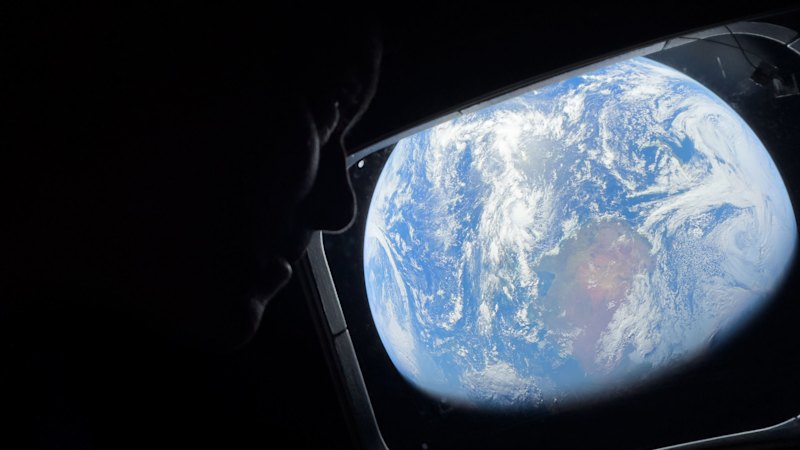
The "getting bigger" moon observed by the crew serves as a grim visual indicator of their distance from help. Unlike the International Space Station (ISS), where a failed toilet can be bypassed by using the Russian segment’s facilities or waiting for a resupply craft, Artemis II is a closed system with zero redundancy. The backup "contingency" options—essentially specialized bags—are a temporary measure that lacks the odor and volume control necessary for a multi-day journey with four adults.
The Cost of Operational Fragility
NASA’s decision to move forward with the Artemis II mission despite known issues with the UWMS in ground testing highlights a "normalization of deviance." This term, coined during the Challenger investigation, refers to the tendency of organizations to accept a recurring technical flaw as a "nuisance" rather than a "threat" until a catastrophic failure occurs.
The strategic impact of this malfunction extends to the Artemis III timeline. The HLS (Human Landing System) and the Gateway station rely on similar fluid-handling logic. If the Orion capsule—the most "mature" piece of hardware in the program—cannot reliably manage the biological output of its crew for a 10-day mission, the 30-day lunar surface missions are functionally impossible.
Quantitative Risk of Mission Extension
Each hour the system remains non-functional, the "Biological Load Factor" (BLF) increases. We can model the risk using a basic decay function of cabin air quality:
$Q(t) = Q_0 e^{-kt} + \frac{S}{V \cdot k}(1 - e^{-kt})$
Where:
- $Q(t)$ is the concentration of contaminants at time $t$.
- $S$ is the source rate (waste generation).
- $V$ is the cabin volume.
- $k$ is the filtration efficiency.
When the waste system fails, $S$ increases as waste is no longer contained, and $k$ decreases as filters become saturated. This creates a linear climb in toxicity that, if left unchecked, will reach the Permissible Exposure Limit (PEL) for ammonia before the Orion hits the Earth's atmosphere.
Tactical Pivot and Engineering Requirements
The immediate priority for mission control is not "fixing" the toilet—repairing a high-speed centrifuge in a cramped, zero-G cabin is a low-probability success—but rather managing the "containment envelope." This involves a three-step triage process:
- Isolation of the UWMS: Sealing off the plumbing to prevent further leakage into the ECLSS loops.
- Pressure Manipulation: Lowering the cabin temperature to slow the metabolic rate of the crew and reduce the volatility of any escaped waste.
- Active Carbon Supplementation: Deploying portable scrubbing canisters (if available) to handle the increased VOC load.
Moving forward, the engineering philosophy for deep-space waste management must shift from "high-efficiency mechanical separation" to "passive phase separation." The reliance on complex moving parts (motors, centrifuges, valves) in a system that cannot be easily serviced is a design philosophy better suited for Low Earth Orbit than the Cis-lunar environment.
The Artemis II failure serves as a definitive proof of concept for the "Reliability Gap." If a system has a Mean Time Between Failures (MTBF) of 200 hours, and the mission duration is 240 hours, the system is mathematically unfit for the mission. The UWMS has now failed to meet its MTBF in two consecutive high-stakes tests (ground and flight).
The strategic play is to mandate a full redesign of the fluid-separation manifold, moving away from the "compact" model toward a redundant, modular architecture that allows for component-level replacement by the crew. Without this shift, the lunar landing will be delayed not by rocket science, but by the fundamental physics of human biology.