Geopolitical defense pacts frequently fail when strategic commitments outpace logistical realities and domestic risk tolerances. The trilateral defense architecture signed by Saudi Arabia, Pakistan, and Turkey—often referred to in strategic circles as the Mecca Pact—faces an immediate structural stress test due to escalating cross-border missile and drone operations by Yemen's Ansar Allah movement, commonly known as the Houthis.
When state actors attempt to extend collective defense umbrellas across asymmetric theaters, friction inevitably develops between sovereign deterrence signaling and operational execution. Islamabad's rapid oscillation between issuing stern warnings to regional militias and subsequently clarifying the narrow, defensive scope of its treaty obligations highlights a classic sovereign dilemma: how to satisfy financial and diplomatic benefactors without entangling national military forces in an intractable quagmire.
The Architecture of the Trilateral Pact and the Collective Defense Trap
The foundational text of the trilateral agreement relies on a classic collective security premise: an armed attack against one signatory constitutes an attack against all. On paper, this creates a formidable deterrent framework, pooling Saudi financial capital, Turkish defense-industrial capabilities (particularly in unmanned aerial systems and electronic warfare), and Pakistan’s extensive conventional military manpower and operational experience.
However, deterrence theory dictates that a threat lacks credibility if the cost of execution exceeds the value of the protected asset for the responding party. For Islamabad, entering a formal defense arrangement with Riyadh provides vital economic stabilization, foreign exchange reserves, and oil concessions. Yet, translating financial dependency into active military intervention against a decentralized, asymmetric adversary in the rugged terrain of the Yemeni highlands creates an asymmetrical risk-reward ratio.
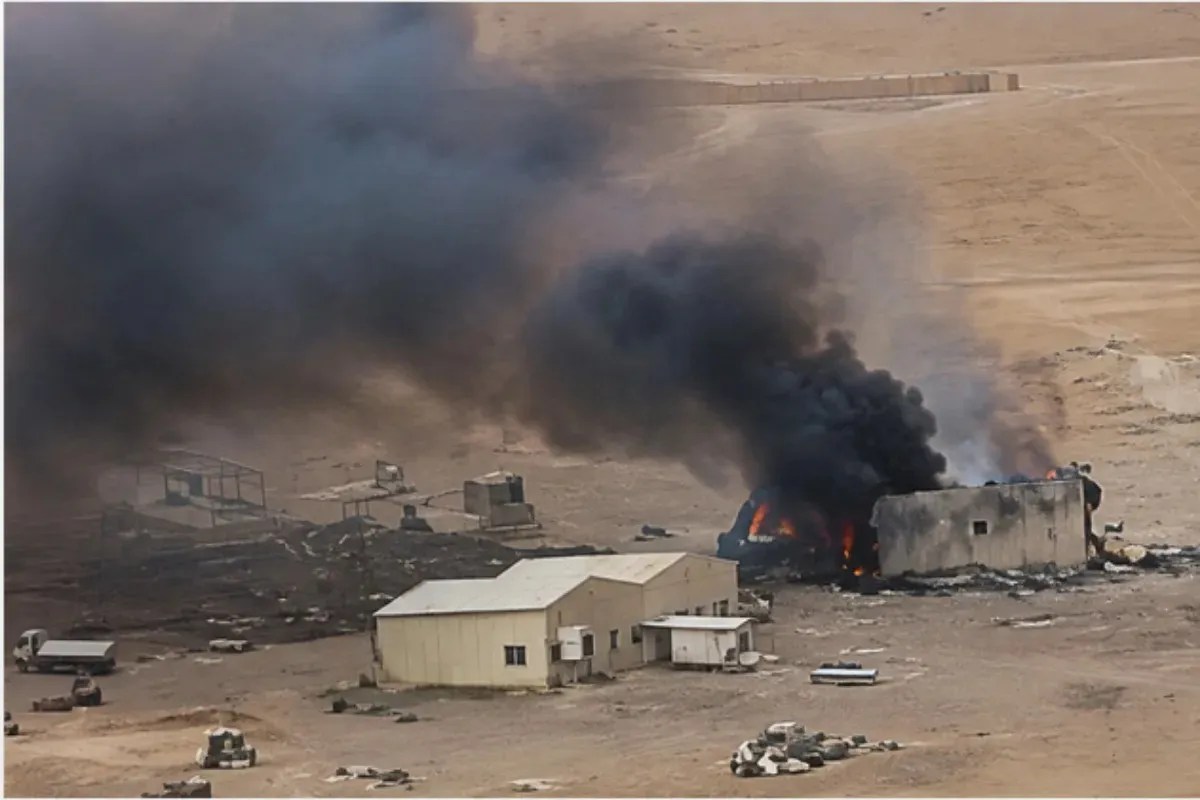
The friction emerged when high-profile kinetic strikes hit strategic infrastructure within the Kingdom, including international airports, air bases, and oil processing facilities. Initial rhetorical posturing from Pakistani defense officials suggested that any regional spillover would automatically operationalize the collective confrontation clauses. Within twenty-four hours, diplomatic reality forced a recalibration. Lawmakers and military planners in Islamabad recognized that invoking collective defense to wage an offensive counter-insurgency campaign in South Arabia risks domestic political cohesion and stretches institutional bandwidth.
The Asymmetric Cost Function in Modern Air Defense
The tactical reality facing the Riyadh-Islamabad-Ankara axis centers on an unfavorable economic and operational cost function. The financial asymmetry of modern missile warfare heavily favors the aggressor. Low-cost loitering munitions and ballistic variants deployed by the Houthis force coalition partners to expend multi-million-dollar interceptor missiles to neutralize cheap projectiles.
Furthermore, centralized critical infrastructure offers a high-value, stationary target set. When air defense networks experience saturation, even a marginal leakage rate results in high-consequence economic and operational disruptions, exemplified by temporary flight suspensions and damage to energy distribution nodes. Deploying external conventional forces—such as Pakistani ground or air assets—does little to alter this core vulnerability unless those forces participate directly in offensive suppression of enemy air defenses (SEAD) and deep-strike campaigns inside Yemeni territory.
Historically, direct foreign military intervention in the northern highlands of Yemen yields diminishing returns. The operational environment neutralizes traditional conventional superiority through decentralized command structures, subterranean fortification, and localized intelligence networks. Pakistan's historical legislative hesitation regarding the Yemen theater—dating back to the parliamentary resolution of 2015—stems precisely from this structural calculus.
Strategic Divergence Between Riyadh and Islamabad
The diplomatic damage control executed by Pakistani civilian and military leadership reflects a fundamental divergence in strategic objectives between the Gulf monarchy and its nuclear-armed ally.
Riyadh requires absolute, unreserved security guarantees that treat any militia-led projectile as an existential casus belli, compelling its partners to absorb the burden of neutralizing external threats at the source. Islamabad, conversely, views the pact through a prism of strategic balancing and economic solvency. The objective is to signal ironclad commitment to the territorial integrity of the Saudi state proper while explicitly legally partitioning that commitment from participation in foreign civil wars or cross-border expeditions.
This divergence creates a credibility gap. If allied defense commitments are perceived as conditional or legally restricted to defensive counter-air operations within Saudi borders, the deterrent value of the trilateral pact degrades. Adversaries quickly calculate the threshold of provocation required to test alliance cohesion without triggering a unified multi-state retaliation.
The Strategic Playbook for Managing Alliance Friction
To stabilize regional deterrence without sliding into open-ended military entanglement, decision-makers must calibrate their instruments along three distinct vectors:
First, decouple territorial defense from offensive expeditionary mandates. Security guarantees must be codified strictly around anti-access and area-denial (A2/AD) shielding of critical infrastructure, utilizing integrated radar and air defense asset sharing rather than deploying combat infantry or offensive air wings to foreign soil.
Second, rebalance the burden of electronic warfare and counter-drone technology integration. Rather than committing conventional manpower, technological partnerships should focus on hardening domestic critical nodes through localized point-defense systems, kinetic-energy alternatives, and directed-energy weapons that reduce the per-engagement cost curve.
Third, maintain absolute clarity in public messaging. Ambiguity in mutual defense pacts invites miscalculation by non-state actors and frustration by state sponsors. Explicitly defining operational boundaries prevents the necessity of sudden diplomatic retreats following bellicose rhetoric.