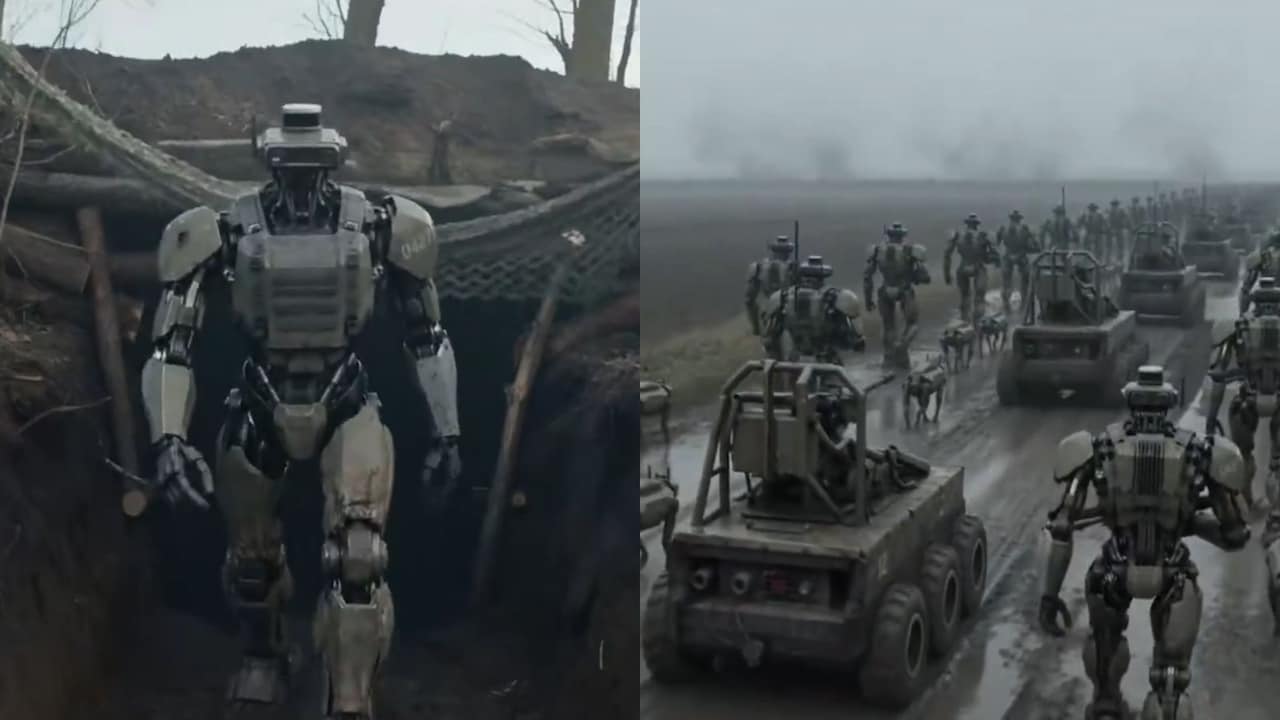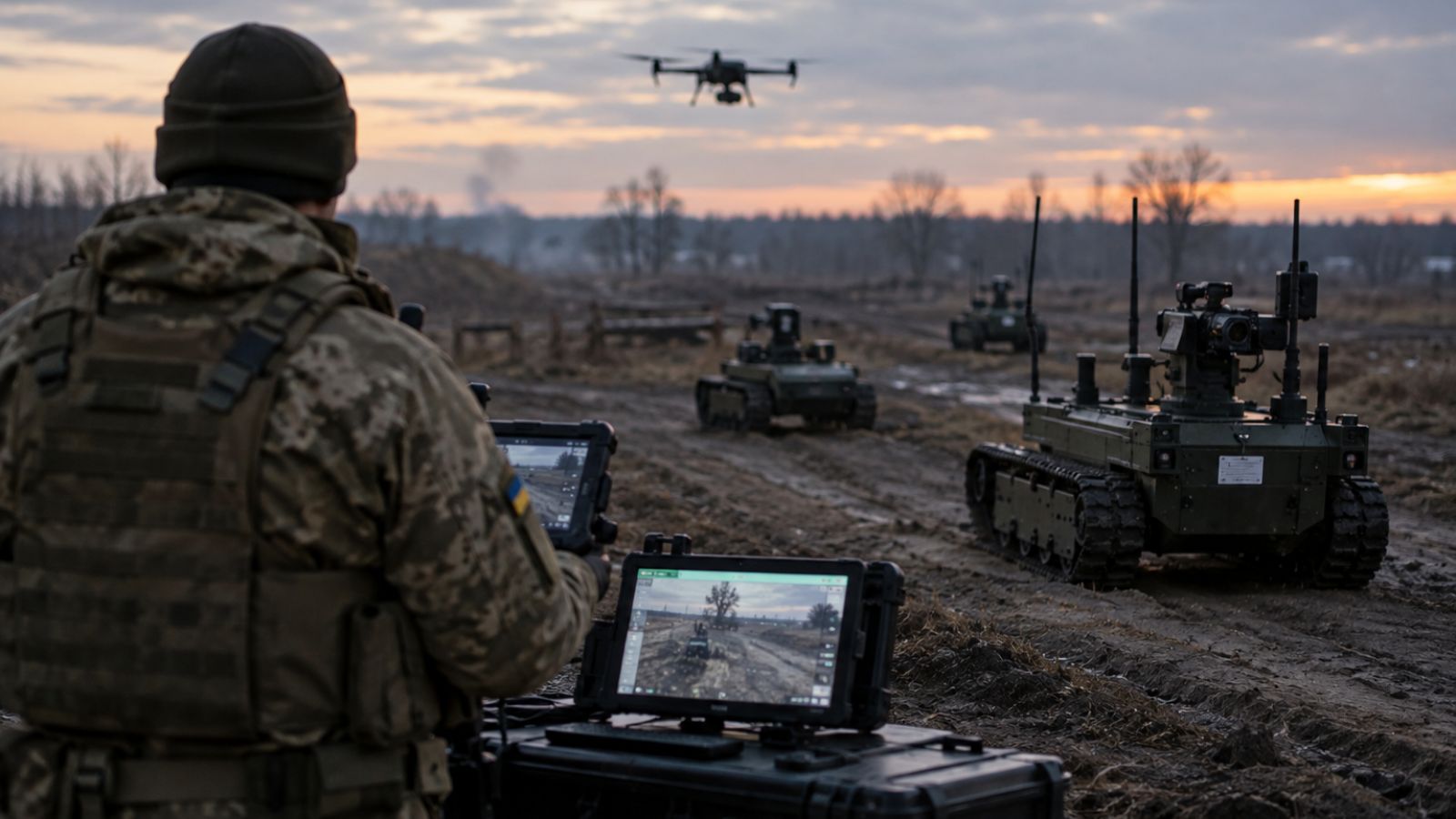
When organizational authority changes hands in a state-level defense apparatus, structural initiatives often emerge to reconcile capital constraints with operational attrition. The launch of the Army of Robots initiative by a former defense minister represents a calculated structural pivot from personnel-heavy attrition models to scalable, capital-intensive remote systems. To understand the viability of this initiative, one must deconstruct the economic, logistical, and technological incentives governing unmanned warfare. The primary utility of autonomous and remote ground systems lies not in revolutionary combat capability, but in the systematic reduction of human exposure to high-entropy battle zones, thereby altering the calculus of force sustainability.
The Cost Function of Human Attrition Versus Automated Replacement
Military operations function under severe resource constraints where human capital is both the most valuable asset and the hardest to replace. Training an infantry unit requires a multi-year investment of time, physical conditioning, tactical instruction, and institutional knowledge. When an operator is incapacitated, the loss extends beyond the individual to the collective combat effectiveness of the unit. If you enjoyed this article, you should read: this related article.
Unmanned ground and air platforms decouple combat exposure from organic personnel presence. The cost function of an automated system comprises three variables: procurement cost, operational maintenance overhead, and vulnerability to electronic warfare interference.
$$C_{system} = P_{procurement} + M_{maintenance} + V_{jamming}$$ For another angle on this development, refer to the recent update from The Verge.
In contrast, the cost function of human deployment includes medical evacuation logistics, long-term state compensation, and the indefinite loss of specialized capability.
The economic argument for mass-producing remote battlefield machinery rests on manufacturing scalability. Unlike specialized military personnel, unmanned platforms can theoretically be manufactured using commercial-off-the-shelf components, reducing unit costs over time through economies of scale. However, this theoretical advantage encounters severe bottlenecks in supply chain resilience and microchip availability.
Operational Bottlenecks in Autonomous Deployment
Transitioning from conceptual initiatives to functional field deployments exposes three distinct structural constraints: power supply limitations, electronic countermeasure vulnerability, and command-and-control latency.
Power density remains the primary physical barrier for ground robotics. Internal combustion engines generate acoustic and thermal signatures that compromise position, while battery electric systems suffer from inadequate energy density-to-weight ratios, restricting operational range and payload capacity. Combat engineering requires continuous power under extreme environmental duress, a demand current battery chemistries struggle to meet without prohibitive weight penalties.
Electronic warfare presents an adversarial feedback loop. Unmanned systems depend on radio frequency links for teleoperation or GPS signals for autonomous navigation. In contested electromagnetic environments, signal jamming severs the tether between operator and machine. Platforms lacking localized edge-computing autonomy become stationary targets the moment communication channels degrade. True operational autonomy requires on-board neural processing capable of target identification and pathfinding without human-in-the-loop intervention, raising ethical and technical complexities that remain largely unresolved.
The Industrial Base Transformation
An initiative of this scale cannot succeed through procurement alone; it requires a structural overhaul of the domestic defense industrial ecosystem. Traditional defense contractors are often optimized for low-volume, high-margin, highly specialized heavy machinery. Remote combat systems demand a different production architecture: decentralized, modular, agile manufacturing modeled on consumer electronics supply chains rather than legacy heavy industry.
This structural shift introduces a tension between standardization and rapid iteration. Battlefield conditions evolve at an accelerated tempo; software patches and hardware modifications must occur in weeks, not years. Centralized bureaucratic procurement channels are structurally incapable of matching the iteration speed of distributed, private-sector technology developers. Therefore, the success of the initiative depends on the state's ability to act as a venture capital allocator rather than a traditional command-and-control procurement agency, integrating small-scale robotics startups into a unified logistical framework.
Strategic Allocation of Capital and Resource Prioritization
To maximize the efficacy of decentralized robotic integration, defense planners must prioritize deployment across three distinct operational tiers based on risk exposure and technological readiness.
Logistics support and supply transport represent the highest immediate return on investment. Moving ammunition, rations, and medical supplies across contested zones using unmanned ground vehicles removes human drivers from high-risk ambush corridors without requiring complex combat decision-making algorithms.
Static defense and perimeter monitoring form the second tier. Stationary sensor nodes and remote-controlled weapon stations reduce the cognitive load on human defenders during protracted positional warfare, maintaining vigilance without fatigue degradation.
Offensive maneuver automation remains the most distant horizon. Navigating unstructured terrain while distinguishing combatants from non-combatants under heavy artillery bombardment exceeds current computer vision and machine learning capabilities. Premature deployment of autonomous offensive systems introduces unacceptable risks of friendly fire and collateral damage.
The transition toward automated combat systems is not a matter of technological inevitability, but an exercise in managing logistical trade-offs. The state that successfully aligns its industrial base with modular manufacturing and solves the power-density constraint will establish a permanent asymmetry in force preservation.