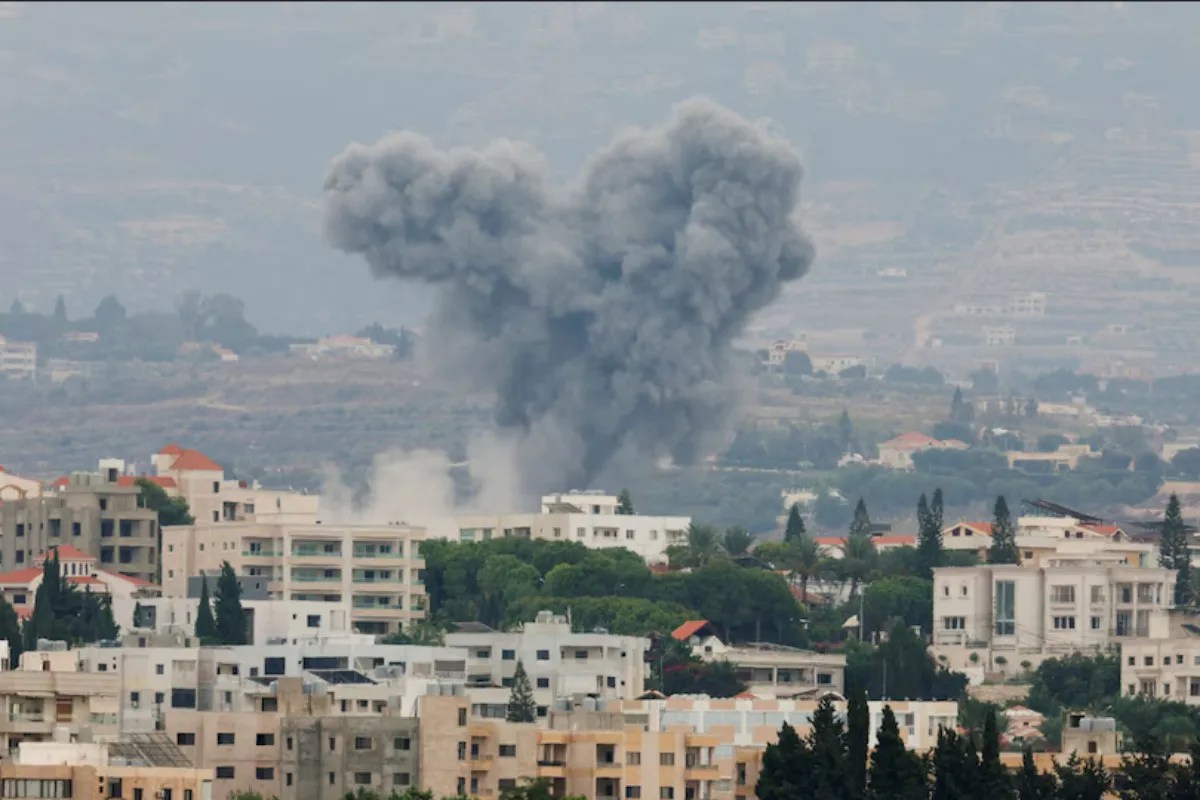
Modern asymmetric warfare environments present severe systemic vulnerabilities for non-combatant information vectors. The operational fatality of a journalist inside an active theatre of engagement is rarely an isolated statistical anomaly. Instead, it functions as the terminal output of a complex chain involving targeting heuristics, sensor-to-shooter loops, and the degradation of institutional protections for press infrastructure. Deconstructing the mechanics behind these incidents requires examining the intersection of autonomous aerial surveillance, urban density, and the erosion of conventional conflict norms.
The Sensor to Shooter Loop in Urban Engagements
In contemporary military operations, the identification and neutralization of targets rely heavily on uncrewed aerial vehicles equipped with multi-spectral optoelectronic sensors and synthetic aperture radar. The architecture of these systems creates an acute compression of the decision-making cycle.
The primary variables governing drone-strike authorization comprise three distinct operational phases:
- Signature Acquisition: Optical sensors and telemetry data capture movement patterns, communication signals, or thermal footprints within a designated zone of interest.
- Algorithmic and Human Triage: Analysts process feeds to categorize entities based on behavioral metadata, movement speed, proximity to known combatants, and electronic signatures.
- Engagement Execution: Munitions deployment occurs via remote command, constrained by the latency of communications networks and the fidelity of the real-time intelligence feed.
When mobile reporting units operate within high-density zones, their transmission equipment, satellite uplink vehicles, and sustained presence near friction points often mimic the electronic and spatial signatures associated with command-and-control nodes. This overlap introduces a high rate of false positives in automated target recognition systems and human vetting processes alike.
Information Infrastructure as a Strategic Asset
The tactical elimination or suppression of journalistic personnel alters the informational equilibrium of a conflict zone. Media operators serve as decentralized telemetry nodes for external observers, transforming localized tactical engagements into globally visible data points.
When this infrastructure is compromised, the primary systemic effect is the restriction of independent verification channels. This dynamic can be mapped across three distinct operational dimensions:
- Epistemic Vacuum: The removal of independent reporters reduces the volume of primary-source documentation, forcing reliance on institutional or belligerent press releases.
- Chilling Effect: Survival heuristics among remaining field reporters dictate withdrawal from high-risk zones, systematically degrading frontline visibility.
- Attribution Deficit: Without continuous, on-ground verification, the forensic reconstruction of specific kinetic strikes becomes heavily reliant on contested post-incident evaluations.
The Cost Function of Modern Combat Journalism
Operating within an active engagement zone introduces an extreme risk matrix where the standard cost-benefit calculations of professional reporting break down entirely. Traditional risk mitigation strategies, such as distinct protective insignia, press vests, and advance coordination of coordinates with operating militaries, exhibit diminishing returns in environments defined by high-frequency urban combat and automated threat evaluation.
When kinetic force is deployed via precision-guided munitions launched from high-altitude platforms, visual identification of small-scale markers like body armor labels or cameras is frequently subordinated to broader telemetry and pattern-of-life analysis. Consequently, the safety of a journalist ceases to be a function of their explicit designation and becomes entirely dependent on the macro-level targeting parameters of the operating force.
Strategic Outlook on Information Security in Zones of Hostility
The systemic vulnerability of reporters operating under modern aerial surveillance indicates that traditional protocols for conflict reporting require a fundamental structural overhaul. Mitigation of future casualties necessitates a shift from reliance on external legal protections toward decentralized, hardened technical countermeasures. Organizations must evaluate whether standard deployment models remain viable when tactical aerial assets treat high-bandwidth electronic transmissions and mobile observational units as high-priority signatures. The future integrity of frontline documentation depends on decoupling journalistic communications from patterns that intersect with automated military targeting criteria.