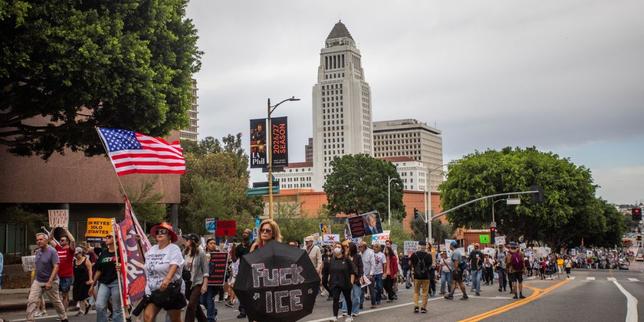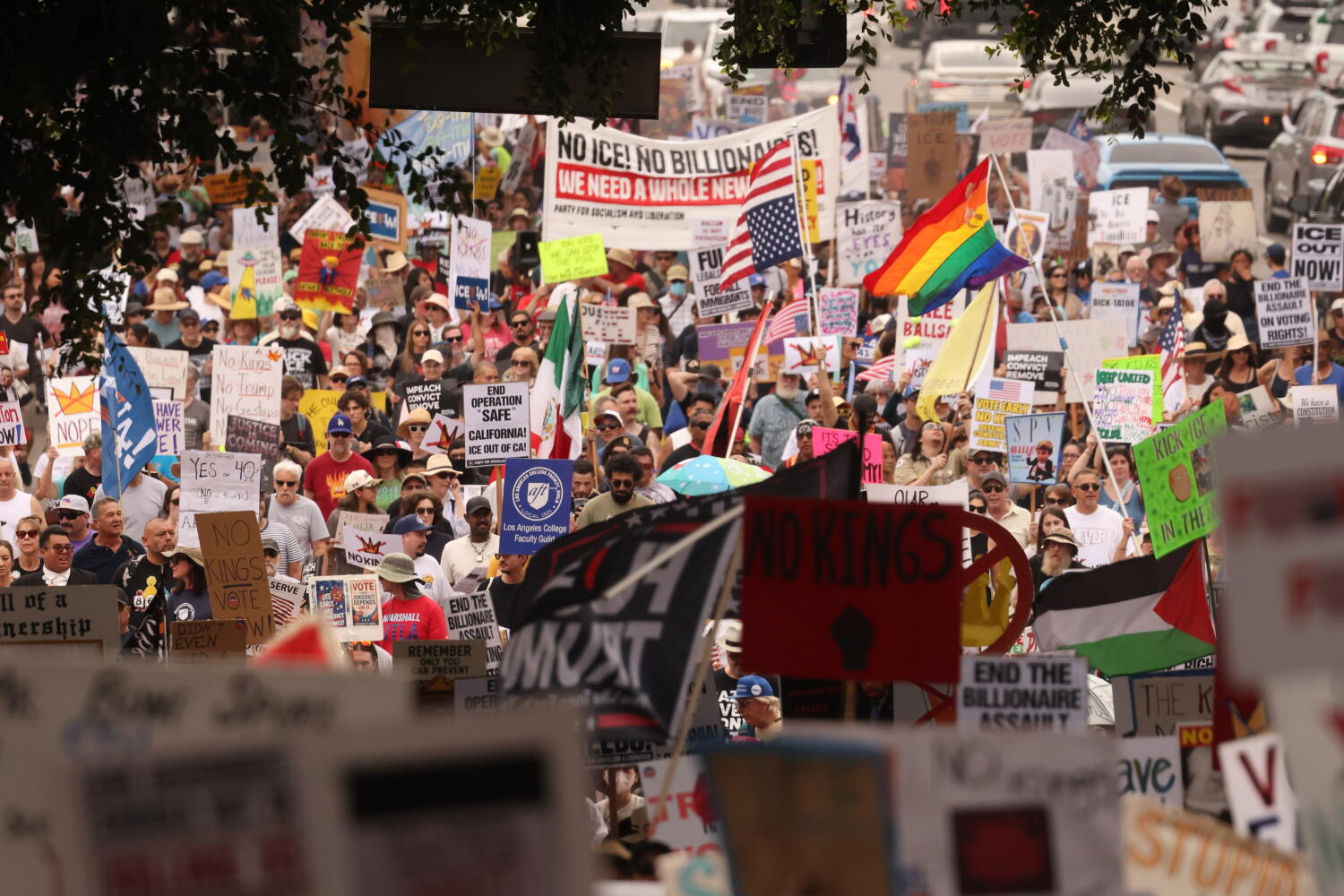
Mass street demonstrations and early-voting drives operate on fundamentally different behavioral and institutional mechanisms, which means a surge in protest visibility across California cannot be treated as a direct measure of incoming ballots. When movement organizers pair anti-executive-power rallies with get-out-the-vote pushes—as seen in the October 2026 "No Kings" mobilization ahead of the midterm elections—the central analytical problem is conversion efficiency: how expressive political action translates into low-friction administrative compliance over a multi-week voting window.
Standard coverage of protest-to-ballot campaigns frequently collapses two distinct phenomena into a single narrative. The first is signaling and coalition maintenance, where public gatherings demonstrate grievance, test geographic reach, and keep volunteers active. The second is turnout engineering, which depends on ballot delivery, mail-in return timing, voter file targeting, and ballot-measure or congressional salience in specific districts. Treating crowd size as a proxy for ballot volume misses the friction points between showing up on a Saturday afternoon and mailing or dropping off a ballot.
Deconstructing the Protest-to-Turnout Thesis
To evaluate claims that protests drive early voter turnout in California, it helps to separate the underlying argument into three analytical layers rather than reading street activity and voting rates as a single wave.
1. The Signaling Function of Street Mobilization
Large-scale demonstrations primarily solve a collective-action visibility problem. Across the nationwide "No Kings" series—which unfolded across four major dates in June 2025, October 2025, March 2026, and October 2026—organizers such as the 50501 Movement, Indivisible, MoveOn, and local allies used distributed events to project opposition to executive overreach, immigration enforcement, and perceived threats to election administration. In California, events spanned major metro cores like Los Angeles and the Bay Area alongside suburban and Central Valley hubs.
From a political-science standpoint, mass rallies act as costly signals of intensity among already sympathetic participants. They lower isolation for activists, recruit first-time volunteers, and generate media attention that frames the stakes of an upcoming election. What a rally cannot do on its own is alter the baseline voting calculus of disengaged or cross-pressured residents who never attend a political demonstration.
2. The Mechanics of Early Voting in California
Unlike states where "early voting" means waiting in line at an early-vote center during a narrow pre-election window, California's election architecture is heavily anchored in universal vote-by-mail alongside in-person voting options and drop boxes. That structural difference changes how mobilization campaigns work:
- Habit vs. Event: Mailing back a ballot is a household logistics task spread across weeks, whereas a protest is a synchronous public event on a specific day.
- Pre-Existing High Propensity: People who turn out to political protests already exhibit high civic engagement and strong partisan or issue alignment. In high-turnout electorates, a large share of protest attendees are already likely voters—meaning their participation represents reinforcement or earlier ballot return rather than net-new electorate expansion.
- Spatial Mismatch: Rally density often concentrates in urban centers or symbolic civic spaces, while competitive House races, ballot propositions, or local contests in California hinge on turnout differentials in specific suburban, exurban, or Central Valley precincts.
3. Why Crowd Size and Early Vote Totals Diverge
Reporting on the October 17, 2026 "No Kings" day of action noted a deliberate shift toward early voting and "anti-election sabotage" messaging, alongside smaller crowds in several locations compared with earlier mass demonstrations in 2025 and March 2026. That divergence is an educated hypothesis about campaign mechanics rather than proof that the mobilization failed or succeeded at the polls.
A smaller street crowd paired with an early-vote push can occur for several reasons:
- Tactical Reallocation: Organizers may shift volunteer hours from staging large marches to canvassing, phonebanking, ballot curing, or organizing "poll walks" where neighbors accompany one another to vote.
- Issue Fatigue or Cycle Timing: Multi-wave protest series often experience attendance fluctuations across cycles even when core activist networks remain intact.
- Timing Lag: Early ballots are cast across a multi-week period, so daily or weekend rally energy does not map onto a single day's vote count.
Known Facts vs. Analytical Hypotheses
Separating verified reporting from causal interpretation prevents overstating what any single rally achieves.
- Known Facts: Organizers staged four major "No Kings" protest waves between June 2025 and October 2026, with the October 17, 2026 mobilization explicitly oriented around encouraging early voting ahead of the midterm elections. Demonstrations took place across California—including Los Angeles and Northern and Southern California communities—with organizers framing early voting as a safeguard against election disruption and a way to build decisive margins.
- Educated Hypotheses: Activist-led early-voting pushes are most likely to affect timing (getting already-motivated supporters to return ballots early) and volunteer recruitment (converting rally attendees into canvassers during the final stretch before Election Day). Their direct impact on net turnout among low-propensity voters is likely more modest unless paired with targeted voter-file outreach in swing or closely contested districts.
Cause-and-Effect Chains Most Coverage Misses
When reporters treat protests and early voting as a simple cause ("activists hold rallies") and effect ("early turnout rises"), four downstream dynamics get overlooked.
Volunteer Supply vs. Voter Persuasion
Rallies are primarily supply-side engines for campaign labor. A demonstration of several hundred or several thousand residents produces a pool of motivated people who are willing to knock doors, text voters, or host neighborhood voting parties. Those volunteers—not the rally itself—do the repetitive outreach required to reach irregular voters. Without a handoff from street event to structured field shifts, rally energy dissipates quickly.
Acceleration vs. Addition in Vote-by-Mail Systems
In a universal mail-ballot environment, an increase in ballots returned during the middle of the voting window can reflect acceleration (voters returning ballots two weeks early instead of on Election Day) rather than addition (people who would otherwise have stayed home). Acceleration still matters operationally—it reduces late-stage mail bottlenecks and gives campaigns cleaner data on who has already banked a ballot—but it should not be confused with expanding the total electorate.
Salience Concentration Across Districts
California is too large and heterogeneous for a statewide protest narrative to apply evenly everywhere. A rally in a heavily partisan urban core sends a strong signal, yet marginal shifts in competitive congressional or state legislative districts depend on local ballot competition, candidate visibility, and targeted ground games in those specific counties.
Counter-Mobilization and Trust Friction
Framing early voting around countering perceived election sabotage can energize core supporters who feel urgency, yet it can also heighten skepticism or polarization among undecided voters who view procedural warnings with suspicion. How a message lands depends heavily on messenger credibility and whether the call to action feels empowering rather than alarmist.
Operational Playbook for Evaluating Protest-to-Polls Campaigns
Anyone tracking or running a mobilization effort that links street action to early voting can test its real-world traction using a concrete operational sequence rather than relying on crowd estimates alone.
- Map Events to Target Precincts: Overlay rally and canvassing locations onto competitive districts or low-turnout precincts rather than evaluating statewide activity in aggregate.
- Track Conversion Actions, Not Just Attendance: Measure concrete post-event commitments—such as signed volunteer shifts, voter-registration checks, or peer-to-peer ballot reminders—immediately following each gathering.
- Separate Early Return Velocity from Final Turnout: Compare mid-window ballot return rates against historical baselines while accounting for mail-in habits, reserving judgment on net turnout gains until final post-election voter-file reporting is available.
- Audit Messaging for Actionability: Ensure calls to vote early specify clear, local steps—such as checking registration status, using an official county drop box, or joining a group vote—rather than relying solely on broad national slogans.
Strategic Limitations and Edge Cases
No mobilization model works uniformly across every context. Weather, local permitting rules, competing news cycles, and activist burnout can depress street attendance even when underlying voter motivation is high—or conversely, a large crowd can mask weak follow-through in uncompetitive or poorly organized precincts. Moreover, public rallies have inherent diminishing returns as an election nears its final days, when direct peer contact and mail/drop-box reminders carry far more marginal weight than large public assemblies.
Tactical Play for the Next Mobilization Cycle
Treat street demonstrations strictly as top-of-funnel recruitment and salience spikes anchored to specific field milestones—such as the opening of mail-ballot dispatch or a defined ballot-curing window—and route every attendee into a concrete 48-hour follow-up action (a canvassing shift, a registration check, or a scheduled group drop-off) so protest visibility is converted into measurable voter contact before attention moves on.