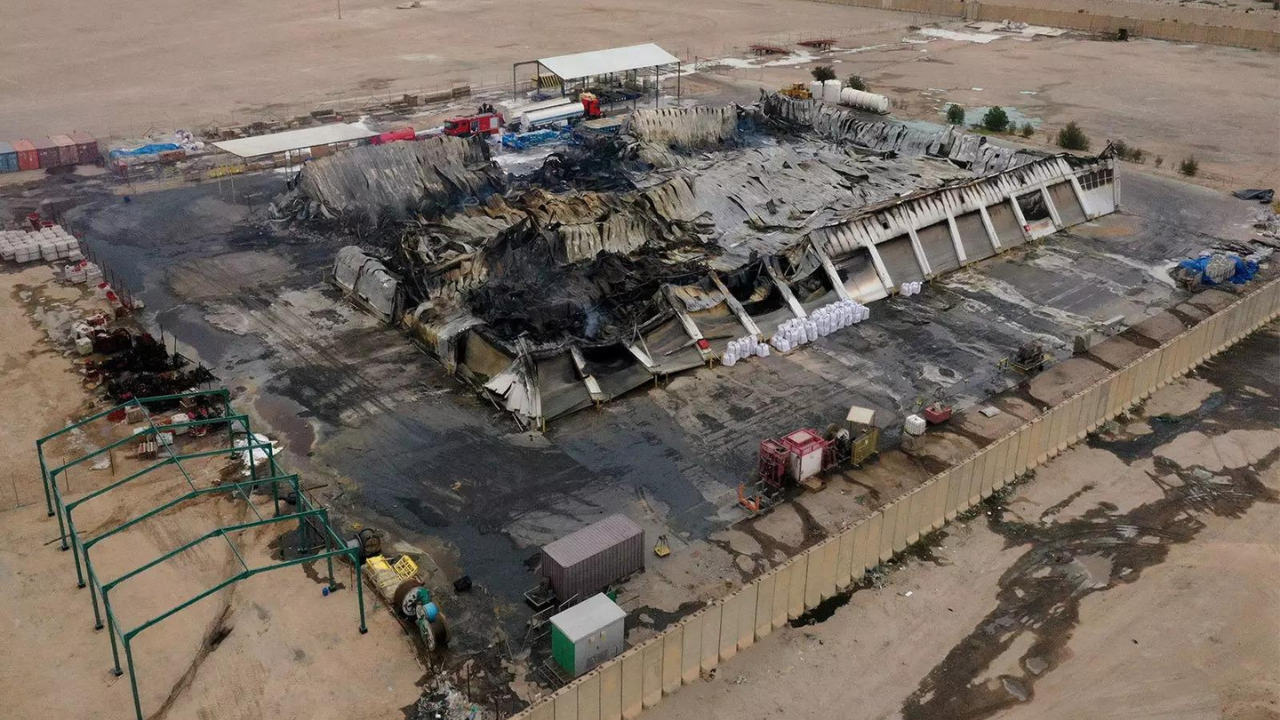
The transformation of water from a renewable resource into a manufactured industrial product has fundamentally altered the security architecture of the Middle East. While traditional water disputes centered on the diversion of river systems or the over-pumping of shared aquifers, the region's current reliance on Sea Water Reverse Osmosis (SWRO) and Multi-Stage Flash (MSF) distillation has shifted the risk profile from environmental diplomacy to critical infrastructure protection. In states where over 90% of potable water is derived from the sea, a desalination plant is not merely a utility; it is a single point of failure for national stability.
The Industrialization of Hydrology
The Middle East represents the highest global concentration of desalination capacity, a necessity driven by the intersection of absolute water scarcity—defined as less than 500 cubic meters of renewable freshwater per capita per year—and rapid urbanization. This shift replaces the hydrological cycle with an industrial supply chain. This supply chain is defined by three rigid dependencies:
- Energy Intensity: Desalination requires a continuous, high-load power supply. For SWRO, this involves electricity to drive high-pressure pumps; for thermal MSF, it requires steam usually harvested from co-located power plants.
- Chemical and Technical Inputs: The process relies on a steady influx of pre-treatment chemicals, anti-scalants, and specialized membranes.
- Coastal Centralization: For logistical and physics-based reasons, these plants must sit on the coastline, exposing them to maritime threats and making them static, high-visibility targets.
This industrialization means that "water stress" is no longer a slow-moving climate phenomenon but a high-speed mechanical risk. If a pump fails or a membrane is fouled by an oil slick, the water supply stops instantly. There is no "buffer" comparable to a natural reservoir.
Weaponization Metrics and the Cost of Interruption
In modern kinetic warfare and gray-zone operations, desalination plants are targeted not for their intrinsic value, but for the disproportionate "cascade effect" their destruction triggers. The logic of targeting these facilities follows a specific cost-benefit function where the attacker seeks to maximize civilian or economic disruption while minimizing the munitions expended.
The strategic value of a desalination plant to an adversary is calculated via the Recovery Time Objective (RTO). Unlike a bridge or a road, which can be bypassed or temporarily patched, a hit on a high-pressure manifold or a thermal brine heater can take months or years to repair due to the bespoke nature of the components.
The Kinetic Vulnerability
Standard munitions can easily penetrate the unhardened structures of a utility plant. The most critical vulnerabilities are:
- Intake Systems: Sabotage of the underwater pipes that draw in seawater.
- Energy Interconnects: Destroying the substation that feeds the plant is often easier than hitting the plant itself and yields the same result.
- Brine Discharge: Disrupting the outflow can lead to localized environmental shifts that render the intake water untreatable by the existing membrane configuration.
The Cyber-Physical Feedback Loop
Modern plants utilize Industrial Control Systems (ICS) and SCADA networks to manage the delicate pressure balances required for reverse osmosis. A cyber-induced "over-pressure" event can cause catastrophic physical failure of the pressure vessels, essentially turning a digital intrusion into a physical explosion. This method allows for plausible deniability, a key feature in modern regional proxy conflicts.
The Economic Asymmetry of Water Defense
The defense of water infrastructure creates an economic imbalance. An attacker can use a drone costing $20,000 to disable a facility that cost $1.5 billion to construct and serves 2 million people. The defender, conversely, must invest in:
- Active Defense: Surface-to-air missile batteries (e.g., Iron Dome, Patriot, or S-400) stationed specifically to guard utility clusters.
- Redundancy Costs: Building "ghost" capacity or interconnected grids to move water from a functioning plant to a zone where a plant has been disabled.
- Storage Buffers: Strategic water reservoirs. However, for a city like Riyadh or Dubai, a 48-hour storage buffer requires massive land use and subterranean engineering, adding billions to the "security tax" on every gallon produced.
Proximity and the Gulf’s Enclosed Sea Risk
The Persian Gulf presents a unique geographical bottleneck. It is a shallow, semi-enclosed sea with a slow flushing rate. This creates a secondary, non-kinetic form of "water warfare": Environmental Sabotage.
An oil spill, whether accidental or intentional (as seen during the 1991 Gulf War), can force the immediate shutdown of every desalination plant along hundreds of miles of coastline. Modern membranes are extremely sensitive to hydrocarbons. Even a thin sheen of oil can clog the pores of the RO membranes, requiring a total and expensive replacement of the filter media. This makes "pollution" a viable strategic weapon that circumvents traditional missile defenses.
Furthermore, the rising salinity of the Gulf—caused by the concentrated brine discharge from the very plants it feeds—increases the osmotic pressure required for the process. This means that as the region becomes more dependent on desalination, the process becomes more energy-intensive and the "fail state" of the equipment becomes more likely under stress.
Strategic Shift from Supply to Resilience
The current trend in regional security is the transition from "Centralized Mega-Plants" to "Distributed Desalination." Large-scale facilities like Ras Al Khair in Saudi Arabia, while efficient, represent too large a target.
The strategic roadmap for the next decade involves:
- De-concentration of Assets: Moving toward smaller, modular plants that are easier to hide, harden, or replace.
- Hybridization: Integrating solar-thermal and wind-powered RO to decouple the water supply from the national electrical grid. This prevents a "black start" scenario where a power grid failure leads to a permanent water crisis.
- Inland Brackish Desalination: Utilizing deep-well salty aquifers located away from the vulnerable coastlines, though these resources are finite and often non-renewable.
- Trans-Border Water Grids: Much like electrical interconnections, a regional water grid would allow states to "export" water to a neighbor whose plants have been compromised. However, this requires a level of political trust that currently does not exist in the Middle East.
The weaponization of water in the Middle East has moved past the "scarcity" phase and into the "infrastructure" phase. The threat is no longer that the water will run out, but that the machines making it will be broken. Security analysts must treat the seawater intake pipe with the same level of tactical importance as a national border or a primary oil terminal. Failure to harden these systems or to create rapid-response repair capabilities ensures that any future kinetic conflict will immediately escalate into a humanitarian catastrophe of the highest order.
States should prioritize the development of mobile, containerized desalination units that can be deployed via heavy-lift aircraft to restore local supply within hours of a strike, bypassing the years-long lead times of permanent plant reconstruction.

:max_bytes(150000):strip_icc()/abby-marcus-wedding-couple-reception-outfits-241-1018-2000-78693942f5be4de9b83f8755450767bb.jpg)
