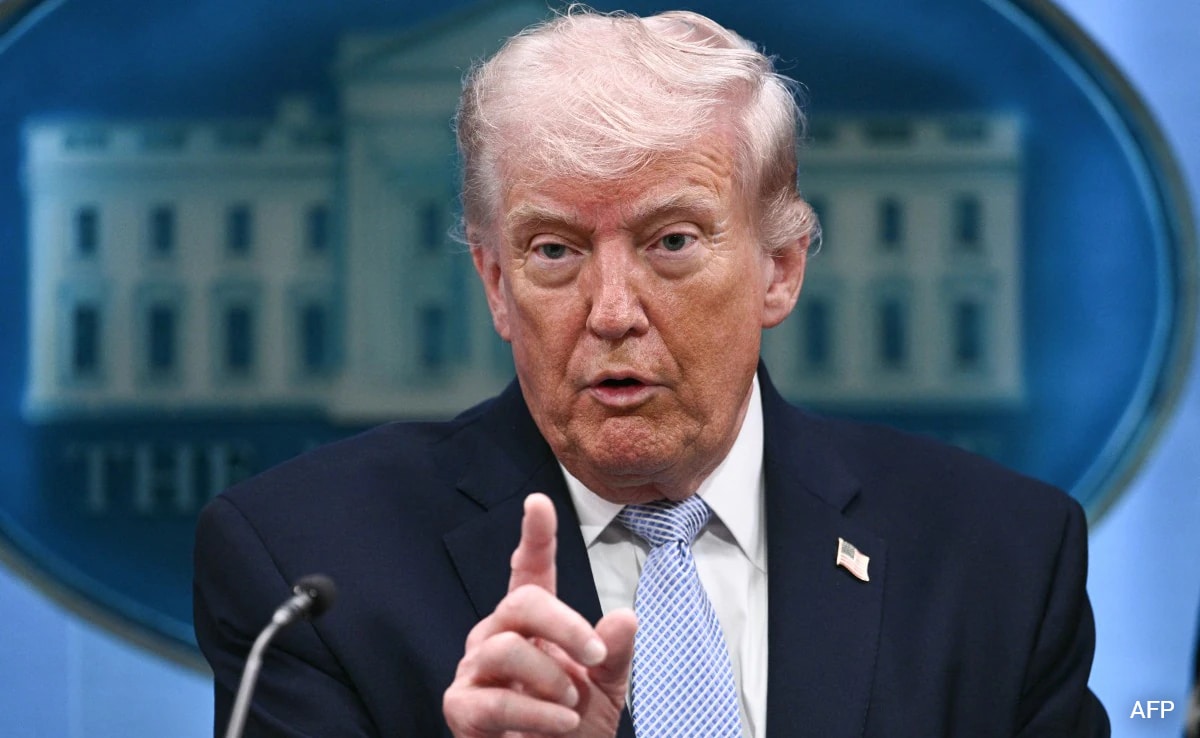
Donald Trump’s refusal to provide a straight answer regarding potential strikes on Iran is not a lapse in communication. It is a calculated exercise in strategic ambiguity. During a recent interaction with the press, the former president and current candidate flatly dismissed inquiries about how he would handle Iranian aggression, asking "Why would I tell you that?" This interaction highlights a fundamental shift in how executive power is wielded in the public square. By keeping his cards hidden, Trump seeks to maintain a posture of unpredictability that he believes serves as a deterrent to foreign adversaries.
The immediate reality is that answering such a question in a media scrum provides zero tactical advantage and significant political risk. If he commits to military action, he alienates the isolationist wing of his base. If he rules it out, he appears weak to the hawks. Instead, he opts for a vacuum.
The Doctrine of Unpredictability
For decades, American foreign policy operated on the rails of "red lines" and "strategic clarity." Under those rules, the U.S. would explicitly state what actions would trigger a military response. The goal was to prevent miscalculation. Trump’s approach flips this script entirely. He operates on the belief that if an adversary doesn't know where the line is, they have to treat every inch of ground as potentially explosive.
This isn't a new invention. Richard Nixon famously toyed with the "Madman Theory," wanting the Soviet Union to believe he was volatile enough to use nuclear weapons. Trump has modernized this. By refusing to telegraph his moves to reporters, he is signaling to Tehran that nothing is off the table, while simultaneously avoiding the baggage of a specific promise. It is a high-stakes game of psychological warfare played out through the 24-hour news cycle.
The Cost of Public Silence
Critics argue that this lack of clarity creates a dangerous void. When the leader of a global superpower refuses to outline a framework for engagement, it can lead to accidental escalation. Diplomats depend on predictable patterns to negotiate. Without them, the risk of a shooting war started by a misunderstanding increases.
However, from the perspective of Trump’s advisors, the traditional diplomatic framework has failed to stop Iran’s regional expansion or its nuclear ambitions. They view the "red line" era as a period of managed decline where enemies learned exactly how much they could get away with without getting hit. In their eyes, the reporter's question isn't a request for information; it's a trap designed to hem in the executive branch.
Intelligence Gaps and Political Theater
There is a practical layer to this evasion that often gets ignored by the headline-chasing press. No candidate, even a former president, has access to the full, real-time tactical intelligence required to greenlight a strike on a sovereign nation until they are sitting in the Situation Room. Providing a definitive "yes" or "no" on Iranian strikes without the latest briefing on troop movements, air defense capabilities, and collateral damage estimates would be malpractice.
Trump’s dismissiveness serves as a shield. It allows him to bypass the technical complexities of Middle Eastern warfare while maintaining his "strongman" brand. The "Why would I tell you that?" response is effectively a way to say that the information is too valuable to be given away for free in a soundbite.
The Audience Beyond the Press Gallery
When Trump speaks, he is talking to three distinct groups. First is the domestic voter who is tired of "forever wars." To them, his refusal to commit to a strike sounds like restraint. Second is the international community, specifically the hardliners in the Iranian Revolutionary Guard. To them, his silence sounds like a threat. Third is the traditional media, whom he treats as a hostile entity. By denying them a headline, he asserts dominance over the narrative.
The media often interprets these exchanges as evidence of a lack of a plan. That might be true. But in the world of high-level geopolitics, a plan that is known to everyone is rarely a plan that works. The tension between public transparency and national security is at an all-time high, and the Middle East is the primary theater for this conflict.
Regional Realities and the Shadow War
The situation on the ground in the Middle East does not wait for election cycles. Iran has spent the last several years building a "ring of fire" via proxies in Lebanon, Yemen, and Iraq. Any strike by the United States would not be an isolated event. It would trigger a cascade of responses that could shut down the Strait of Hormuz and spike global oil prices overnight.
When a reporter asks about "striking Iran," they are asking about the potential start of World War III. Treating that question with the gravity of a policy white paper is impossible in a three-minute interview. The refusal to engage is, in a strange way, more honest than a prepared talking point. It acknowledges that the stakes are too high for casual conversation.
The Shift in Executive Communication
We are witnessing the death of the traditional press briefing. The era where a president would stand at a podium and explain the nuances of the Monroe Doctrine or the Marshall Plan is gone. Communication is now a weapon. It is used to distract, to intimidate, and to signal.
Trump’s interaction is a symptom of a larger trend where the "how" of governance is hidden behind a wall of personality. This creates a situation where the public is left guessing about the actual direction of the country’s defense policy. While this might keep adversaries on their toes, it also leaves the American public in the dark about the risks being taken in their name.
The Logistics of a Potential Strike
If the U.S. were to move against Iranian assets, it would involve a massive coordination of carrier strike groups, stealth bombers, and cyber warfare units. These are not decisions made on a whim. They are the result of months of targeting exercises and diplomatic maneuvering with allies like Israel and Saudi Arabia.
By dismissing the question, Trump avoids having to explain how he would manage these alliances. He doesn't have to answer for the concerns of European partners who still want to revive nuclear deals. He doesn't have to explain how he would protect American troops stationed in Iraq from the inevitable retaliation. Silence is the ultimate luxury for a politician who wants to remain nimble.
Hard Power vs. Soft Talk
The world has seen that Trump is willing to take kinetic action when he deems it necessary. The 2020 strike on Qasem Soleimani is the primary example. That move was not telegraphed. It was not debated in the press. It simply happened.
This history gives his current silence a weight that other candidates lack. When he says he won't tell the press his plans, the subtext is that he already has a track record of acting without warning. This is the core of his deterrent strategy. It isn't based on what he says, but on the fact that he refuses to say anything at all.
The Vulnerability of Ambiguity
While the "madman" approach has its benefits, it also has a shelf life. Allies need reassurances. Markets need stability. If the U.S. position on the world's most volatile region is entirely dependent on the mood of one man, the global system begins to fray.
Investment in the Middle East relies on the belief that the U.S. will act as a stabilizing force. When that stability is replaced by a "wait and see" attitude, capital begins to flee. We are seeing this play out in the fluctuating costs of shipping and insurance in the Red Sea. The lack of a clear American doctrine creates an opening for other powers, namely China and Russia, to step in as the "rational" actors in the room.
Redefining the Reporter's Role
The tension in that press interaction also signals a change in the role of the investigative journalist. If the executive branch refuses to provide information through traditional channels, the work must move elsewhere. Following the money, the troop movements, and the quiet meetings in regional capitals becomes more important than getting a quote on a tarmac.
The question "Why would I tell you that?" is a challenge to the entire system of public accountability. It suggests that the public has no right to know the intentions of its leaders until those intentions are already being executed in the form of missiles and troop deployments.
The geopolitical landscape of 2026 is far more complex than it was a decade ago. Proliferation is faster, information travels instantly, and the margin for error is razor-thin. In this environment, the words a leader chooses not to say are often more important than the ones they do. Trump knows this. He has turned his refusal to answer into a brand of its own, a shield against scrutiny and a sword against his enemies. The "hard-hitting" response isn't a policy paper; it's the sound of a door slamming shut.
Stop looking for the answer in the transcript. The answer is the silence itself.