The white-knuckle stand-off in the Persian Gulf has reached a breaking point, dissolving the fragile peace of a weeks-old ceasefire into a dangerous theater of open conflict. President Donald Trump declared on Sunday that American forces struck Iran very hard overnight, flattening air defense systems and naval assets to keep the Strait of Hormuz open for global commercial shipping. Despite Washington's absolute insistence that traffic is flowing normally, Iran's Islamic Revolutionary Guard Corps announced the absolute closure of the world’s most critical energy artery. The stark contradiction reveals a deeper crisis that military power alone cannot solve.
For decades, naval theorists have warned about the vulnerability of this narrow choke point. Those warnings are no longer theoretical. What unfolded over the last twenty-four hours is the violent unspooling of a diplomatic gambit that was supposed to buy time, but instead bought only ammunition.
The Illusion of a Perfect Deal
Hours before American Tomahawk missiles and carrier-launched jets struck more than one hundred forty targets across Iran, diplomats in Muscat believed they were on the precipice of a breakthrough. Negotiators from Washington and Tehran had spent days huddled in Omani government buildings, attempting to hammer out the technical details of the June 17 memorandum of understanding. Trump himself noted that the Iranians were ready to concede on key points, including highly enriched nuclear material and maritime oversight.
Then the guns fired.
A Cyprus-registered container ship, the GFS Galaxy, drifted slightly outside what Tehran deems the approved transit lane along the southern edge of the strait. The Islamic Revolutionary Guard Corps deployed fast-attack craft and fired a succession of warning shots, eventually striking the vessel and disabling its engine room. One crew member vanished in the chaos. The remaining mariners abandoned the burning structure for lifeboats, leaving a multi-million dollar commercial asset dead in the water.
This swift action shattered the Omani talks instantly. The strike was not an accident or a technical miscommunication. It was a deliberate political statement broadcast by hardline elements within Tehran who view any diplomatic concession as an existential threat. The civilian leadership in Iran may speak of economic relief and sanctions lifting, but the commanders holding the missile keys on Qeshm Island answer to a different authority entirely.
A Firestorm Across the Gulf
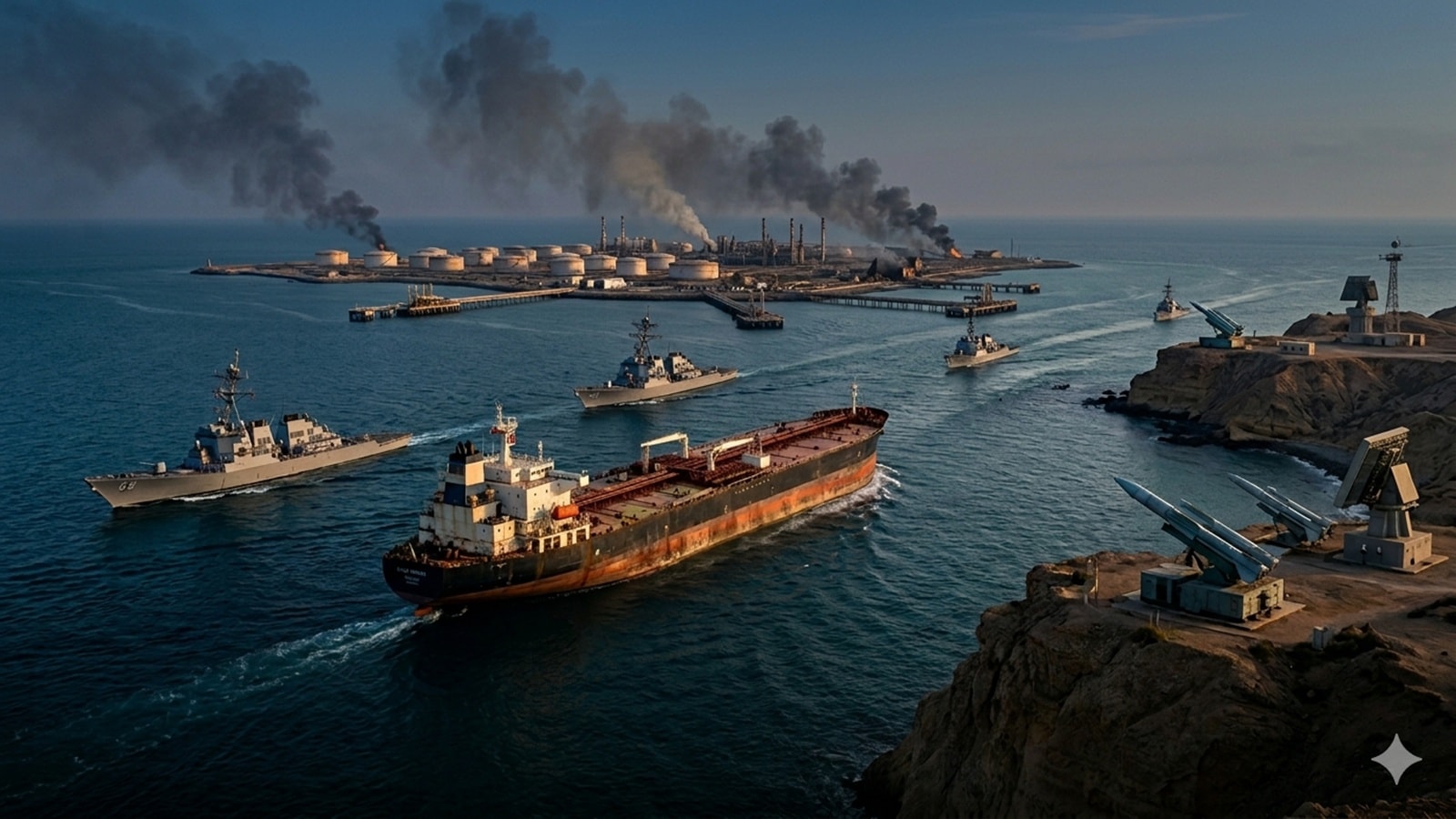
The American response was immediate, heavy, and intended to decapitate Iran's immediate coastal strike capabilities. For three consecutive nights, the Pentagon directed escalating waves of strikes against radar installations, drone launch pads, ammunition depots, and fast-boat harbors. The primary objective was clear. The White House needed to demonstrate that the United States can guarantee freedom of navigation by sheer force of arms.
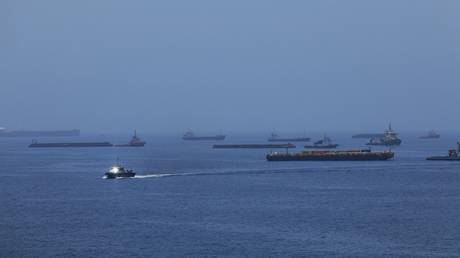
Yet the operational reality on the water tells a far more complicated story than official briefings suggest. While United States Central Command insists that the southern shipping lane remains technically navigable, maritime insurance companies have already begun rewording their policies. The United Kingdom Maritime Trade Operations center upgraded its security threat level to severe. Commercial captains are not looking at charts issued by Washington. They are looking at the smoke billowing from disabled hulls.
Iran's retaliation extended far beyond the immediate waters of the strait. Within hours of the American bombardment, a coordinated barrage of drones and ballistic missiles targeted facilities across the region. Air raid sirens pierced the night in Doha, where Qatari air defenses intercepted incoming ordinance. The United Arab Emirates reported active engagements over its northern territories, while shrapnel from intercepted missiles damaged property in Jordan. Even the remote port of Duqm in Oman, a vital logistical hub for Western naval vessels, faced direct drone strikes targeting its fueling infrastructure.
This regional sprawl changes the calculus completely. By striking American logistical bases located inside neighboring Arab states, Tehran is attempting to raise the geopolitical rent for Washington's allies. The message to Qatar, Bahrain, and the UAE is unambiguous. If you host the assets that bomb Iran, your own economic infrastructure will burn.
The Fractured Command in Tehran
Understanding this sudden escalation requires looking past the public declarations of both presidents and analyzing the internal fractures tearing through the Iranian political establishment. For months, a bitter quiet war has raged within Tehran regarding how to handle the economic devastation brought on by the broader conflict that erupted in February.
On one side stands the traditional diplomatic corps, desperate to salvage the economy by securing an extension to the ceasefire. They recognize that prolonged isolation and the complete shutdown of oil exports will eventually trigger internal collapse. On the other side sits the military apparatus, specifically the newly minted Persian Gulf Strait Authority. This entity was created to cement permanent Iranian sovereignty over the waterway, turning an international channel into a domestic toll road.
The attack on the GFS Galaxy occurred just as diplomats were nearing an agreement to formalize commercial passage rules. Hardline elements within the Revolutionary Guards observed the progress and chose to derail it by pulling the trigger. By forcing an American military reaction, the internal security forces successfully neutralized the diplomats, ensuring that the register of national policy remains dictated by martial law rather than international treaties.
United Nations representatives from Iran have already begun shifting the goalposts in public forums. Outside the Security Council, Iranian diplomats stated that any maritime activity within the strait, including demining operations or ship routing, rests exclusively under their sovereign jurisdiction. They are demanding that foreign vessels obtain explicit permits and pay fees directly to Tehran. This represents a fundamental rejection of the maritime status quo that has governed global trade since the end of World War II.
The White House Political Crucible
Back in Washington, the political pressure on the administration is mounting to a dangerous degree. The war was initially sold to the public as a swift, decisive campaign to permanently degrade Iran’s nuclear ambitions and neutralize its long-range missile programs. Months later, the conflict remains an open wound, bleeding resources and driving domestic economic anxiety.
Energy prices, which had stabilized significantly from their wartime peaks, spiked instantly following Sunday’s exchanges. The American consumer feels every single missile strike directly at the fuel pump. For an administration facing deep domestic political headwind, an extended maritime conflict in the Middle East is a recipe for electoral disaster. The President's rhetoric reflects this tension. By asserting that the strait is wide open and that Iran was hit very hard, the White House is attempting to soothe anxious financial markets and project an aura of total control that does not fully match the tactical reality.
The military options remaining on the table are increasingly fraught. While the Pentagon possesses the firepower to obliterate static Iranian radar sites and coastal missile batteries, it cannot easily counter the asymmetric threat of low-cost loitering munitions, underwater mines, and mobile missile launchers hidden deep within the rugged terrain of the Iranian coastline. You cannot open a shipping lane with a spreadsheet or a triumphant press briefing. It requires commercial mariners believing they will survive the voyage.
The Hard Reality on the Waves
The core problem is that freedom of navigation is not a binary switch that can be flipped by a successful bombing run. It is a psychological state of confidence. Even if the United States military clears every mine and destroys every visible fast-boat, the mere threat of a single hidden anti-ship missile is enough to keep commercial supertankers anchored outside the Gulf of Oman.
The Joint Maritime Information Center confirmed that shipping traffic has slowed to a crawl. Some vessels are attempting the treacherous southern route under heavy naval escort, but the volume is a fraction of what the global economy requires. The current strategy of tit-for-tat military retaliation has reached its structural limit. Washington cannot negotiate a lasting settlement with a nation whose internal military factions benefit directly from the continuation of the crisis, nor can it completely abandon a waterway that dictates the price of global commodities.
The current situation reveals that the original framework of the conflict was flawed from its inception. Military supremacy can deter state-level navies, but it struggles to secure a narrow corridor against an adversary willing to burn its own house down just to scorch its neighbor's lawn. The coming days will test whether the White House can find a diplomatic backchannel that bypasses the radicalized military command in Tehran, or if the region will drift into a full-scale war of attrition that no one can afford.