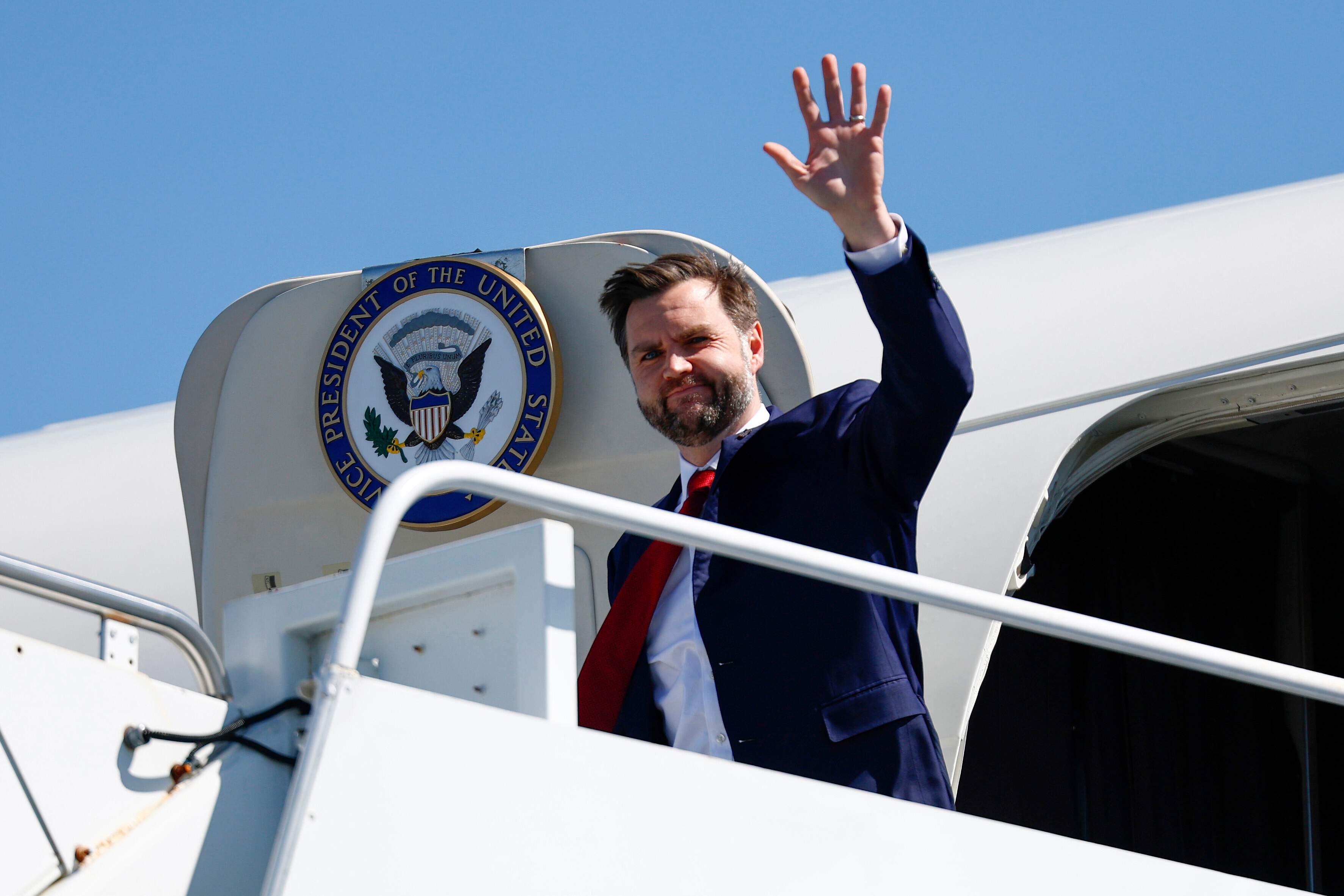
The deployment of Vice President JD Vance to lead a diplomatic delegation to Pakistan for negotiations with Iranian officials represents a fundamental shift in American structural engagement with the Middle East. This maneuver is not merely a diplomatic meeting; it is a calculated exercise in Geopolitical Arbitrage. By utilizing Islamabad as a neutral conduit, the U.S. administration is attempting to bypass the ossified communication channels of Brussels and Muscat, seeking a direct, high-stakes resolution to the "Maximum Pressure" cycle that has reached a point of diminishing marginal returns.
The success of this mission depends on three specific vectors: the Pakistan Buffer Calculus, the Vance Credibility Variable, and the Escalation-Incentive Framework. Understanding these mechanics reveals the difference between a symbolic gesture and a structural realignment of power.
The Pakistan Buffer Calculus: Why Islamabad?
The selection of Pakistan as the host for these talks is a strategic deviation from the traditional Swiss or Omani mediation models. Pakistan occupies a unique space in the regional hierarchy, maintaining a complex, security-dependent relationship with the United States while sharing a 900-kilometer border and significant energy interests with Iran.
Pakistan's utility in this context functions as a High-Friction Neutrality. Unlike Oman, which provides a "silent" channel for message passing, Pakistan offers a theater where both the U.S. and Iran have active, competing, and occasionally overlapping security concerns—specifically regarding the stability of Afghanistan and the containment of Baluchi insurgencies.
- Security Guarantee Parity: Both Tehran and Washington trust the Pakistani military apparatus to secure the physical environment of the talks, even if they distrust the political motivations of the civilian government.
- Regional Weight: By involving a nuclear-armed neighbor of Iran, the U.S. signals that the outcome of these talks carries weight beyond bilateral sanctions, impacting the broader Eurasian security architecture.
- The China Variable: Pakistan’s role as a cornerstone of China's Belt and Road Initiative (BRI) introduces a silent third party to the room. Any agreement reached in Islamabad inherently considers Chinese regional interests, potentially neutralizing Beijing's role as a spoiler in U.S.-Iran relations.
The Vance Credibility Variable: Signaling Alignment
Sending the Vice President instead of a career diplomat or a Secretary of State changes the Cost of Failure. In diplomatic signaling, the rank of the envoy is directly proportional to the "Executive Buy-In" of the administration. Vance’s presence indicates that any consensus reached has a direct, unfiltered line to the President, bypassing the internal friction of the State Department bureaucracy.
Vance represents a specific ideological pivot in American foreign policy: Principled Realism. His background suggests a preference for transactional outcomes over permanent ideological crusades. For Iran, this is a distinct advantage. They are not negotiating with a liberal institutionalist seeking "reform," but with a realist seeking "stability." This reduces the threat surface for Tehran, allowing them to focus on tangible concessions—sanctions relief and nuclear caps—rather than existential political shifts.
The risks associated with this variable are internal. The Vance delegation must maintain a "Single Source of Truth." If the delegation’s messaging deviates from the Department of Defense’s operational stance in the Persian Gulf, the credibility of the talks collapses. The delegation's strength lies in its perceived ability to override the "deep state" objections that have historically derailed U.S.-Iran rapprochement.
The Tri-Pillar Negotiation Framework
The delegation is operating under a tripartite structure designed to isolate manageable variables from the intractable religious and ideological conflicts that characterize the region.
I. The Kinetic De-escalation Protocol
The first objective is the establishment of a "No-Surprise" zone. This involves defining the specific red lines for proxy activities in Iraq, Syria, and Yemen. The logic here is a Threshold Management System.
- Quantifying "Acceptable" Friction: Establishing clear metrics for what constitutes a retaliatory trigger.
- Direct Hotlines: Implementing a verifiable communication link between the IRGC (Islamic Revolutionary Guard Corps) and U.S. Central Command to prevent accidental escalation during the negotiation period.
II. Economic Reciprocity and Frozen Asset Liquidity
Iran’s participation is driven by a desperate need for capital infusion. The U.S. delegation holds the key to the Sanctions Elasticity Model.
- Phased Thawing: Releasing specific tranches of frozen assets in South Korea and Qatar in direct exchange for verifiable pauses in uranium enrichment.
- Energy Waivers: Granting limited, time-bound exemptions for Iranian oil exports to specific Asian markets, creating a "breathable" economic window for the Iranian regime to sell the talks to its hardline domestic audience.
III. The Nuclear Ceiling
While a full "JCPOA 2.0" is unlikely, the delegation is aiming for a Maintenance of Status Quo. The objective is to cap enrichment at current levels to prevent a "breakout" scenario that would force an Israeli kinetic response. This is a containment strategy, not a disarmament strategy.
Logical Gaps in Current Regional Analysis
Most analysts view the Vance-Pakistan mission through the lens of "Peace," which is a vague and analytically useless term. The mission is actually about Risk Mitigation.
The primary cause-and-effect relationship ignored by the competitor article is the Israeli Veto. Any progress made in Pakistan is subject to the security requirements of Jerusalem. If the Vance delegation offers a path to enrichment that Israel deems unacceptable, the "Sabotage Variable" increases. This includes cyberattacks on Iranian infrastructure or targeted operations against nuclear scientists. The U.S. delegation must therefore negotiate a deal that is "Israel-Resistant"—one where the benefits of stability outweigh the risks of a unilateral Israeli strike.
The second bottleneck is Iranian Internal Fractionalization. The Iranian delegation in Pakistan may not have the total mandate of the Supreme Leader. This creates a "Double-Agency" problem. The U.S. is negotiating with the Iranian foreign ministry, but the actual power lies with the IRGC. If the IRGC perceives the Islamabad talks as a threat to their economic monopoly within Iran, they will trigger a regional crisis to collapse the negotiations.
The Cost Function of Failure
The failure of the Vance delegation would not return the situation to the status quo. It would result in a Security Vacuum.
- The Pivot to Moscow: If Iran concludes that the U.S. executive branch cannot deliver on its promises (due to domestic political opposition), they will accelerate their military integration with Russia, trading drone and missile technology for advanced Russian air defense systems (S-400s) and fighter jets (Su-35s).
- The End of the Pakistan Channel: Pakistan’s credibility as a mediator is on the line. A failure here would likely push Islamabad further into the Chinese orbit, signaling that Western-led diplomacy in the region is functionally extinct.
Strategic Forecast: The Islamabad Interim Agreement
The most probable outcome of this delegation is not a signed treaty, but an Informal Memorandum of Understanding (MoU). This "quiet" agreement will likely focus on three tactical pivots:
- Enrichment Freeze: Iran stays at or below 60% enrichment in exchange for the U.S. ignoring certain oil shipments.
- Regional Non-Aggression: A temporary cessation of drone attacks on U.S. bases in exchange for a reduction in U.S. naval presence in the Strait of Hormuz.
- Humanitarian Exchange: A high-profile prisoner swap to provide the Vance delegation with a "win" for domestic U.S. consumption.
The delegation's move into Pakistan is a recognition that the old maps of Middle Eastern diplomacy are shredded. By utilizing a "Frontier Mediator" and a "Realist Envoy," the U.S. is betting that it can stabilize the region through transactional clarity rather than moralistic intervention. The metric of success will not be a handshake on a stage, but a measurable drop in the insurance premiums for oil tankers in the Persian Gulf over the next six months.
The strategic play for the U.S. administration is to maintain this Islamabad channel as a permanent contingency. By institutionalizing this route, they create a redundant system that operates outside the visibility of traditional diplomatic spoilers. The Vance delegation must ensure that the technical mechanisms for de-escalation are embedded within the Pakistani military coordination cells, making the "Peace" a matter of operational procedure rather than political whim.