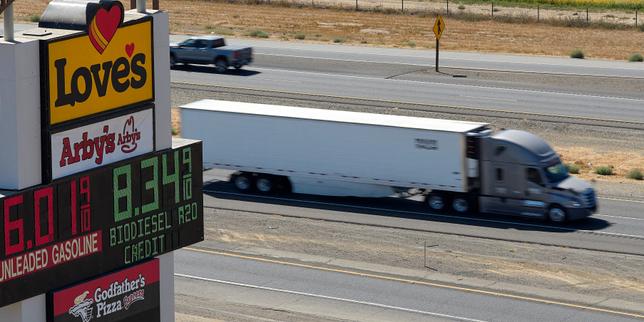
When geopolitical friction intersects with energy market architecture, the knee-jerk policy response is typically a coordinated release of emergency petroleum reserves. The announcement by G7 nations to inject one hundred million barrels of crude oil into the global market, catalyzed by political pressure from Donald Trump, represents a textbook case of state intervention intended to signal price suppression. However, evaluating the efficacy of this move requires stripping away the political rhetoric to examine the structural mechanics of global supply, inventory accounting, and the fundamental limitations of strategic reserves in altering long-term market clearing prices.
Strategic petroleum reserves are designed as shock absorbers for physical supply disruptions, such as sudden structural supply outages resulting from military conflict or geopolitical chokepoints closing. They were never architected to act as a permanent price ceiling against broader macroeconomic and structural supply-demand imbalances. When political entities compel reserve releases to manage short-term price signals, they engage in a high-stakes trade-off: depleting sovereign insurance buffers for temporary market sentiment management.
The Mechanics of Strategic Reserves and Market Liquidity
To understand the actual impact of a one-hundred-million-barrel injection, one must analyze the scale of global liquid fuel consumption. Daily global oil consumption hovers around one hundred million barrels. Therefore, the total announced G7 release represents roughly twenty-four hours of global demand.
Daily Global Demand: ~100 Million Barrels
Announced G7 Release: ~100 Million Barrels Total
Market Impact Duration: ~24 Hours of Global Equivalence Distributed Over Weeks
Distributed across weeks or months of logistical execution, the daily incremental supply addition is a fractional percentage of total market volume. Consequently, the primary mechanism of action is not physical supply restructuring, but psychological signaling. By signaling to futures markets that state actors are willing to monetize inventory, governments attempt to induce speculative liquidation among financial market participants holding long positions.
This transmission mechanism relies entirely on market psychology rather than physical deficits. If commercial refiners do not face a genuine physical shortage, additional crude entering the market merely shifts barrels from public storage to commercial storage without altering the underlying supply-demand equilibrium. Refiners will only increase throughput if cracking margins justify higher product yields, which depends on downstream demand for gasoline, diesel, and jet fuel, rather than the mere presence of unrefined crude in a storage tank.
The Cost Function of Sovereign Inventory Depletion
Every barrel of crude released from a strategic reserve represents a depleted unit of sovereign insurance. Replenishing these reserves is not a frictionless accounting exercise. Governments face distinct economic constraints when attempting to refill storage caverns:
- Replacement Cost Asymmetry: Governments typically acquire reserves during low-price environments to maximize taxpayer value. Re-entering the market to purchase one hundred million barrels during a period of elevated or volatile prices forces the state to buy high, reversing the economic logic of reserve management.
- Physical Injection Constraints: Salt domes and underground storage facilities have maximum daily injection and withdrawal rates governed by pipeline infrastructure and cavern integrity. Rapid cycling introduces mechanical stress and operational risks.
- Geopolitical Vulnerability: Lower reserve inventories diminish a nation's strategic leverage during genuine supply crises, shifting the long-term risk profile of energy security.
When political pressure forces the monetization of these assets, the decision makers are trading long-term national resilience for short-term political price relief. The cost function is heavily skewed toward future vulnerability, creating a structural deficit in the state's crisis management toolkit.
Market Structure and the Limits of State Price Control
Energy markets are global, interconnected, and dominated by complex logistics, refining capacity bottlenecks, and OPEC+ production quotas. A state-directed inventory release confronts several structural dampening effects that blunt its intended impact:
- The Refining Bottleneck: Crude oil cannot be consumed in its raw form. If global refining capacity is already operating near utilization ceilings due to maintenance cycles, regulatory constraints, or structural underinvestment in distillation units, adding more crude to the market creates a logjam at the refinery gate. Crude prices may dip temporarily while refined product cracks widen due to downstream scarcity.
- Offsetting Producer Responses: Major exporting cartels monitor OECD inventory levels meticulously. If state-managed releases artificially depress prices, producer nations possess the analytical capability and the economic incentive to adjust their own production quotas downward to offset the injected volume, neutralizing the inventory effect over a multi-month horizon.
- Financial Speculation Dampening: Algorithmic and discretionary commodity traders understand the transient nature of reserve releases. While an announcement can trigger an immediate intraday price correction via algorithmic stop-loss hunting, structural buyers quickly re-establish positions once the physical delivery schedule of the reserve release is absorbed by the market's baseline absorption capacity.
Structural Interdependence and Energy Security Realities
The interplay between political mandates and energy economics highlights a persistent governance challenge. Elected officials operate on compressed political timelines, often prioritizing visible price metrics ahead of electoral cycles. Conversely, energy markets operate on multi-year capital expenditure cycles, geological realities, and long-term infrastructure amortization schedules.
When state actors attempt to override market clearing mechanisms through inventory deployment, they create artificial distortions that discourage private sector capital investment in exploration, extraction, and refining infrastructure. If market participants anticipate frequent, politically motivated inventory dumps whenever prices spike, the perceived regulatory risk increases, raising the cost of capital for energy infrastructure projects. This dynamic ultimately exacerbates future supply tightness by starving the sector of the long-term investments required to maintain baseline productive capacity.
The G7 announcement of a one-hundred-million-barrel release must therefore be evaluated as an exercise in political communication rather than a structural solution to energy scarcity. It leverages sovereign balance sheets to influence short-term market sentiment, accepting long-term inventory depletion and distorted price signals as the cost of immediate political relief.
Execute a coordinated multi-agency audit of domestic refining margins and import-export parity before scheduling subsequent inventory auctions, prioritizing physical deficit mitigation over speculative sentiment targeting.


