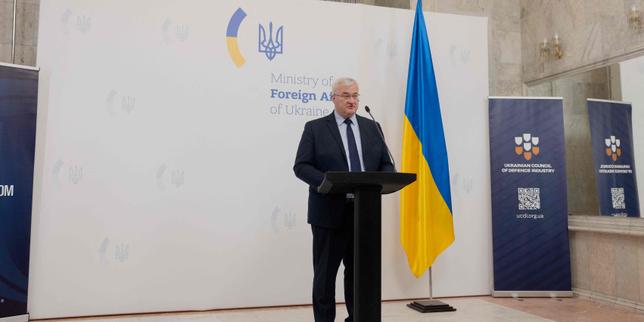
The pursuit of a direct meeting between Volodymyr Zelensky and Vladimir Putin in Turkey serves as a diagnostic indicator of the current stagnation in the Russia-Ukraine conflict. Rather than signaling an imminent cessation of hostilities, this proposal functions as a diplomatic signaling mechanism designed to reframe international perception and test the internal stability of opposing command structures. Analysis of the conflict requires distinguishing between operational military realities and the secondary layer of diplomatic posturing where mediators, such as the Turkish administration, seek to establish regional influence.
The Tripartite Logic of Negotiated Settlements
Diplomatic engagement in high-intensity conflicts rarely proceeds from a genuine alignment of interests. Instead, it operates on a function of three variables: exhaustion, external pressure, and domestic political sustainability.
The Exhaustion Coefficient
Military attrition rates dictate the timeline for serious negotiation. When neither side possesses the force density required to achieve a decisive territorial breakthrough, the incentive structure shifts toward freezing the conflict. The current frontline demonstrates a tactical stalemate where defensive posture advantages—specifically minefields, drone-assisted artillery, and electronic warfare—negate traditional maneuver operations. Proposals for high-level summits emerge when the cost of maintaining current offensive output begins to cannibalize future defensive stability.
External Mediation Incentives
Turkey maintains a unique position within the Black Sea security architecture. By facilitating a potential meeting, Ankara secures a seat at the table, ensuring that any future security arrangements in the region necessarily include Turkish oversight. This is not purely altruistic; it is an exercise in regional hedging. Ankara balances its obligations under the Montreux Convention with a desire to act as the primary interlocutor between Moscow and Western-aligned powers. The utility of this position for Turkey lies in the ability to influence grain corridors, maritime trade routes, and energy transit, which are all inextricably linked to the trajectory of the war.
Domestic Political Sustainability
For Kiev, the public pursuit of diplomacy provides a necessary counter-narrative to battlefield fatigue. It validates the state’s commitment to sovereignty while framing the lack of progress as a failure of the Russian executive. Conversely, the Russian administration monitors this messaging to assess the depth of potential dissent within the Ukrainian political apparatus. If the Russian side perceives that these overtures represent genuine weakness or a lack of internal cohesion, they respond with escalation to maximize their bargaining position. If they view it as a mere public relations maneuver, they maintain the status quo.
Operational Constraints on High-Level Diplomacy
A meeting between heads of state necessitates a pre-existing convergence on fundamental terms. Without a common baseline, summits result in political theater that often hardens positions rather than softening them.
The primary impediment remains the misalignment of core objectives. The Russian framework requires the formal acknowledgement of territorial gains and the long-term neutralization of Ukrainian military capability. The Ukrainian framework demands a restoration of territorial integrity and explicit security guarantees that would likely preclude Russian control over occupied zones.
These objectives represent a zero-sum game. When two parties occupy diametrically opposed positions on sovereignty, the role of a mediator becomes one of inventorying concessions. This requires a credible threat of reduced support from allies or a fundamental change in the battlefield reality. Until one of these conditions is met, the diplomatic process serves primarily as a status-signaling device for international observers.
The Cost of Frozen Conflict Scenarios
The international community often gravitates toward the idea of a "frozen conflict" as a pragmatic solution to prevent further loss of life. However, applying a purely quantitative lens reveals that a frozen conflict is not a state of peace, but an unstable equilibrium.
- Economic Drag: A frozen conflict necessitates a permanent high-alert military posture. This diverts human and financial capital from infrastructure and economic recovery, cementing a state of dependency on foreign aid.
- Insecurity of Investment: Large-scale reconstruction requires risk insurance that private markets refuse to provide in an active, albeit stalled, conflict zone.
- Institutional Decay: Prolonged states of emergency erode democratic processes and centralize authority, complicating the transition back to long-term stability.
These factors create a strategic trap. The longer the conflict remains in a state of suspended animation, the more difficult it becomes to rebuild a functioning state apparatus capable of independent economic performance.
Assessing Future Trajectories
The likelihood of a productive summit in the near term remains low due to the divergence in the cost-benefit analysis of both combatants. The current phase of the war is defined by a race to build defense-industrial capacity. Russia is attempting to leverage its larger resource pool to outlast the sustainability of Western military assistance to Ukraine. Ukraine is attempting to modernize its tactical integration of autonomous systems and Western munitions to render the Russian advantage in mass irrelevant.
Diplomatic signaling will continue to increase in frequency as both sides approach internal limits on manpower and materiel. The focus of analytical observers should not be on the potential for a meeting itself, but on the shifting requirements of the mediators. If Ankara or other international partners begin to link their support for either side to the acceptance of specific, non-negotiable concessions, the likelihood of a transition from signaling to negotiation will increase.
Strategic actors should prepare for a period of protracted instability. The primary indicator of a genuine shift toward resolution will not be the convening of a high-level meeting, but rather the creation of a back-channel communications mechanism capable of discussing granular, non-public territorial and security arrangements. Until such a mechanism is established, the public narrative of negotiation remains a component of the broader war effort rather than a path to its conclusion.



