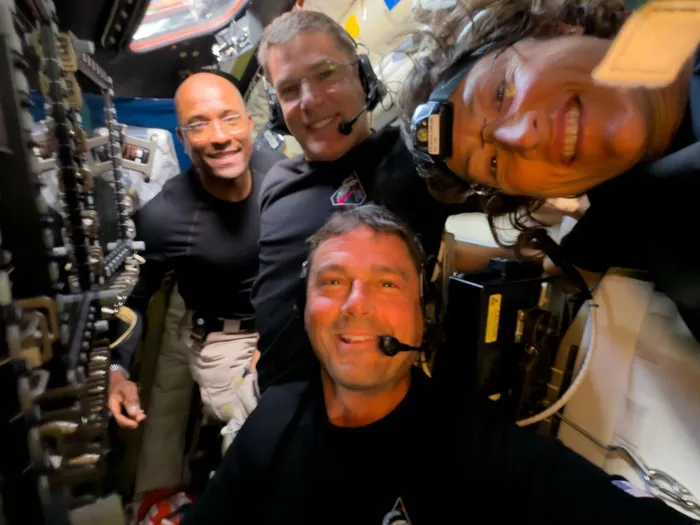
The completion of the Artemis splashdown transitions the United States from a theoretical spaceflight posture to a demonstrated lunar capability. While political rhetoric focuses on the achievement of the return, the underlying objective is the validation of the Deep Space Transport (DST) model. The moon serves as a non-optional terrestrial testbed; without establishing a sustained presence at the lunar South Pole, the logistics of a Mars transit remain physically and economically insolvent.
The Lunar-Mars Divergence Problem
A fundamental error in public discourse is treating Mars as a linear extension of lunar operations. They are distinct thermodynamic and logistical challenges. The moon sits within a three-day emergency return window. Mars requires a minimum of six to nine months of transit, creating a "Logistics Gap" that current chemical propulsion systems struggle to bridge.
To move from the Artemis return to a Martian injection, three structural bottlenecks must be resolved:
- The Delta-v Penalty: Mars requires significantly higher velocity changes ($\Delta v$). Reaching the Martian surface involves managing a gravitational well deeper than the moon’s, necessitating either massive fuel reserves or advanced aerobraking technologies that were not required for Artemis.
- Radiation Attenuation: Unlike the moon, where lunar regolith can be used for immediate shielding, Martian transit exposes crews to solar particle events (SPE) and galactic cosmic rays (GCR) for durations that exceed current cumulative safety limits.
- Life Support Loop Closure: Artemis relies on high-frequency resupply. A Mars mission requires a closed-loop Environmental Control and Life Support System (ECLSS) with a reliability rating of $98%$ or higher over a two-year period—a metric currently unproven in microgravity.
The Architecture of Lunar Sustenance
The political directive to use the moon as a "stepping stone" is a mandate for In-Situ Resource Utilization (ISRU). The primary objective at the lunar South Pole is the extraction of water ice from Permanently Shadowed Regions (PSRs).
The Hydrocarbon Synthesis Chain
Water is not merely for hydration; it is the raw material for the next generation of propellant. Through electrolysis, water is split into hydrogen and oxygen. On Mars, the Sabatier reaction can then be employed:
$$CO_2 + 4H_2 \rightarrow CH_4 + 2H_2O$$
This equation represents the bridge between the two celestial bodies. By mastering the extraction of $H_2O$ on the moon, NASA and its commercial partners validate the hardware needed to manufacture methane ($CH_4$) on Mars. This eliminates the "Gear Ratio" problem, where every kilogram of fuel needed for the return trip requires ten kilograms of fuel to lift it from Earth.
Orbital Mechanics and the Gateway Bottleneck
The Lunar Gateway acts as a high-latitude orbital station. Its utility is often debated, but its primary function is serving as a Refueling and Refurbishment Node (RRN).
If the goal is Mars, the Gateway must evolve from a laboratory into a dry dock. The current Artemis architecture uses a Near-Rectilinear Halo Orbit (NRHO). This specific orbit balances gravitational pulls from the Earth and Moon, allowing for long-term station-keeping with minimal fuel. However, transitioning from NRHO to a Mars Transfer Orbit (MTO) requires a high-thrust departure. The second limitation of the current Artemis hardware is that the Orion spacecraft lacks the internal volume and propulsion for this transit.
A Mars-bound craft will likely be assembled in lunar orbit, using Artemis as the ferry system for crew and high-value components. This creates a dependency: the success of the Mars mission is tethered to the operational uptime of the Lunar Gateway. If the Gateway fails to achieve its refueling throughput targets, the Mars timeline slips by decades.
The Economics of Heavy Lift Competition
The transition to Mars is dictated by the cost per kilogram to Low Earth Orbit (LEO) and beyond. The Artemis program utilizes the Space Launch System (SLS), a high-reliability, high-cost expendable rocket. In contrast, the commercial sector, led by SpaceX’s Starship, pursues a fully reusable architecture.
Structural differences in these two approaches create a "Dual-Track Strategy":
- The SLS Track: Provides guaranteed, government-controlled access for high-risk human missions. It is characterized by low flight cadence and high precision.
- The Starship Track: Aims for high-volume, low-cost cargo delivery. The "Mars! next step" rhetoric depends almost entirely on the Starship HLS (Human Landing System) succeeding in its rapid refueling tests.
The bottleneck here is the "Cryogenic Fluid Management" (CFM). Transferring thousands of tons of liquid oxygen and methane in zero gravity has never been done at scale. Until orbital refueling is a solved science, Mars remains a mathematical impossibility.
Biological Constraints of Long-Duration Transit
The human element is the most volatile variable in the Mars equation. Artemis missions are short-duration sprints. A Mars mission is a marathon in a high-radiation, low-gravity vacuum.
Bone Mineral Density and Atrophy
In microgravity, astronauts lose bone mineral density at a rate of $1%$ to $1.5%$ per month. On a 300-day journey to Mars, a crew could arrive with the skeletal integrity of a 70-year-old, significantly increasing the risk of fractures during a high-G Martian landing. Artemis serves as the laboratory for high-intensity resistive exercise protocols designed to mitigate this decay.
Neurological and Psychological Stress
The "Earth-out-of-view" phenomenon is a psychological state not yet experienced by humans. Artemis crews can always see their home planet. Mars crews will see a pale blue dot. The communication delay—ranging from 3 to 22 minutes—precludes real-time troubleshooting. This necessitates the integration of high-autonomy AI systems capable of managing shipboard emergencies without Earth's intervention.
[Image comparing communication latency between Earth-Moon and Earth-Mars]
The Strategic Path Forward
The congratulatory tone surrounding the Artemis return must be tempered by the technical reality of the Martian requirements. To move from a successful splashdown to a Martian injection, the following operational pivots are required:
First, the transition from expendable to reusable assets must accelerate. The current SLS cost-plus contract model is unsustainable for the mass requirements of a Mars colony. NASA must shift its role from a primary builder to a primary customer, incentivizing private firms to solve the orbital refueling problem.
Second, the "Moon to Mars" objective requires an immediate focus on nuclear thermal propulsion (NTP). Chemical rockets are too slow. NTP could potentially cut transit times in half, reducing radiation exposure and life-support requirements. Without a shift in the propulsion paradigm, the mission risk profile remains outside of acceptable tolerances for human flight.
The lunar base at the South Pole must be treated as a prototype for the Martian "Alpha" base. Every piece of hardware sent to the moon—from the rovers to the habitats—should be designed with the 0.38g gravity of Mars and its perchlorate-rich soil in mind. If the moon is used merely for flags and footprints, it is a dead end. If it is used as a rigorous, high-fidelity simulation of the Martian environment, it becomes the foundation of a multi-planetary economy.
The strategic play is to decouple the Mars timeline from political cycles and tether it to technical milestones:
- Successful orbital cryogenic fuel transfer.
- 500-day autonomous ECLSS operation on the Gateway.
- Demonstration of kilopower nuclear reactors on the lunar surface.
Only once these three pillars are established does a Mars departure become a viable technical reality rather than a rhetorical aspiration.