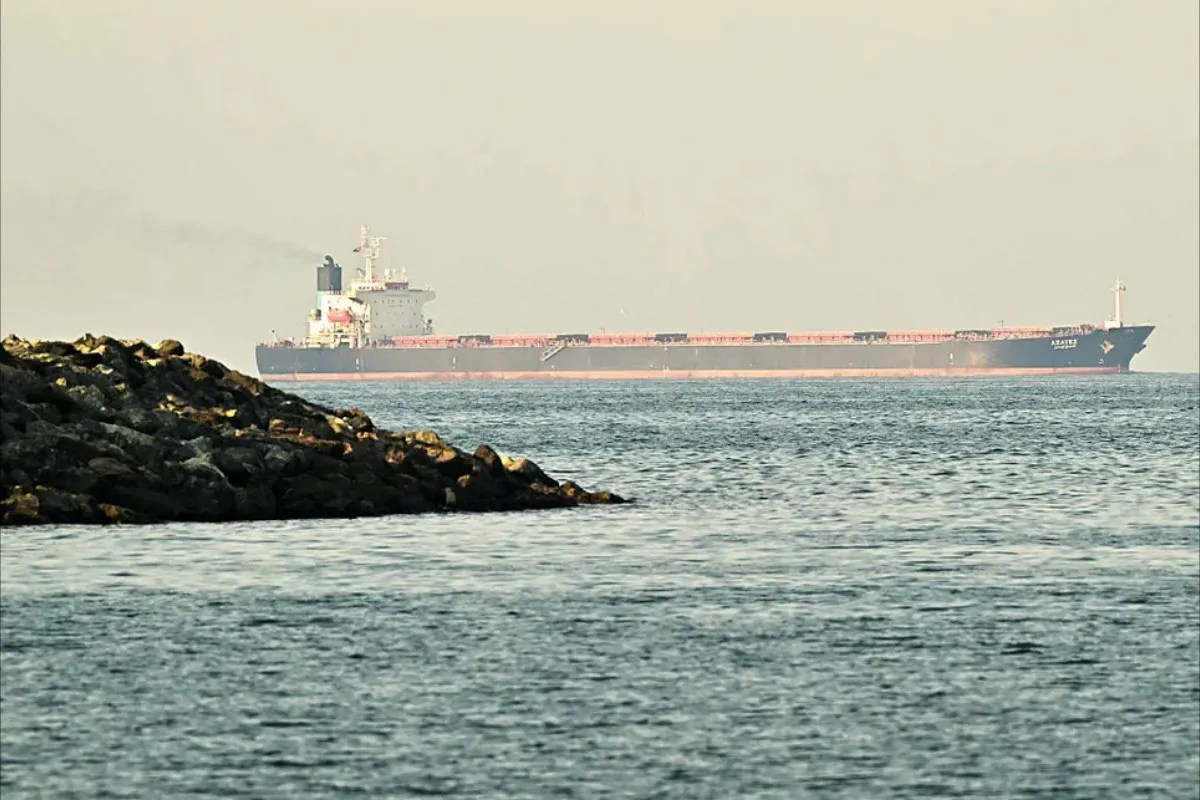
Geopolitical disruption in maritime choke points creates immediate cascading failures across global energy supply chains. When the Strait of Hormuz faces closure threats or actual blockages, energy markets react with immediate volatility pricing, yet the structural mechanisms required to reopen and stabilize the corridor involve complex diplomatic, military, and economic bargaining. Washington claims an imminent diplomatic resolution regarding the reopening of this vital artery, but surface assertions of a pending deal fail to account for the systemic friction points governing maritime transit security, maritime insurance adjustments, and regional military posture adjustments.
The Structural Anatomy of the Strait
The Strait of Hormuz functions as the primary maritime bottleneck for global petroleum logistics. Approximately one-fifth of the world's petroleum consumption traverses this narrow channel, bounded by Oman and Iran. The physical architecture of the route forces tanker traffic through two narrow two-mile-wide traffic separation schemes, rendering vessels highly vulnerable to asymmetric naval tactics, mine warfare, and shore-based anti-ship missile batteries. Don't miss our previous article on this related article.
Understanding why a simple political declaration fails to instantly normalize maritime traffic requires analyzing the operational dependencies of commercial shipping. A commercial tanker does not resume transit simply because political actors announce a tentative agreement. The operational calculus depends entirely on quantifiable risk assessments executed by underwriters, vessel operators, and charterers.
The Cost Function of Maritime Risk
When transit security degrades, insurance premiums experience exponential spikes rather than linear increases. War risk insurance surcharges, calculated as a percentage of the hull value per voyage, multiply rapidly during heightened threat environments. If you want more about the history of this, Reuters provides an excellent breakdown.
Normal Operations -> Baseline Hull Insurance + Standard Freight Rates
Disruption Phase -> Exponential War Risk Surcharges + Route Diversion Costs
Reopening Phase -> Lagged Underwriting Adjustments + Verified Security Guarantees
Underwriters do not price risk based on optimistic diplomatic communiques. They price risk based on historical incident data, active military telemetry, and verified threat reduction. Even if a bilateral or multilateral deal is announced today, the cost function for operating a Very Large Crude Carrier through the passage remains elevated until the underlying kinetic threat parameters are measurably altered.
Insurance syndicates in London and other maritime hubs require empirical proof of de-escalation before rolling back war risk premiums. This creates a structural lag between diplomatic announcements and actual commercial normalization. A political deal proclaimed "today or tomorrow" must clear multiple operational hurdles before the first uninsured or standard-rate tanker safely clears the median line.
Diplomatic Leverage and Asymmetric Bargaining
Washington assertions regarding imminent agreements typically leverage economic coercion, secondary sanctions enforcement, and back-channel naval deterrence. However, the counterparties involved operate under distinct domestic incentives and security imperatives.
The bargaining space comprises three primary variables:
- Sanctions relief or enforcement relaxation concerning petroleum exports.
- Regional force posture adjustments and naval redeployments.
- Security guarantees for littoral states regarding freedom of navigation.
When a superpower claims a breakthrough is imminent, it frequently reflects progress on the first two variables while leaving the third unresolved. If naval escorts or mine-clearing operations are not fully coordinated, commercial operators will refuse to sail regardless of diplomatic consensus. The friction lies in the execution gap between high-level political alignment and operational naval safety protocols.
The Logistics of Fleet Redeployment
Reopening a compromised maritime corridor requires more than halting hostile actions. It demands active, resource-intensive naval logistics.
- Threat Neutralization: Minesweeping vessels must systematically sweep the traffic separation schemes to clear acoustic, magnetic, and contact mines. This process is painstakingly slow and cannot be accelerated by executive fiat.
- Telemetry and Communication Setup: Establishing open communication channels between commercial vessels and regional naval command centers is mandatory to prevent misidentification and accidental engagement.
- Backlog Clearance: A prolonged closure creates a massive queue of vessels anchored outside the gulf. Once the strait is declared open, vessel bunching at ports of origin and destination creates secondary bottlenecks that take weeks to absorb.
Global supply chains cannot instantly pivot back to pre-disruption efficiency. The elasticity of tanker availability is constrained by the physical location of the global fleet. When vessels are diverted around the Cape of Good Hope or held in waiting patterns, ton-mile demand shifts permanently for the duration of the disruption, altering freight rate baselines.
Strategic Capital Allocation and Downstream Impact
Energy importers face immediate inventory depletion during transit blockages, forcing strategic petroleum reserve releases to bridge short-term supply deficits. Refiners adjust feedstock inputs based on regional availability, prioritizing heavy sour crudes typically sourced through the gulf.
Energy trading desks model these scenarios using probability-weighted outcome trees. When political rhetoric diverges from maritime reality, sophisticated market participants discount the political claims and trade the underlying logistical friction.
To hedge against prolonged normalization delays, market operators must price in the absolute time required for mine clearance, insurance market recalculation, and fleet repositioning. Diplomatic timelines are notoriously compressed compared to operational maritime timelines. Planning for energy security requires preparing for the lag between an announced settlement and the actual physical transit of the first fully loaded tanker through the cleared channel.