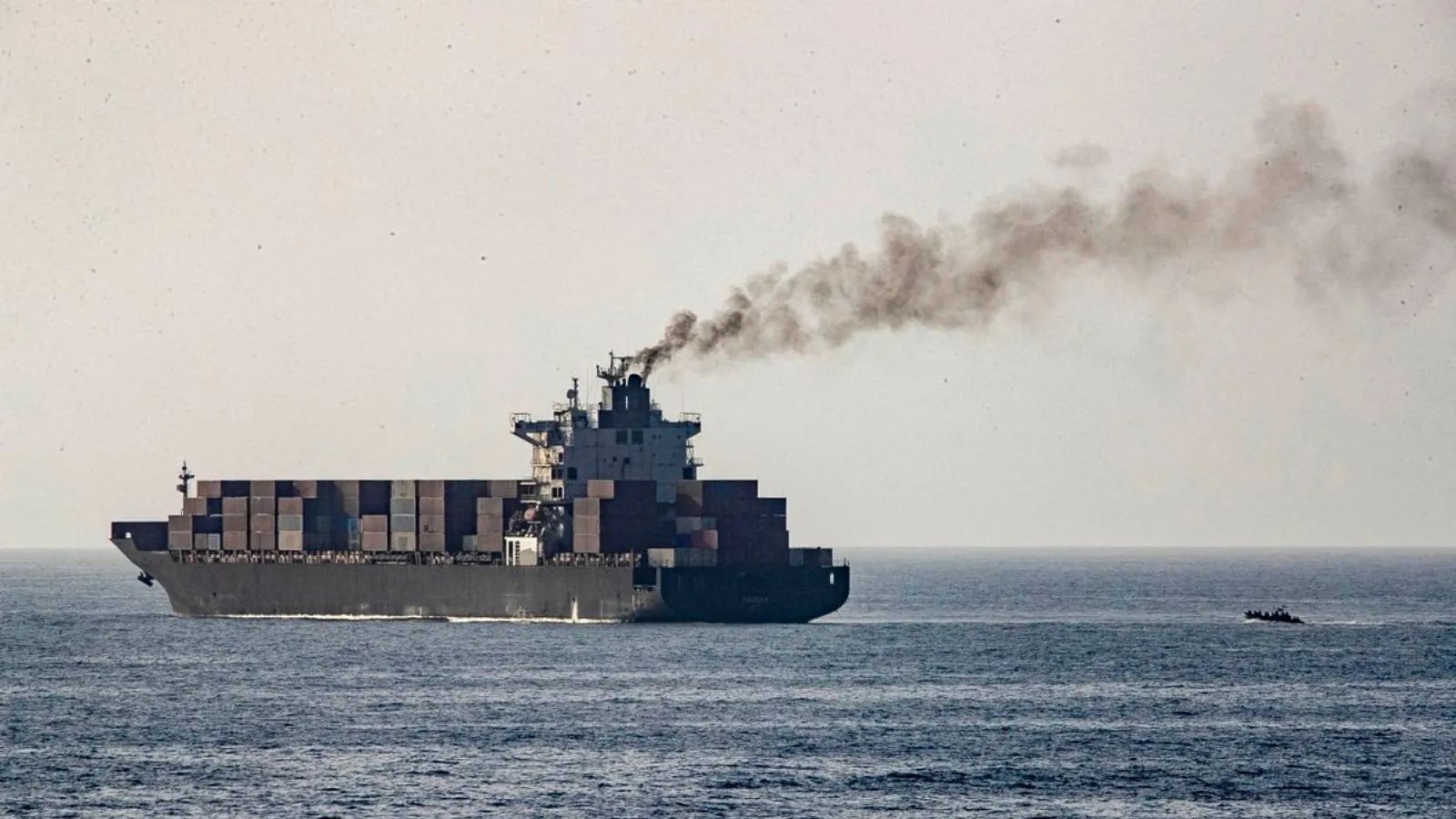
The ink on the June 17 memorandum of understanding wasn't even dry before the drones started flying again. If you thought the recent diplomatic breakthrough between Washington and Tehran was going to permanently lower your fuel bills, think again. The fragile truce just hit a massive, explosive speed bump.
On June 25, an Iranian kamikaze drone slammed into the upper deck of the Ever Lovely, a Singapore-registered container ship transiting near the coast of Oman. Washington didn't wait around to negotiate. By Friday, June 26, U.S. Central Command launched heavy airstrikes directly against military targets inside Iran, striking coastal radar stations, missile depots, and drone launch facilities along the coast and on strategic Qeshm Island.
The brief window of commercial confidence has slammed shut. This is exactly what happens when a peace deal relies on vague, handshake semantics rather than hard enforcement.
The One and a Half Page Problem
Everyone wanted to believe the June 17 agreement would work. Under the interim deal, both nations had a 60-day window to hash out a permanent end to the maritime war that began back in February. Iran supposedly agreed to make its "best efforts" to allow commercial shipping to resume free of charge.
The problem? The memorandum of understanding was a tiny, one-and-a-half-page document. It didn't define what "best efforts" actually meant. It left a massive, gaping hole regarding who actually controls the shipping lanes.
Tehran claims it never promised a total free-for-all. Iranian officials are actively pushing a wild new plan to establish a permanent toll system in the waterway. They want to force global shipping companies to pay for "services" to the tune of an estimated 40 billion dollars annually, a revenue stream they want to share with neighboring Gulf states.
To enforce this, the Islamic Revolutionary Guard Corps (IRGC) Navy demanded that all vessels follow a specific, Tehran-approved traffic separation scheme. When the United Nations International Maritime Organization (IMO) teamed up with Oman to establish a safe, alternative route hugging the Omani coast to evacuate the roughly 500 ships stranded in the region, Iran lost its mind. They called the U.N. route "completely dangerous." Then they backdropped those threats by hitting the Ever Lovely.
Ground Reality in the Choke Point
This isn't just a political spat. It's a logistical nightmare for global trade. Before the war broke out earlier this year, more than 130 commercial ships passed through the strait every single day, carrying 20 percent of the world's petroleum.
By Wednesday, confidence had recovered enough that traffic ticked up to 78 transits. It looked like normal life was returning. But the moment the Ever Lovely was hit, everything ground to a halt.
- The IMO instantly paused its coordinated rescue and evacuation operations.
- Multiple massive oil tankers immediately reversed course in the Gulf of Oman, refusing to enter the strait without strict security guarantees.
- Daily transits plummeted back down to 43 within 24 hours of the drone strike.
Iranian politicians aren't backing down from the military fallout either. While President Donald Trump called the drone strike a "foolish violation" that justified the immediate American bombing run, Iranian parliament security chief Ebrahim Azizi hit back on social media. He claimed the drone strike wasn't a violation at all, but rather "ceasefire management." According to Tehran, if you don't use their approved lanes and pay attention to their rules, you're fair game.
The Mirage of a Quick Fix
Western markets keep making the same mistake. They assume that signing a diplomatic framework means the physical risks vanish overnight. It doesn't. Even during this temporary ceasefire window, the IRGC has been actively hiding sea mines, using satellite spoofing to mess with commercial GPS, and swarming lanes with fast-attack boats.
You can't fix a structural geographical conflict with an ambiguous piece of paper. The U.S. and its Gulf Cooperation Council allies issued a blunt statement from Bahrain rejecting any attempts by Iran to levy tolls or force mandatory coordination with the IRGC.
If you are tracking global energy markets or supply chain stability, don't buy into the narrative that the Doha deconfliction channels will smoothly iron this out. Expect insurance premiums for commercial vessels in the Persian Gulf to skyrocket on Monday morning. Shipping companies are faced with a brutal choice: wait out a volatile, trigger-happy standoff or divert ships entirely around the southern tip of Africa, adding weeks and millions of dollars to global transit costs. Prepare for a prolonged period of supply chain whiplash.