Donald Trump has effectively declared war on the global energy supply chain. By ordering a full naval blockade of the Strait of Hormuz following the collapse of high-stakes peace talks in Islamabad, the administration is betting that the U.S. Navy can choke the Iranian economy faster than the resulting $150-a-barrel oil can shatter the American consumer. This is no longer a diplomatic standoff or a regional skirmish. It is a calculated gamble on a "total win" scenario that ignores the fragility of a world economy already reeling from six weeks of active kinetic warfare in the Persian Gulf.
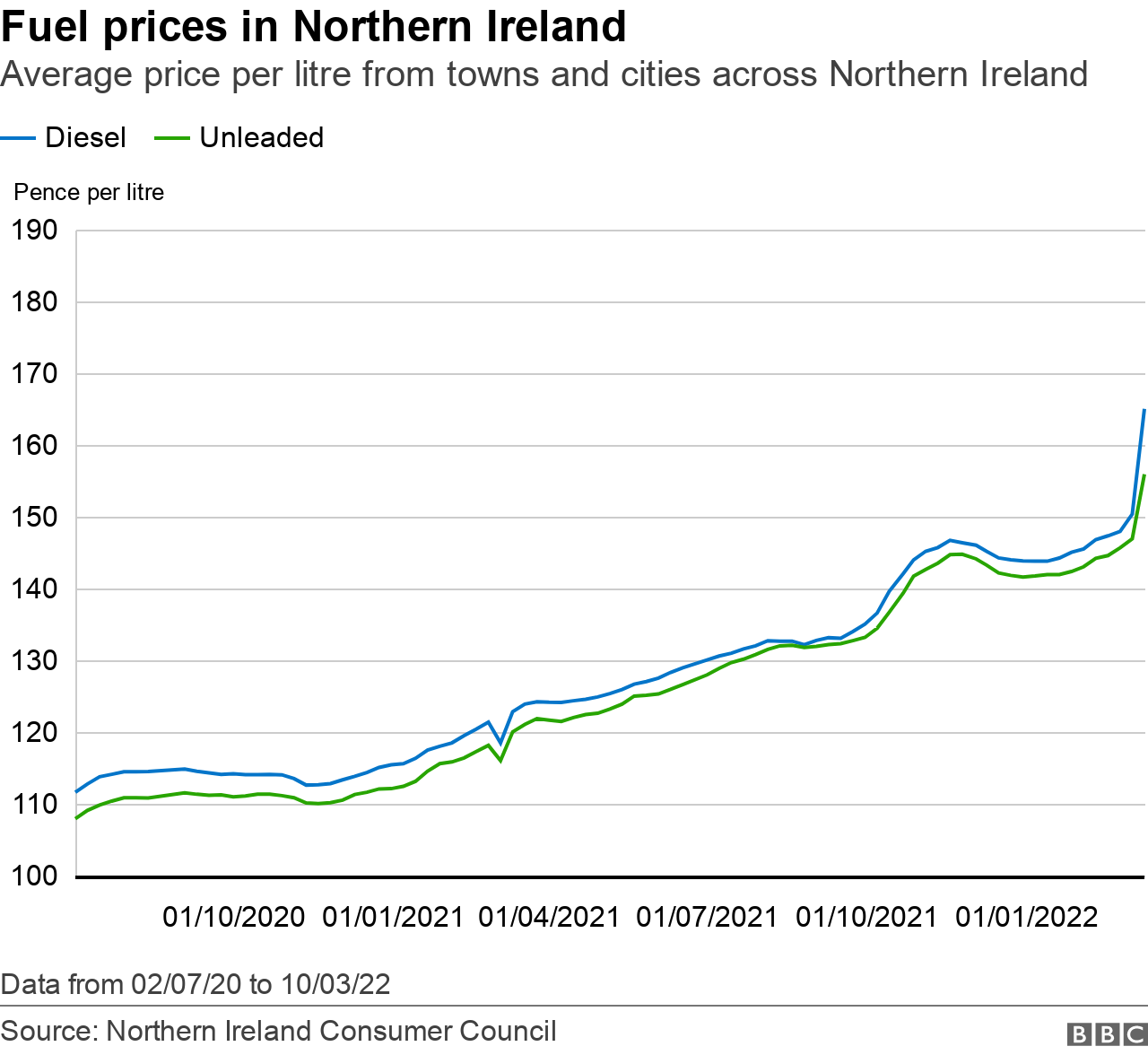
The Islamabad talks did not just fail; they disintegrated over a fundamental lack of trust regarding Iran’s nuclear endgame. While Vice President JD Vance and Iranian negotiators spent 21 hours in a Pakistan marathon session, the gap remained a chasm. The U.S. demanded an ironclad, permanent cessation of all enrichment; Iran demanded war reparations and an immediate lifting of the sanctions that have already gutted its middle class. When the clock ran out, Trump bypassed the subtleties of the "ceasefire extension" and went straight for the jugular of the global oil trade. Recently making news lately: Ireland fuel crisis shows why tax cuts alone won't stop the tractors.
The Strategy of Asymmetric Suffocation
The U.S. Navy is now tasked with an "all-in, all-out" policy. Under this directive, any vessel attempting to transit the Strait must prove it has not paid transit tolls to Tehran. Trump has characterized these tolls as "world extortion," claiming that any ship funding the Iranian regime forfeits its right to safe passage in international waters. This is a radical departure from traditional freedom of navigation operations.
For decades, the Strait of Hormuz has been the world's most sensitive chokepoint, with 20% of global oil and a fifth of the world’s liquefied natural gas (LNG) passing through its narrow waters. By interdicting every vessel in the Gulf, the U.S. is not just targeting Iran; it is effectively seizing control of the export routes for Kuwait, Iraq, and the United Arab Emirates. Additional insights on this are detailed by NPR.
The Pentagon’s plan relies on the sheer dominance of the USS Gerald Ford and USS Abraham Lincoln carrier strike groups. Their mission is twofold:
- Mine Clearance: Neutralizing the "ghost mines" Iran has allegedly scattered throughout the shipping lanes.
- Economic Interdiction: Stopping and searching tankers to ensure no revenue reaches the Islamic Revolutionary Guard Corps (IRGC).
This approach assumes that the IRGC will remain passive as its primary source of income is extinguished. History suggest otherwise. The "Tanker War" of the 1980s was a playground scuffle compared to the saturation of anti-ship missiles and swarm-drone capabilities the Iranians have integrated into their coastal defenses over the last ten years.
The $120 Barrel and the Death of the Soft Landing
Wall Street’s hope for a controlled inflation environment died the moment Trump’s Truth Social post hit the wires. Brent crude has already spiked past $120 per barrel in early trading, and the International Energy Agency (IEA) has warned that we are entering the largest supply disruption in history.
This is not a temporary shock. The EIA has revised its 2026 price forecasts upward, signaling that even if the blockade "succeeds," the damage to the infrastructure and the spike in maritime insurance premiums will keep energy costs elevated for years. QatarEnergy has already declared force majeure on LNG exports, a move that will likely lead to industrial shutdowns in Germany and Northern Italy by the end of the month.
The domestic political risk for the Trump administration is immense. The White House is banking on the Strategic Petroleum Reserve (SPR) to blunt the impact at the pump, but the SPR is a finite resource. If the blockade drags into the summer, the "anxiety, dislocation, and pain" Trump blamed on Iran will be felt most acutely by American voters facing four-dollar-a-gallon diesel and double-digit food inflation.
The Caloric Crisis
We often talk about oil, but the blockade is a food security nightmare. The Gulf Cooperation Council (GCC) states—Saudi Arabia, the UAE, Qatar, and Kuwait—rely on the Strait for over 80% of their caloric intake. By sealing the waterway, the U.S. has inadvertently triggered a "grocery supply emergency" in the region.
Retailers in Dubai and Riyadh are already airlifting staples like rice and flour, causing local prices to surge by 120%. This creates a bizarre paradox where the U.S. is blockading its own allies' food supplies to punish a common enemy. The diplomatic fallout from this "collateral damage" could alienate the very regional partners Washington needs to maintain a stable post-war order.
Why the Islamabad Talks Were Dead on Arrival
To understand why we are now at the precipice of a global depression, one must look at the 21 hours in Islamabad. The U.S. sent 300 officials, a massive delegation intended to signal seriousness. Iran sent two planeloads of negotiators, including a heavy contingent of IRGC hardliners.
The sticking point was not just the nuclear program. It was "Control of the Strait." Iran views the waterway as its sovereign territory and a legitimate source of revenue through transit fees. The U.S. views it as an international commons. When Iran refused to waive these fees—which they use to fund their proxy networks—the U.S. perceived it as a refusal to negotiate in good faith.
Trump’s insistence that "the only point that really mattered, NUCLEAR, was not [agreed to]" simplifies a much more complex reality. The Iranians feel they have nothing left to lose. Their refineries have been hit, their navy is decimated, and their supreme leadership is under constant threat. A cornered animal does not negotiate; it bites.
The Illusion of the Clean Win
There is a dangerous sentiment in Washington that the U.S. can "out-blockade" Iran and force a regime collapse without a full-scale ground invasion. This ignores the "Axis of Resistance." While the IRGC has been weakened, its ability to disrupt global markets via asymmetric means remains high. A single drone strike on a Saudi desalinization plant or a stray mine hitting a Chinese supertanker would turn this naval exercise into a multi-front global crisis.
Furthermore, the U.S. is now in direct opposition to the interests of China and India, who receive 75% of the oil transiting the Strait. By cutting off these supplies, the Trump administration is effectively forcing Beijing to choose between its energy security and its relationship with the West.
The Navy has been instructed to "finish up" the situation at the appropriate moment. But in the Persian Gulf, there is no such thing as a clean finish. Every ship turned back is a gallon of fuel removed from a global economy that is already running on fumes. The blockade is a blunt instrument being used in a theater that requires a scalpel, and the resulting scars will be visible on the global ledger for a generation.
The ceasefire expires on April 22. If no new agreement is reached before then, the blockade will not just be a policy; it will be the opening bell for a conflict that no one—not even the "Finest Navy in the World"—can truly control.