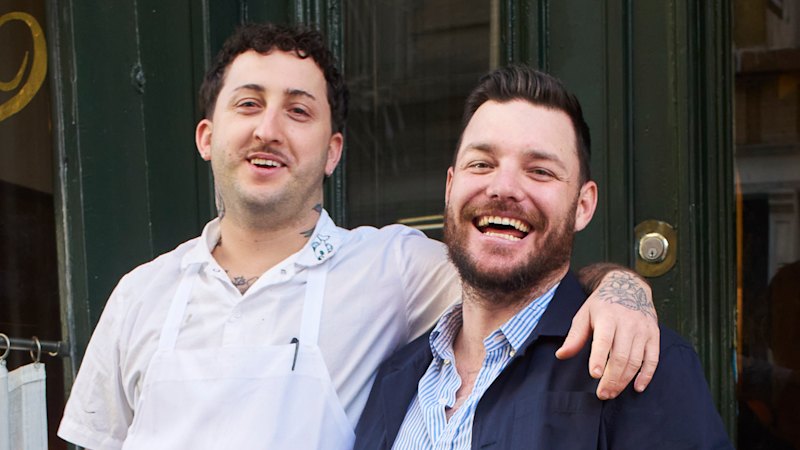
Every six months, the hospitality press falls for the exact same magic trick.
A group of charismatic expats—often Australian, British, or French—opens a dimly lit dining room in SoHo, the West Village, or Tribeca. A handful of A-list actors get photographed slipping past a velvet rope on opening week. Suddenly, lifestyle editors are penning breathless profiles about how these "crazy" visionaries cracked the code to Manhattan nightlife.
It is pure PR theater. And if you are an investor, an aspiring restaurateur, or a diner chasing the cultural zeitgeist, buying into the "celebrity hotspot" narrative is the fastest way to lose your money and your taste.
I have spent fifteen years auditing hospitality groups, restructuring failing nightlife concepts, and watching brilliant operators burn through tens of millions of dollars chasing the dragon of celebrity validation. The industry loves to sell the myth that famous people create restaurant success. In reality, celebrity foot traffic is often a lagging indicator of good marketing, a massive drain on unit economics, and the earliest warning sign that a venue is about to implode.
The Anatomy of the PR Puff Piece
When an outlet runs a headline celebrating the quirky, rule-breaking founders behind New York’s latest celebrity magnet, they are participating in a well-oiled publicity machine. The narrative is always identical: scrappy outsiders arrive in Manhattan, ignore conventional wisdom, rely on "vibes" and "instinct," and magically attract the cultural elite.
This framing is lazy consensus at its worst. It erases the ruthless financial engineering, aggressive public relations retainers, and loss-leader comps that actually put famous faces in those banquettes.
Consider how a modern Manhattan "it" spot actually gets built. Before a single cocktail is shaken, the ownership group hires a top-tier hospitality PR firm—think Purple PR, Karla Otto, or Nadine Johnson—at a monthly retainer ranging from $15,000 to $35,000. That agency does not just pitch reporters; they act as talent bookers. They coordinate with celebrity publicists, personal stylists, and brand managers to guarantee appearances during the critical first thirty days.
The "organic" paparazzi shot of a supermodel exiting the side door? Arranged. The "spontaneous" late-night dinner with a cast of prestige-TV actors? Comped to the last drop of vintage Champagne, often paired with a direct appearance fee or a slice of sweat equity in the holding company.
Calling these founders "crazy" is a branding exercise. True madness in New York hospitality is signing a fifteen-year triple-net lease on Crosby Street at $250 per square foot without a guaranteed corporate buyout strategy. Everything else is just calculated customer acquisition cost.
Why Celebrity Diners Destroy Restaurant Unit Economics
If you ask the average hospitality investor what they want most, they will say a viral room packed with recognizable faces. They are asking the wrong question entirely. The real question is: What is the lifetime value of a customer who never pays their check?
Let us look at the brutal math of Manhattan fine dining and nightlife. Standard industry benchmarks dictate that prime costs—Cost of Goods Sold (COGS) plus total labor—must stay below 60% of gross revenue for a restaurant to survive. In New York City, where commercial rents routinely eat 10% to 15% of top-line sales and minimum wage laws plus administrative overhead push labor costs upward, your margin for error is microscopic. A wildly successful, high-volume Manhattan restaurant might net a 12% to 15% profit margin after debt service.
Enter the VIP table strategy.
To keep a room "hot," operators maintain a massive promotional comp budget. When a celebrity table orders three bottles of Krug, five plates of Wagyu carpaccio, and rounds of bespoke mezcal cocktails, the house absorbs the wholesale cost of those goods while paying full freight on the labor required to serve, buss, and guard them.
- The Comp Bleed: High-profile nightlife-adjacent restaurants regularly comp between 8% and 14% of their gross food and beverage sales. On a $10 million annual revenue run rate, that is up to $1.4 million in retail value vaporized to subsidize the lifestyles of millionaires.
- Table Turn Suicide: Standard casual-upscale dining relies on turning a table 2.5 to 3 times per night. Celebrity rooms require "camping." If a pop star sits at Booth 4 from 9:30 PM until 2:00 AM, that prime real estate generates zero incremental revenue while blocking paying regulars who would have spent $300 per head and left within ninety minutes.
- Security and Friction Costs: Catering to high-net-worth fame requires private security details, dedicated VIP hosts, and separate entry logistics. That is pure overhead that adds zero value to the culinary product.
I once watched a lauded downtown brasserie hit $18 million in annual top-line revenue—an astronomical figure for a 110-seat room—and still file for Chapter 11 bankruptcy protection eighteen months later. Their dining room was a nightly who's who of fashion week. Their balance sheet was a bloodbath because their comp ratio exceeded 16% and their late-night security payroll rivaled their kitchen labor.
The Australian Hospitality Export Myth
There is a specific sub-genre of New York restaurant hype dedicated to the "Australian invasion." From Ruby’s and Two Hands to Ray’s and Isla & Co., Australian operators have undeniably left a massive mark on Manhattan’s daytime cafe and casual dining culture.
The media loves to attribute this success to an innate Aussie charm—a laid-back, egalitarian "no worries" ethos that supposedly disarms uptight New Yorkers.
That is romantic nonsense. The real reason Australian operators thrive in New York has nothing to do with their accents and everything to do with labor arbitrage and operational discipline learned in one of the toughest regulatory environments on earth.
Australia enforces some of the highest minimum wages and strictest hospitality penalty rates (mandatory overtime pay for weekends, nights, and holidays) in the developed world. To survive in Sydney or Melbourne, an operator cannot throw cheap labor at bad systems. They are forced to master:
- Hyper-efficient menu engineering: High-margin, low-prep dishes that rely on assembly rather than complex, multi-station line cooking.
- All-day revenue maximization: Utilizing the exact same square footage for $6 flat whites at 8:00 AM, $24 grain bowls at 1:00 PM, and $22 spritzes at 9:00 PM.
- Aggressive table-turn pacing: Subtle spatial design—hard surfaces, compact two-tops, bright daytime lighting—that encourages diners to eat, pay, and vacate within forty-five minutes.
When Australian operators bring those razor-sharp systems to New York, they dominate the fast-casual and neighborhood bistro tiers. However, the moment they pivot from high-turn cafes to velvet-rope celebrity hotspots, they abandon the very operational advantages that made them profitable in the first place. They trade predictable, high-margin daytime volume for fickle, ego-driven late-night chaos.
What People Get Wrong About Restaurant Longevity
When diners and amateur investors look at a buzzing new hotspot, they tend to ask the same predictable questions. Let us dismantle the three most common misconceptions driving the hype cycle.
"How do you get celebrities to come to your restaurant?"
You buy them, directly or indirectly. Either you bring them in as minor equity partners before opening—a playbook perfected by groups like Major Food Group and h.wood Group—or you pay a well-connected nightlife fixer to route them there on their way to another event. Celebrities rarely "discover" a restaurant. Their movements are choreographed by teams managing their public image and brand partnerships.
"Doesn't celebrity buzz guarantee long-term financial success?"
No. In fact, it often accelerates the death spiral. Fame-chasing crowds are notoriously disloyal. The exact moment a newer, shinier room opens three blocks away, the paparazzi and the talent migrate. When they leave, the "regulars" who only came to gawk at famous people leave too. You are left with an oversized lease, a bloated payroll, and a kitchen that never bothered to build a loyal neighborhood customer base because it was too busy plating caviar bumps for influencers.
"Is the food actually good at these places?"
Usually, it is aggressively mediocre—and that is by design. Culinary excellence requires obsessive consistency, expensive raw ingredients, and quiet focus. Hotspots prioritize theater over gastronomy. You get truffle oil drizzled over factory-farmed pasta, dry-aged steaks buried under heavy compound butters, and $28 cocktails masked with dry ice and edible flowers. High-margin comfort food dressed up in luxury signifiers sells better to intoxicated crowds than delicate, technically demanding cuisine.
The Real Kings of New York Hospitality
If you want to understand actual power and profitability in New York dining, stop reading celebrity gossip columns and start studying the operators who treat fame as a byproduct rather than a business model.
Look at Keith McNally (Balthazar, Minetta Tavern, Pastis). Yes, celebrities eat at McNally’s rooms every single night. Yet Balthazar has remained packed from 7:30 AM until midnight for nearly thirty years because it operates like a Swiss watch. McNally obsessively controls room temperature, lighting curves, acoustics, and service choreography. A billionaire sitting in the center booth gets the exact same steak frites and efficient service as a solo tourist sitting near the kitchen door. The room is the star, not the clientele.
Look at Danny Meyer’s Union Square Hospitality Group (Gramercy Tavern, Union Square Cafe). Meyer built an empire by inverting the velvet-rope model. Instead of manufactured scarcity and artificial exclusion, he weaponized radical hospitality, staff retention, and deeply loyal local regulars. While trendy hotspots flare out in twenty-four months, Meyer’s dining rooms generate predictable, compounding cash flow across decades.
Even in the ultra-exclusive tier, look at Cote by Simon Kim. It is a Michelin-starred Korean steakhouse that routinely hosts A-list talent, yet its foundation is an airtight, high-margin prix-fixe business model ("The Butcher's Feast") that guarantees predictable check averages, streamlined kitchen prep, and rapid inventory turnover.
The Downside of the Anti-Hype Playbook
I am not pretending that ignoring the hype machine is painless. Operating without the sugar high of celebrity PR comes with real, quantifiable trade-offs that sink plenty of well-intentioned restaurateurs.
First, your customer acquisition timeline stretches from weeks to years. Without a splashy opening month fueled by boldface names and lifestyle press, you will bleed cash during your first six to twelve months while you slowly earn neighborhood trust one table at a time. Many undercapitalized operators run out of working capital in month eight, right before word-of-mouth reaches critical mass.
Second, raising institutional or high-net-worth capital becomes vastly harder. Passive investors love ego assets. A wealthy financier is far more likely to write a $500,000 check to own a piece of a downtown club where he can impress his friends than to fund a quiet, high-margin neighborhood trattoria in Carroll Gardens. When you reject the celebrity circus, you reject the easiest source of dumb money in New York.
Third, you lose pricing power on low-effort luxury. People will happily pay $34 for a mediocre vodka rigatoni in a room where an Oscar winner is sitting ten feet away. If you strip away the velvet rope, your food, service, and ambiance actually have to justify every dollar on the check. There is nowhere to hide when the lighting is bright enough to see the plate.
How to Build a Room That Actually Survives
Imagine a scenario where you are deploying $4 million to open a 90-seat restaurant in Lower Manhattan. You have two choices: chase the headline-grabbing hotspot model, or build a cash-flowing institution.
If you want to survive past year three, burn the standard PR playbook and execute these four rules instead:
- Cap your promotional comp budget at 2% of gross sales. Not 10%. Not 5%. Two percent. Use that budget exclusively to reward repeat local regulars and industry peers who actually send paying guests your way. If a celebrity publicist asks for a free dinner in exchange for an Instagram tag, tell them the kitchen is full.
- Design for acoustic energy, not exclusivity. A room feels alive because of sound reflection, warm 2200K lighting, and tight table spacing—not because a bouncer with a clipboard is holding a crowd on the sidewalk. When people walk past a window and see happy, animated diners eating great food, that creates genuine organic demand.
- Engineer your menu for a 24% food cost and 18% beverage cost. Anchor your menu around dishes that showcase technique and acid rather than expensive trophy ingredients like white truffles and A5 Wagyu. High-margin pasta, roast chicken, and sharp, simple crudos pay the rent; luxury garnishes ruin your COGS.
- Hire general managers from high-volume casual dining, not nightlife. Nightlife managers know how to stroke egos and comp bottles. High-volume restaurant managers know how to cut labor during a slow Tuesday shift, manage inventory variance, and turn tables smoothly without making guests feel rushed.
The next time you read a breathless profile about the "crazy" founders behind New York's hottest new celebrity hangout, look past the quotes about brotherhood, vibes, and late-night tequila shots. Check the lease terms, calculate the comp ratio, and watch the front door eighteen months later.
Real hospitality does not need a velvet rope, and profitable businesses do not beg famous people to eat for free. Build a room worth paying for, or start preparing your Chapter 11 filing now.