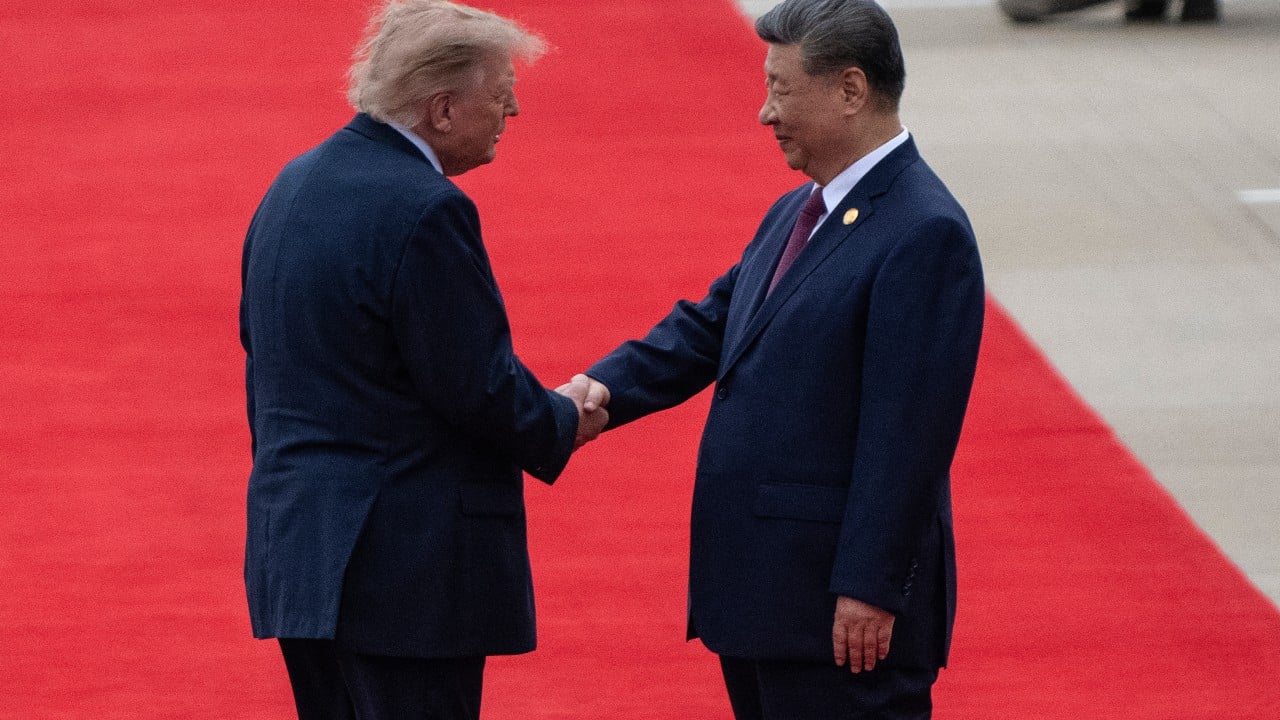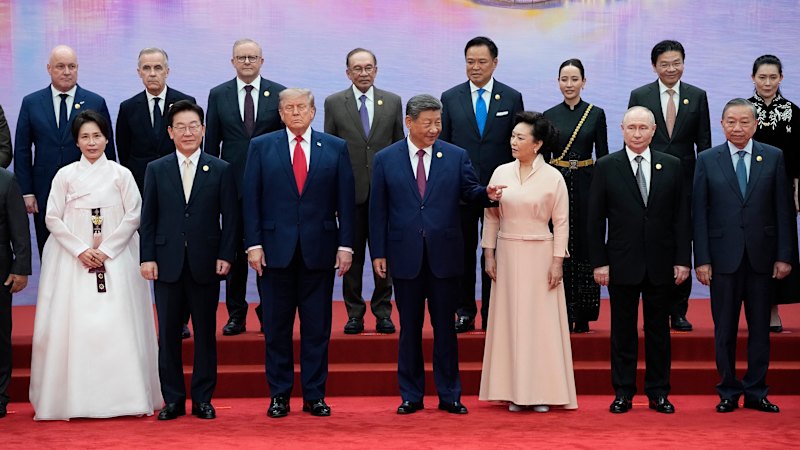
Every time major world leaders touch down in Beijing, the press corps loses its collective mind over the exact same theatrical props. The length of the handshake. The seating chart at the Great Hall of the People. The stiff, choreographed joint communiqués that read like they were drafted by committee in 1998 and microwaved for the evening news.
Mainstream coverage treats a summit in China like a heavyweight boxing match where points are scored through body language and diplomatic phrasing. Analysts spend forty-eight hours dissecting whether a smile looked forced or whether a specific buzzword made it into the closing statement.
They are watching the wrong show.
While reporters obsess over the optics of bilateral summits, the real structural shifts happen three floors below the press room, inside technical working groups, central bank swap desks, and supply chain compliance offices. High-level diplomatic summits in China are not where policy is born. They are the public ribbon-cutting ceremonies for technical compromises that were hammered out six months earlier—or, more often, expensive smokescreens designed to buy domestic political cover while both sides quietly decouple their core infrastructure.
If you are an investor, a supply chain director, or a policy analyst making decisions based on the mood music coming out of a Beijing summit, you are already behind the curve.
The Myth of the Diplomatic Breakthrough
The lazy consensus in international journalism rests on a simple, comforting premise: when superpower leaders sit in the same room, tension drops, communication channels open, and the risk of miscalculation shrinks.
That sounds reasonable on a Sunday morning talk show. In practice, it is backward.
I have sat across from corporate boards that froze hundreds of millions of dollars in capital expenditure because a bilateral summit ended with "constructive dialogue" and "renewed commitment to stability." Six months later, export controls tightened anyway. Tariffs snapped back into place. Licensing approvals stalled in bureaucratic purgatory. Those executives mistook diplomatic theater for operational policy.
In modern statecraft, particularly within Beijing's institutional framework, summits serve a specific, inward-facing function. They project stability to domestic audiences and global markets while locking in the status quo on terms favorable to the host. When foreign leaders fly to China, the visual architecture of the visit—the motorcades, the honor guards, the state banquets—is engineered to reinforce a narrative of inevitability and centrality.
Meanwhile, the actual mechanisms of geopolitical competition operate on a completely different clock.
- Export control regimes move on regulatory cycles dictated by national security ministries, not summit calendars.
- Industrial subsidies are embedded in five-year planning documents and local government financing vehicles long before a foreign delegation steps onto the tarmac.
- Currency settlement shifts happen through incremental clearing bank agreements and commodity invoicing contracts that never make the front page.
Treat a summit communiqué like a press release from a struggling tech company. Look at what is missing, ignore the adjectives, and check the balance sheet instead.
What Actually Gets Decided Behind Closed Doors
If the headlines are noise, what is the signal? When superpower leaders meet in China, there are only three areas where real leverage changes hands. Everything else is filler.
1. Guardrails for Asymmetric Competition
Superpowers do not meet to become friends. They meet to agree on which parts of the house they will not burn down while fighting over the rest. In strategic terms, this is escalation management—the establishment of backchannel protocols to prevent a localized maritime incident, a cyber intrusion, or a satellite collision from spiraling into an unintended kinetic conflict.
Notice the distinction. Agreeing to pick up a red phone during a crisis is not the same thing as resolving the underlying dispute. You can have a functioning military-to-military hotline while simultaneously accelerating naval shipbuilding and semiconductor restrictions. Pundits constantly confuse crisis management with strategic alignment. They are opposites. You only build reinforced guardrails on roads where you expect high-speed collisions.
2. Selective Market Access as Political Leverage
Beijing understands better than almost any capital on earth how to weaponize its domestic consumer and industrial market as a diplomatic tool. Ahead of major summits, regulatory bottlenecks suddenly clear. Agricultural import quotas expand. Commercial aircraft orders get dusted off. Financial licensing applications move from the bottom of the pile to the top.
These are not permanent structural reforms. They are tactical releases of pressure designed to turn foreign CEOs into unpaid lobbyists for softer policy back in their home capitals. When a Western executive returns from Beijing singing the praises of "openness and cooperation" because their firm secured a joint venture approval, they are playing a role scripted for them months in advance. The access is conditional, reversible, and priced into the geopolitical negotiation.
3. Third-Party Signaling
A bilateral meeting in China is rarely just bilateral. Every camera angle and protocol detail is calibrated for an audience in Brussels, Tokyo, Riyadh, New Delhi, and Brasília.
When leaders meet in Beijing, smaller and middle powers watch closely to gauge the balance of leverage. If a visiting leader appears overly eager for commercial deals while softening their stance on trade distortions or regional security, middle powers adjust their own hedging strategies accordingly. They conclude that they cannot afford to take a harder line than the visiting superpower. Conversely, if the summit produces zero substantive concessions despite days of high-level meetings, third-party observers recognize that the structural freeze is permanent and accelerate their own supply chain diversification.
Dismantling the Questions Everyone Gets Wrong
Whenever a major summit hits the news cycle, the same predictable questions flood search engines and boardroom briefings. Most of them are built on flawed premises.
"Did the summit improve relations between the two countries?"
This question assumes bilateral relations move along a single thermometer—warmer or colder. They do not. Modern superpower relations are compartmentalized. You can simultaneously experience record-high trade volume in non-sensitive consumer goods, active cooperation on climate methane standards, and near-total technological decoupling in artificial intelligence, quantum computing, and advanced lithography. Asking whether relations "improved" is like asking whether a company is healthy without looking at its debt-to-equity ratio. Specify the sector, or the question is meaningless.
"Who won the summit?"
Summits are not zero-sum sporting events with a final buzzer. Political scientists like Robert Putnam famously described international negotiations as a two-level game: leaders are simultaneously negotiating with their foreign counterpart at Level I and with their domestic political constituencies, legislatures, and bureaucratic factions at Level II. A concession that looks like a loss to foreign commentators might be a decisive victory for a leader trying to neutralize a hardline faction at home. If you do not understand the domestic political constraints each leader walked into the room with, keeping score is pure guesswork.
"Will this meeting stop tariffs, sanctions, or export controls?"
No. Full stop. Once national security apparatuses frame a technology or supply chain as an existential vulnerability, economic logic loses its veto power. No single meeting between heads of state will dismantle an entity list or reverse a domestic industrial policy backed by hundreds of billions in state capital. At best, a summit buys a temporary pause on new escalations while existing restrictions quietly tighten through enforcement and secondary compliance rules.
How to Read a China Summit Like an Insider
If you want to extract actual intelligence from high-level diplomatic meetings in Beijing, stop reading the op-eds and start auditing the primary indicators. Here is the exact playbook used by geopolitical risk desks that actually make money rather than write white papers.
Track the Deputy-Level Roster, Not the Principals
Look at who sits two chairs down from the heads of state. If the delegation includes the heads of export control bureaus, central bank monetary policy directors, and sovereign wealth fund managers, concrete transactional deals are on the table. If the room is packed exclusively with foreign ministry protocol officials and generalists, the summit is purely symbolic.Compare the Readouts Line by Line
Never rely on a single summary. Pull the official readout published by Xinhua alongside the readout released by the visiting delegation's press office. Put them side by side. The points where both texts use identical language represent the narrow strip of genuine agreement. The topics mentioned in one readout and completely omitted from the other tell you exactly where the negotiations hit a brick wall.Watch Regulatory Filings 30 to 60 Days Post-Summit
Real diplomatic deliverables show up in mundane administrative databases, not press conferences. Monitor customs clearance times for specific agricultural or industrial goods, antitrust merger review approvals involving multinational firms, and central bank currency swap line renewals. If those indicators do not budge within sixty days of the handshake, nothing happened in that room.Follow the Capital Flows of State-Backed Entities
Ignore what officials say about welcoming foreign investment. Watch where Chinese state-owned enterprises and policy banks deploy capital in the weeks following a summit. If outbound investment continues to surge into manufacturing hubs in Southeast Asia, Latin America, and Eastern Europe—often referred to as connector economies—then Beijing is still actively building workarounds to bypass Western trade barriers, regardless of how warm the summit toast sounded.
The Blind Spot in the Contrarian View
Dismissing diplomatic theater altogether carries its own risk. Even seasoned analysts can get burned by assuming summits are 100% hollow.
Personal chemistry at the top still matters in centralized political systems. When power is heavily concentrated in the hands of a single executive, an unscripted conversation over a private dinner can genuinely override bureaucratic inertia on a specific, narrow issue—such as prisoner releases, temporary agricultural waivers, or greenlighting a stalled commercial aviation contract. Bureaucracies in Beijing are massive, risk-averse machines; sometimes they refuse to move until they see clear visual proof from the top that engagement is permitted.
The mistake is not paying attention to summits. The mistake is treating the summit as the destination rather than a diagnostic tool.
Stop Trading on the Photo Op
The next time superpower leaders step onto a red carpet in Beijing, watch how predictable the reaction cycle becomes. Markets will twitch on an ambiguous headline. Pundits will declare either a historic thaw or an inevitable cold war. Corporate consultants will circulate slide decks promising "new clarity" on bilateral trade.
Ignore all of it.
Power in the twenty-first century is not negotiated in front of flagpoles and camera flashes. It is built in wafer fabrication plants, lithium refining facilities, subsea cable routing stations, and cross-border payment clearinghouses. A handshake in Beijing does not alter a single line of export control code or move a single ton of rare earth processing capacity.
Close the live blog, pull up the customs data, and watch what moves when the cameras turn off.