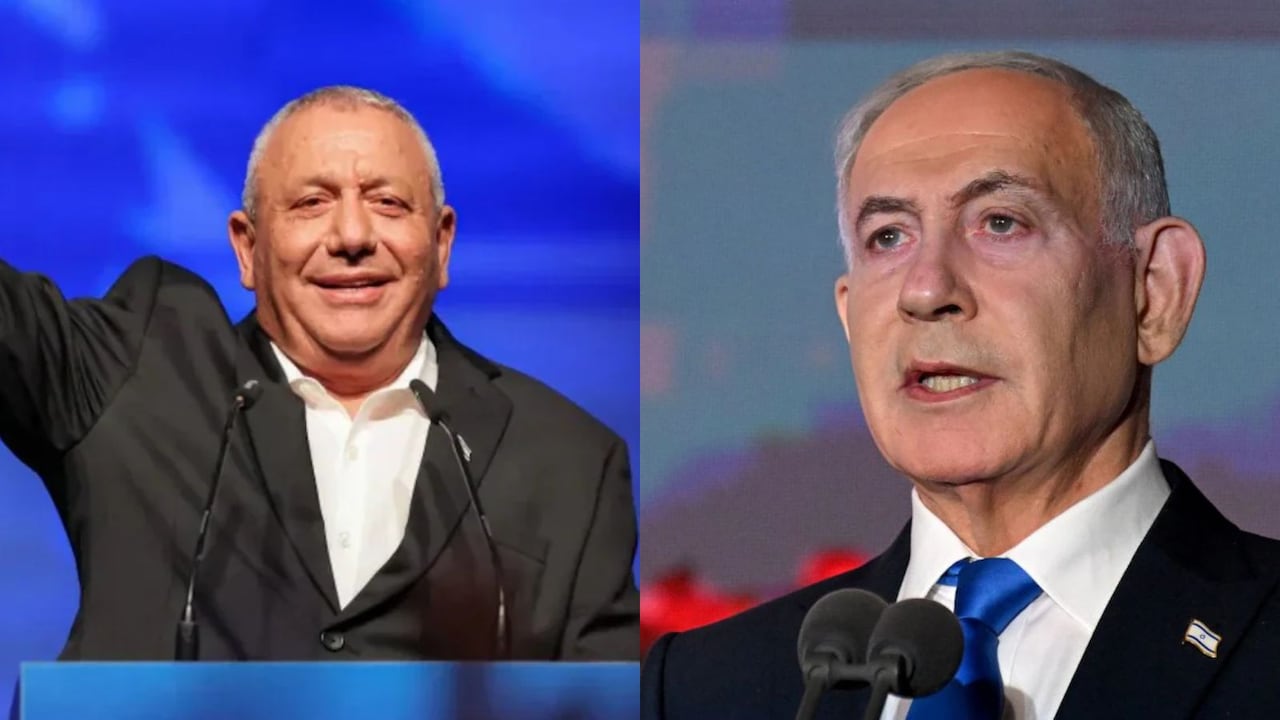
Mainstream political coverage treats Israeli coalition talks like a high-stakes poker game where every closed-door meeting brings the players closer to a grand compromise. Another round of talks is scheduled. Another set of anonymous aides leaks optimistic soundbites about "bridging the gaps." Another headline declares that there is no deal yet, implying that a deal is simply waiting to be found if Gadi Eisenkot and Benjamin Netanyahu just drink enough stale coffee in the same room.
That framing is completely backwards.
You are watching political theater designed to buy time, shift blame, and manage public expectations before an inevitable collapse. When political analysts obsess over whether Likud and the centrist opposition factions can hammer out a policy agreement, they miss the fundamental structural reality of modern Knesset arithmetic. These negotiations are not about governance. They are an exercise in mutual hostage-taking disguised as statesmanship.
The Myth Of The Centrist Kingmaker
Every election cycle or wartime cabinet shakeup produces the same lazy consensus among pundits. The narrative goes like this: Israel is polarized, the ideological extremes hold disproportionate power, and a pragmatic former IDF Chief of Staff like Gadi Eisenkot represents the adult in the room who can pull Benjamin Netanyahu back toward the center.
It sounds comforting. It is also flatly contradicted by twenty years of Israeli parliamentary history.
I have sat in enough war rooms and coalition backchannels to recognize the exact moment a negotiation stops being about policy and turns into an exit strategy. You see it in the phrasing of the leaks. When negotiators talk about "constructive atmospheres" while scheduling another meeting for next week, nobody is conceding an inch. They are simply ensuring that when the talks blow up, the other side takes the heat from the electorate.
In Israel's proportional representation system—where a 3.25% electoral threshold turns tiny single-issue factions into indispensable veto players—the political center does not hold the leverage people think it does. Centrist leaders enter unity talks believing their military credentials and public approval ratings give them moral authority at the bargaining table. Netanyahu enters those same talks counting seats.
Moral authority does not survive a Knesset confidence vote. Seat counts do.
Consider the structural trap Eisenkot faces every time his camp sits across from Likud:
- The Veto Asymmetry: Netanyahu’s natural ideological partners—the ultra-Orthodox Haredi parties and the far-right Religious Zionist factions—do not bluff about bringing down the government. Their demands on military draft exemptions, judicial appointments, and West Bank settlement policy are existential to their voter bases. Centrist partners, by contrast, constantly hesitate to pull the trigger during security crises out of a sense of national responsibility. In coalition bargaining, the party least willing to walk away loses every time.
- The Portfolio Illusion: Likud historically offers centrists prestigious titles—Defense, Foreign Affairs, seats in a narrow security cabinet—while retaining tight control over the Finance Committee, the Justice Ministry, and the legislative agenda. You get the title and the blame when things go wrong, while the prime minister’s inner circle controls the actual machinery of the state.
- The Clock Problem: Time always favors the sitting prime minister. Every week spent in "ongoing coalition talks" is a week the opposition spends divided, unable to mount a unified front, while the incumbent controls state budgets, diplomatic channels, and the timing of any eventual snap election.
Why Policy Agreements In Jerusalem Mean Nothing
If you want to understand why the latest round of meetings will end in either a hollow photo-op or a bitter public breakup, stop reading the draft coalition guidelines. In Israeli politics, written coalition agreements are among the least enforceable documents in the democratic world.
As political scientists like Reuven Hazan at the Hebrew University of Jerusalem have documented extensively, Israel’s system lacks the institutional enforcement mechanisms found in other parliamentary democracies. There is no constructive vote of no confidence that forces an opposition to have a replacement government ready before toppling the current one. Instead, coalition survival relies entirely on continuous transactional maintenance.
Imagine a scenario where Eisenkot and Netanyahu sign a thirty-page document tomorrow morning outlining a clear postwar diplomatic framework, a timeline for a state commission of inquiry, and an equitable ultra-Orthodox conscription law. What happens six months later when Netanyahu refuses to bring the conscription bill to a final plenum vote because his Haredi allies threaten to bolt?
Nothing. There is no court that will force the Prime Minister to submit a bill he decides to bury in committee. Eisenkot’s only recourse is to resign—which is precisely where he started, except now he has spent six months legitimizing a government he fundamentally opposes.
We have already seen this movie play out repeatedly:
- The 2012 Kadima Experiment: Shaul Mofaz, another former IDF Chief of Staff, joined Netanyahu’s coalition with a massive parliamentary bloc, promising to pass a universal draft law and overhaul the electoral system. Within ten weeks, Netanyahu refused to back Mofaz’s draft committee recommendations. Mofaz walked out humiliated, and Kadima disintegrated at the ballot box shortly after.
- The 2020 Rotation Government: Benny Gantz—Eisenkot’s longtime political partner—agreed to join Netanyahu during the COVID-19 crisis under a rotating premiership backed by ironclad Basic Law amendments. Netanyahu bypassed the rotation simply by refusing to pass a state budget, triggering an automatic election before Gantz could ever take the prime minister’s chair.
- The Post-October 7 Emergency Cabinet: The National Unity faction entered the government to provide wartime stability and strategic oversight. Month after month, critical decisions were routed around the war cabinet or stalled entirely until the centrists finally realized they were absorbing political damage without exercising actual command.
History does not just rhyme in Jerusalem. It repeats the exact same script with different retired generals.
Dismantling The Questions Everyone Is Asking
When news breaks that talks have stalled and another meeting is scheduled, voters and commentators immediately reach for the wrong set of questions. Let’s look at the actual dynamics behind the standard talking points.
What is the main sticking point between Eisenkot and Netanyahu?
Pundits will tell you the deadlock is over specific policy disputes: the day-after governance of Gaza, the structure of a state inquiry into intelligence and operational failures, or the terms of military service legislation.
That is the surface noise. The real sticking point is ultimate decision-making authority.
Eisenkot operates from a traditional IDF General Staff mindset: define the strategic objective, align the operational tools, establish clear chains of command, and hold leaders accountable for outcomes. Netanyahu operates from a political survival mindset: keep all options open, avoid irreversible commitments that alienate any core constituency, and maintain total personal control over final decisions. Those two operating systems cannot coexist inside the same cabinet. No amount of clever legal phrasing in a coalition contract can reconcile a leader who wants clear accountability with a leader whose entire political longevity depends on constructive ambiguity.
Can a unity government actually stabilize Israel’s economy and diplomatic standing?
Not when it is built on mutual distrust. International credit rating agencies, foreign investors, and diplomatic allies in Washington do not simply look at whether two rival politicians shook hands for the cameras. They look at policy predictability and legislative durability.
A patchwork coalition where every cabinet meeting turns into a leak-fest and every major vote requires last-minute brinkmanship creates more uncertainty, not less. Markets price in political paralysis. When a government cannot pass structural economic reforms or commit to a coherent long-term regional strategy because half the cabinet is waiting for the other half to blink, calling it a "unity government" is pure marketing.
Why does Eisenkot keep coming back to the table if the odds are stacked against him?
Because walking away completely carries an immediate political penalty in a polarized country facing multi-front security threats. Neither side wants to be branded by voters as the faction that refused to compromise when national solidarity was on the line.
Both camps are playing a sophisticated game of blame attribution. Eisenkot needs to demonstrate to moderate swing voters that he exhausted every conceivable avenue to influence policy from the inside before declaring the government irredeemable. Netanyahu needs to demonstrate to center-right voters—and to international partners—that he is open to broad consensus and that any failure to form a wider coalition rests entirely on the opposition’s rigid preconditions.
The Uncomfortable Truth About The Alternative
Before we pretend that rejecting coalition talks is an effortless win for the opposition, let’s acknowledge the massive downside to the contrarian stance. Staying outside the government leaves the steering wheel entirely in the hands of the current ruling bloc.
When centrist leaders refuse to enter a coalition on principle, they forfeit real-time access to intelligence briefings, operational planning, and diplomatic backchannels. They trade the messy, compromised reality of partial influence for the clean, powerless purity of opposition speeches. If a major strategic decision is made at 3:00 AM—whether involving northern border escalation, hostage negotiations, or judicial overhauls—those sitting outside the cabinet room read about it in the morning press just like everyone else.
That is the genuine dilemma facing any serious Israeli statesman. Entering the tent means risking co-optation and political irrelevance; staying outside means watching consequential, potentially irreversible decisions happen without your voice in the room. Pretending this is an easy choice—or that either path guarantees success—is dishonest.
How To Read What Happens Next
Stop tracking the meeting schedules. Stop analyzing the body language of negotiators walking into the Prime Minister’s Office or the Knesset cafeteria. If you want to know whether these talks actually mean anything, watch three concrete indicators instead:
- Control of the Knesset Arrangements Committee and Finance Committee: If Likud refuses to hand over meaningful parliamentary gatekeeping power, any talk of partnership is dead on arrival. Without committee control, a coalition partner cannot advance a single piece of legislation without the Prime Minister’s personal blessing.
- Binding Deadlines With Automatic Triggers: Watch whether any proposed agreement includes immediate, self-executing deadlines—such as passing specific legislation within thirty days—rather than vague promises to "establish a ministerial committee to examine the issue." Committees in Jerusalem are where inconvenient promises go to die.
- The Reaction of Existing Coalition Partners: Pay zero attention to what Likud spokespeople say about Eisenkot. Watch what the Haredi and far-right party leaders do. If they are not screaming in panic and threatening immediate dissolution, it means Netanyahu has already privately assured them that the talks with the centrists are purely cosmetic.
Coalition negotiations in Israel rarely fail because the two sides couldn't find the right words. They fail because both sides understand the words won't hold once the ink dries. Until the underlying incentives of the Knesset change, every "renewed round of talks" is just another intermission before the exact same impasse.