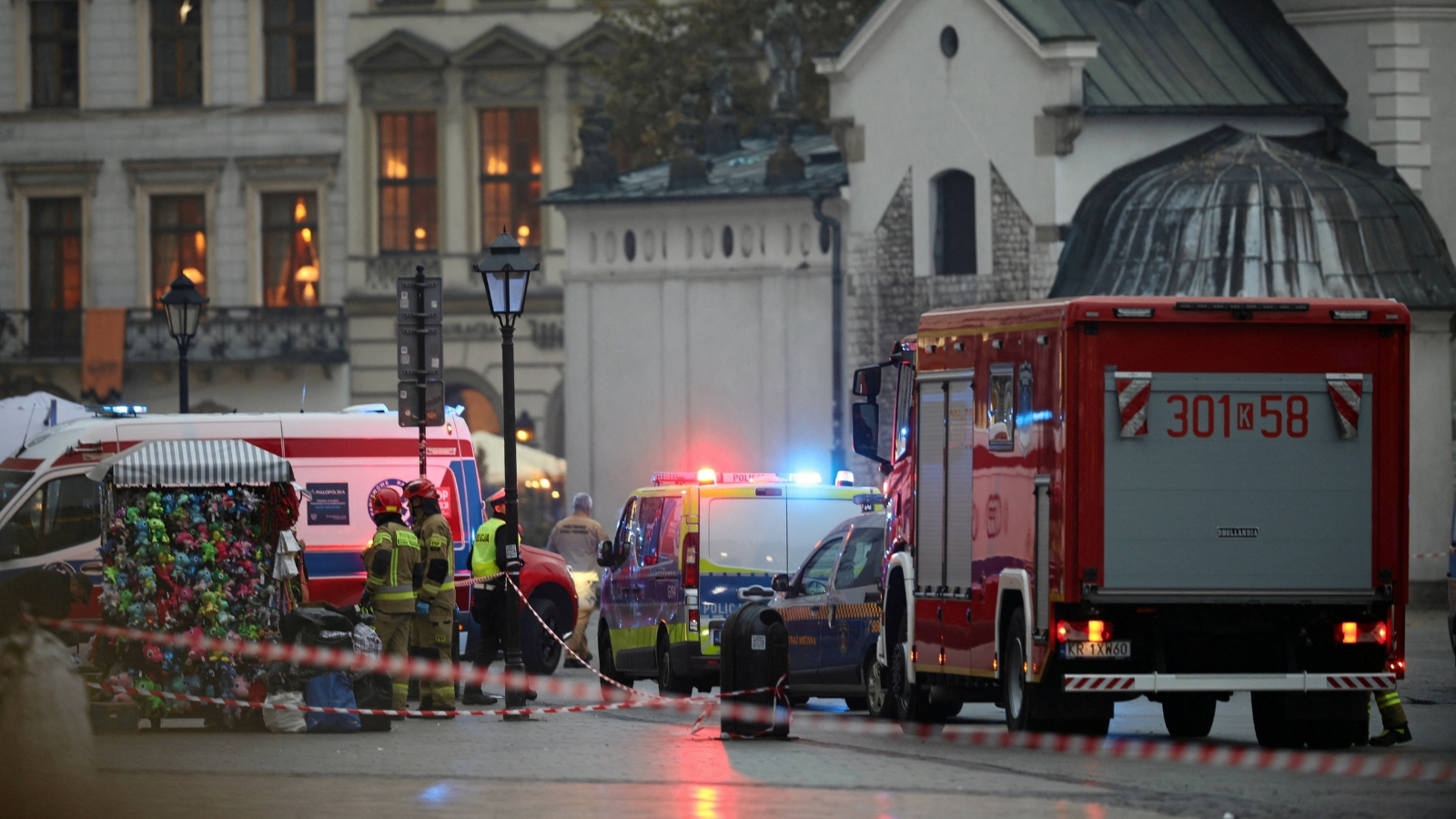
They didn't even wait for the National Transportation Safety Board to clear the wreckage before the vultures started typing.
A Learjet goes down. A young co-pilot dies. Her father, shattered by unimaginable loss, shares a few raw, private words about his daughter—calling her his soulmate, mentioning a final wish—and within hours, the digital content mills have stripped his grief down for parts, bolted on a sensationalized headline, and fed it into the algorithmic meat grinder.
Look at the standard playbook for covering private aviation disasters. Every major tabloid and syndicated news aggregator runs the exact same formula: find the most gut-wrenching familial quote, strip out every ounce of technical context regarding Part 135 charter operations or cockpit resource management, and frame a complex mechanical or human-factors failure as a tear-jerking soap opera.
It is lazy. It is exploitative. Worse, it actively makes the skies less safe by distracting the public—and the industry—from the brutal realities of light-jet aviation.
The Grief-Click Industrial Complex
Newsrooms used to have an unspoken rule about the immediate aftermath of a fatal crash. You reported the tail number, the departure and arrival airports, the weather conditions, and the bare facts of the casualties. You left the grieving family alone unless they explicitly called a press conference, and you waited for the preliminary investigators to pull the cockpit voice recorder before speculating on the human element.
That era is dead. Today, digital editors treat fatal crashes like season finales of a prestige drama.
When a headline reduces a licensed, type-rated commercial pilot to a grieving father's "soulmate" and leads with a "final wish," it isn't honoring her memory. It is weaponizing parasocial empathy to drive programmatic ad impressions. Readers click expecting a poignant human-interest tribute, scroll past six auto-playing video ads, and walk away knowing zero facts about why a twin-engine business jet fell out of the sky.
I have sat in hangar offices with chief pilots and directors of safety after accidents just like this. While the internet is busy crying over curated quotes pulled from a victim's social media feed, the people actually responsible for keeping aluminum in the air are pulling maintenance logs, checking duty-time spreadsheets, and asking uncomfortable questions about training standards. The media's obsession with emotional melodrama creates a smokescreen. When the public only consumes the tragedy as a personal tearjerker, there is zero public pressure on regulators or charter operators to fix the systemic cracks that put that co-pilot in an impossible situation in the first place.
What the Headlines Ignore About the Right Seat
If you want to actually respect a fallen co-pilot, stop talking about her dad's heartbreak and start talking about what happens in the right seat of a light business jet.
In the hierarchy of commercial aviation, the public understands the major airlines. You have a Captain with 15,000 hours and a First Officer with 4,000 hours, backed by a massive dispatch department, union protections, and strict fatigue rules.
Private charter and corporate aviation—operating under Federal Aviation Regulations Part 135 or Part 91—is a completely different animal.
For a young pilot building turbine time, getting into the right seat of a Learjet is the golden ticket. The Learjet series, particularly legacy models like the 35 or 60, is legendary for a reason. They are rocket ships. High wing loading, swept wings, blistering climb rates, and unforgiving low-speed handling characteristics. You do not fly a Learjet; you stay three miles ahead of it, or it bites you.
Because of insurance requirements and operator economics, the right seat of a light jet is frequently occupied by a relatively low-time pilot eager to log multi-engine turbine hours. Meanwhile, the left seat is often occupied by a high-time veteran—sometimes a retired airline pilot, sometimes an aggressive former freight dog—who runs the cockpit like a personal fiefdom.
This creates a lethal gradient in Crew Resource Management (CRM).
- The Authority Gradient: When a 24-year-old second-in-command sees an airspeed decay or a glide-slope deviation, how hard are they willing to push back against a 60-year-old captain who signs off on their performance?
- Schedule Pressure: Unlike major airlines, where a mechanical delay is an inconvenience absorbed by a massive network, private aviation caters to ultra-high-net-worth individuals or urgent cargo clients. The unspoken pressure to "get the job done" and launch into marginal weather is immense.
- Fatigue and Duty Cycles: Under Part 135 regulations, rest requirements and duty-time limits have historically been far looser than the Part 121 rules governing commercial airliners. Pilots regularly fly erratic schedules, flipping from daytime charters to middle-of-the-night repositioning legs.
None of this fits neatly into a viral headline about a father's final wish. You cannot monetize a deep dive into single-pilot resource management or stall-warning stick-pusher mechanics on Facebook. So the press ignores it entirely, burying the aviation reality under a mountain of mawkish sentimentality.
Dismantling the "Freak Accident" Myth
Whenever a small jet crashes, the comment sections inevitably fill up with the same fatalistic platitudes. "When it's your time, it's your time." "Flying private is just riskier." "It was a freak mechanical failure."
Every single one of those statements is demonstrably false.
Aviation safety experts, including organizations like the Flight Safety Foundation and the National Business Aviation Association (NBAA), have spent decades proving that "freak accidents" virtually do not exist in modern turbine aviation. Engines do not simply fall off wings out of nowhere. Jet turbines are marvels of metallurgy and redundancy, boasting failure rates measured in fractions of a percentage point per million flight hours.
When a Learjet crashes, it is almost never the result of a single, unforeseeable catastrophe. It is the end result of an accident chain—a sequence of minor, seemingly inconsequential errors, shortcuts, or environmental factors that align like holes in slices of Swiss cheese.
| The Media Narrative | The Operational Reality |
|---|---|
| A sudden, inexplicable tragedy strikes a beloved pilot. | A predictable sequence of unmitigated risks finally reaches a tipping point. |
| Focuses entirely on the victims' personalities and family grief. | Focuses on approach stability, maintenance sign-offs, and cockpit communication. |
| Treats the crash as an isolated emotional event. | Connects the crash to broader industry trends in pilot shortages and training shortcuts. |
| Leaves the reader feeling sad and helpless. | Demands accountability from operators, manufacturers, and the FAA. |
Consider how this plays out in the real world. Imagine a scenario where a charter crew is flying an unstabilized approach into a regional airport at night. The weather is right at minimums. The tower is closed, so they are flying into uncontrolled airspace. The captain is rushing to make a curfew before the airport FBO closes for the night. The co-pilot notices they are 300 feet high on the glide path and 20 knots fast, but hesitates for four seconds before calling for a go-around because the captain snapped at her during the pre-flight briefing. Four seconds in a Learjet at approach speed is nearly a thousand feet of runway eaten up. By the time the power levers come forward, the engines take three seconds to spool up from flight idle.
That isn't fate. That is physics colliding with human psychology.
Why Family Quotes Should Never Be the Lead
There is an ethical line that modern journalism has completely obliterated, and it has nothing to do with being a prude. It has to do with basic competence.
When a person dies violently, their immediate family is experiencing acute psychological trauma. Their brains are flooded with shock, denial, and desperation to make sense of the senseless. When a father speaks to a local reporter twenty-four hours after losing his child, he is not offering a balanced, objective assessment of his daughter's career or the circumstances of her death. He is drowning in grief and grasping at memories.
Taking those raw, unfiltered expressions of trauma and turning them into the central hook of a national news story is predatory.
I understand the counter-argument. Editors will claim they are "humanizing" the victims so they don't become mere statistics. They will argue that readers want to connect with the people behind the tragedy, and that sharing a father's love for his daughter honors her legacy.
That excuse falls apart the second you look at how these articles are structured. If the goal were genuinely to honor the victim, the article would examine her accomplishments as an aviator. It would look at the grueling hours she spent studying aerodynamics, the checkrides she passed, the weather systems she navigated, and the exact professional standards she upheld in a brutally demanding industry. Instead, her professional competence is reduced to a background detail—a mere stage prop for a melodrama about her personal relationships.
Worse, publishing speculative or emotionally charged narratives immediately after a crash taints the public record. Once a million people read a sensationalized version of a crash, they never go back twelve to eighteen months later to read the final NTSB probable cause report.
Ask ten people on the street what caused any high-profile private plane crash over the last decade. Nine of them will repeat whatever dramatic rumor or emotional hook dominated the news cycle during the first forty-eight hours. Almost none of them will cite the actual aerodynamic stall, spatial disorientation, or maintenance oversight documented by federal investigators.
The Hard Truth About the Pilot Pipeline
If journalists actually wanted to do their jobs and ask the tough questions surrounding young co-pilots dying in business jets, they would be investigating the pilot shortage.
Right now, the aviation industry is experiencing one of the most aggressive talent vacuums in history. Major airlines are hoovering up pilots at an unprecedented rate to replace retiring Baby Boomers. To fill the void, regional airlines and Part 135 charter operators have dramatically lowered their hiring minimums and accelerated their training timelines.
Years ago, getting hired to fly a high-performance corporate jet required thousands of hours of flight time, extensive instrument experience, and years of seasoning in slower, more forgiving piston and turboprop aircraft. Today, pilots are transitioning from single-engine Cessna trainers directly into the right seats of twin-engine jets with barely enough ink dry on their commercial certificates.
Simulation technology is incredible, and young pilots today are technically sharper than ever. However, you cannot simulate judgment. You cannot download ten years of watching bad weather develop over the Rockies, or knowing when a mechanic's quick fix doesn't feel right, or having the spine to tell a senior captain to abort a takeoff.
When a young co-pilot dies in a crash, the tragedy isn't just that a father lost his daughter. The tragedy is that an industry desperate to keep planes moving is routinely placing junior aviators into high-stakes, high-workload environments without the institutional safety nets that major airline pilots take for granted.
Writing a tear-jerker about a grieving dad lets every charter operator, every flight school, and every federal regulator off the hook. It turns a systemic labor and safety issue into a Hallmark card.
How to Consume Aviation News Without Being Played
The next time a business jet, a commuter plane, or a private aircraft goes down, watch the headlines closely. You will see the exact same pattern repeat itself within minutes of the first emergency responder arriving on the scene.
If you want to understand what actually happened—and avoid feeding the grief-click machine—apply a strict filter to everything you read in the first week:
- Ignore any headline built around a family member's quote. If the lead paragraph focuses on a final text message, a soulmate bond, or a tragic coincidence, close the tab. The outlet has zero factual information about the crash and is stalling for clicks.
- Look for the tail number and operator certificate. Legitimate aviation reporting immediately identifies whether the flight was operated privately (Part 91) or commercially for hire (Part 135), as the safety oversight and maintenance requirements differ drastically.
- Wait for the NTSB Preliminary Report. Within roughly ten to fourteen days of a fatal U.S. crash, investigators release a factual preliminary report. It contains zero speculation—just verified radar tracks, weather observations, witness statements, and maintenance history.
- Follow actual aviation analysts, not general assignment reporters. General news reporters rarely know the difference between an altimeter and an airspeed indicator. Seek out commentary from accredited accident investigators, aerodynamicists, and active type-rated pilots who understand the specific airframe involved.
There is nothing honorable about turning a devastated father's private agony into public entertainment. A pilot died doing one of the most demanding, unforgiving jobs on earth. She deserves an investigation rooted in cold, hard engineering and unsparing accountability—not a cheap headline designed to make you cry before you scroll to the next distraction.