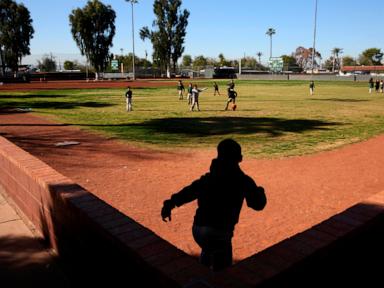
The American Academy of Pediatrics (AAP) just released another "groundbreaking" report telling us that children need recess. Groundbreaking? It’s the medical equivalent of telling people to breathe oxygen. They argue that recess is a "necessary break" for physical and mental health. They frame it as a gentle, supervised period of rejuvenation—a "wellness" intervention tucked between long-division and social studies.
They are completely wrong.
By sanitizing recess into a clinical requirement for "child development," we are killing the very thing that makes it valuable. The AAP wants a controlled environment. They want rubberized mats, "structured play," and teachers roaming the perimeter like prison guards to ensure no one scrapes a knee. This isn't recess. This is an outdoor extension of the classroom.
The real value of recess isn't the "break" from academics. It’s the high-stakes social laboratory of unregulated, risky, and sometimes unfair play. If we keep following the AAP’s sanitized roadmap, we aren’t raising healthy children; we’re raising fragile ones who can’t navigate a world that doesn’t have a whistle-blowing referee standing five feet away.
The Myth of the "Mental Break"
The common narrative suggests that the brain needs a rest period to consolidate learning. You’ve heard the pitch: "A tired brain can't focus." While biologically true, the "rest" narrative implies that recess is a passive reset button.
It isn't. Recess is the most cognitively demanding part of a child's day.
In a classroom, the rules are explicit. Sit here. Open this book. Speak when called upon. At recess, the rules are implicit, shifting, and governed by a complex hierarchy of peers. A child has to negotiate the terms of a kickball game, read the body language of a bully, manage the sting of exclusion, and decide whether jumping off the top of the slide is worth the potential pain.
This isn't "rest." This is executive function on overdrive. When pediatricians lobby for "regular recess" to improve classroom focus, they are treating children like machines that need to cool their processors. They ignore the fact that the "stress" of recess is the point.
Safetyism is a Health Crisis
We have traded broken bones for broken spirits. The push for "safe" playgrounds has resulted in sterile environments where the greatest risk is boredom.
The AAP notes that recess should be "safe," but they fail to define what that means. In the modern educational context, "safe" has come to mean the total elimination of physical risk. When you remove the ability for a child to fall, you remove their ability to learn proprioception—the sense of self-movement and body position.
Dr. Peter Gray, a research professor at Boston College, has documented the decline of free play over the last half-century. His findings are chilling: as free play has declined, anxiety, depression, and feelings of helplessness among children have skyrocketed. By making recess "safe," we’ve made the world terrifying.
Imagine a scenario where a child never experiences a physical "near-miss" on a climbing frame. They never learn to calibrate their own fear. They never learn how to recover from a minor injury without a parent or teacher intervening. This child enters adulthood with a vestibular system that hasn't been tested and a psyche that views every obstacle as a catastrophe.
The AAP wants more recess? Fine. But if that recess is "structured" and "safe," it’s just more school. We need more danger in recess, not less.
The Problem with "Structured Play"
A rising trend in schools is "structured recess," where adults lead games like organized tag or soccer. The AAP gives this a cautious thumbs-up, noting it can increase physical activity levels in children who would otherwise stay sedentary.
This is a disaster for social intelligence.
Structured play is just another form of adult-led instruction. When an adult manages the game, the children don't have to resolve their own disputes. They don't have to learn how to keep a game going when the rules are unclear. They don't have to deal with the kid who cheats. They just look to the adult to fix it.
I’ve spent years observing how these policies play out in school districts. When you take away the "negotiation" phase of play, you create a vacuum in conflict resolution skills. I once watched a group of fifth-graders spend 15 minutes of a 20-minute recess just arguing over the rules of a game they made up. To a teacher, that looks like a "waste of time." To a developmental expert, those 15 minutes were the only part of the day that actually mattered. They were learning how to build a society from scratch.
Structured play is for the convenience of administrators who fear lawsuits. It is not for the benefit of the child.
The Inequality of the "Recess as a Privilege" Model
The competitor article touches on the idea that recess shouldn't be taken away as punishment. They’re right, but for the wrong reasons. They think it's unfair because the child "needs the exercise."
The real reason you don't take away recess is that it's the only time the "difficult" student has a chance to be successful.
The classroom is a narrow track. It rewards a specific type of compliance and linguistic/logical intelligence. The playground is a wide-open field. The kid who can't sit still for a spelling test might be the kid who can coordinate a 10-person defense in a game of capture the flag.
When schools use recess as a bargaining chip—"If you don't finish your work, you stay inside"—they are effectively telling the child that their only value lies in their ability to conform to a desk-based environment. This creates a cycle of resentment and disengagement. We shouldn't protect recess because it's a "right"; we should protect it because it's the only place where the non-linear, high-energy, "problem" students can actually lead.
Recess in the Age of Digital Isolation
The AAP article ignores the biggest competitor to recess: the screen.
We aren't just fighting for 20 minutes of outdoor time; we are fighting against the total atrophy of the human social animal. In a digital world, everything is curated. Social interactions are mediated by algorithms. You can "block" anyone who disagrees with you.
Recess doesn't let you block people. You have to deal with the kid who smells, the kid who talks too loud, and the kid who won't share the ball. This is the "friction" of humanity.
The AAP suggests that recess improves "social and emotional learning." That is a sanitized, academic way of saying "learning how to not be a jerk." You don't learn empathy from a textbook or a "Social-Emotional Learning" (SEL) worksheet. You learn it when you realize that if you hit your friend too hard, they stop playing with you, and then you’re alone.
The False Promise of "Regularity"
The "regularity" of recess is another point of contention. The AAP advocates for frequent, scheduled breaks.
The problem with a 15-minute scheduled break is that it takes 10 minutes for children to enter "deep play." Deep play is the state of flow where the imagination takes over, and the environment becomes something else entirely—a spaceship, a castle, a jungle.
By chopping the day into tiny, "regular" intervals, we prevent children from ever reaching that state of flow. We are training them to be "task-switchers," not "deep thinkers."
Instead of three 15-minute breaks, why aren't we talking about one 90-minute block of unstructured chaos? Because 90 minutes of chaos is hard to manage. It's hard to insure. It’s hard to fit into a schedule optimized for standardized testing.
The Physical Health Fallacy
The AAP loves to talk about obesity. They frame recess as a tool to combat the "obesity epidemic."
If your goal is caloric expenditure, recess is an inefficient tool. A child can easily spend 20 minutes of recess sitting on a swing or talking to a friend. If physical health was the primary goal, we’d just put them on treadmills.
When we justify recess through the lens of physical health, we make it vulnerable to being replaced by "Physical Education" (PE). PE is not recess. PE is another class with a curriculum, goals, and grades.
Recess must be defended as an intellectual and social necessity, not a physical one. If we allow it to be categorized under "health and wellness," it will always be the first thing cut when the budget gets tight or the test scores drop. You can get "wellness" from a vitamin or a gym class; you can only get "recess" from freedom.
Stop Asking for Permission
The "lazy consensus" is that we need more "high-quality, supervised recess."
I’m telling you we need low-quality, unsupervised recess.
We need playgrounds with loose parts—old tires, wooden planks, crates—where kids can build and destroy things. We need to stop worrying about dirt, germs, and minor bruises. We need to stop the "helicopter" surveillance that prevents children from making their own mistakes.
Admit the downside: Yes, children will get hurt. Yes, there will be hurt feelings. Yes, some kids will be excluded.
But the alternative is worse. The alternative is a generation of adults who have never had to solve a problem that wasn't on a multiple-choice test.
The AAP’s report is a polite suggestion from a group of well-meaning doctors. But childhood isn't a medical condition to be managed. It’s a trial by fire.
Open the doors. Step back. Let them figure it out.