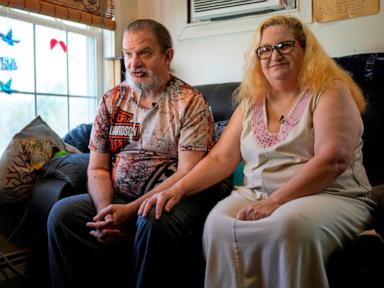
The media is currently infatuated with a heartwarming tale. An elderly, ailing couple manages to stay in their family home, avoiding the dreaded transition to an assisted living facility. The hero of the story? A sleek, semi-autonomous piece of metal and plastic that reminds them to take pills, fetches water, and bridges the gap between independence and institutionalization.
The collective response from tech pundits and social commentators has been a predictable, utopian sigh of relief. They look at a rapidly aging population, look at a severe shortage of healthcare workers, and declare that the cavalry has arrived. They ask, "Are more to come?" as if the widespread adoption of domestic care robots is an inevitable, glorious triumph of human ingenuity.
They are asking the wrong question.
The real question is why we are willing to spend hundreds of thousands of dollars developing machines to simulate human empathy rather than fixing the systemic, economic, and architectural failures that isolate our elderly in the first place.
I have spent fifteen years consulting for health tech startups and venture capital firms. I have watched boards pour millions of dollars into robotic companions, mechanical limbs, and automated monitoring systems. I can tell you exactly how this plays out. The shiny beta tests always succeed in isolated, wealthy environments. Then the harsh reality of the real world hits, and these projects collapse under the weight of their own flawed assumptions.
The belief that robotics will solve the eldercare crisis is a dangerous fantasy. It is an expensive band-aid applied to a gaping cultural wound.
The Economic Myth of the Automated Caretaker
Let us start with the most glaring blind spot in the pro-robot narrative: basic economics.
The lazy consensus suggests that mass production will eventually make care robots affordable for the average middle-class family. This logic applies to consumer electronics like televisions and smartphones. It does not apply to complex, multi-modal kinetic machines operating in unstructured environments.
A smartphone operates in a digital environment where the stakes of a software glitch are a crashed app. A care robot operates in a physical environment where a software glitch means dropping an eighty-year-old human being onto a hardwood floor.
The liability alone ensures that these machines will never be cheap. To understand why, you need to understand the difference between structured and unstructured environments.
- Structured Environments: Automated factories and fulfillment centers are highly controlled. The floor is perfectly level. The lighting is consistent. No unexpected objects appear in the paths of the machines. Under these conditions, automation thrives.
- Unstructured Environments: The average suburban home is a chaotic mess of uneven rugs, scattered clutter, unpredictable pets, and shifting furniture.
Navigating a messy living room requires an extraordinary amount of computational power and expensive sensory hardware. To create a robot that can reliably assist a person with limited mobility without causing injury requires advanced LiDAR, redundant hydraulic systems, and sophisticated edge-computing architecture.
When you factor in the cost of specialized maintenance, mandatory software updates, and exorbitant liability insurance, the total cost of ownership skyrockets. These machines will not democratize eldercare. They will become a luxury commodity reserved for the top five percent of the population. The rest of the world will be left with empty promises and a worsening shortage of human caregivers.
The Cognitive Decline Acceleration
Even if we assume the engineering challenges are solved and the costs miraculously plummet, we are still ignoring a massive medical downside.
The primary argument for care robots is that they preserve independence by automating daily tasks. If a robot fetches your tea, cleans your kitchen, and monitors your vitals, you get to stay in your house.
But in geriatric care, there is a fundamental rule: use it or lose it.
Physical and cognitive health in old age is directly tied to engagement and effort. When you automate the mundane friction of daily life, you accelerate decline. The simple act of standing up to fetch a glass of water is a crucial mobility exercise for an ninety-year-old. The mental effort required to plan a meal, walk to the pantry, and cook is a vital cognitive workout that keeps neural pathways active.
By designing a world where an elderly person never has to exert themselves physically or mentally, we are effectively accelerating their path toward complete helplessness.
Consider a study published in The Lancet that analyzed the impact of lifestyle interventions on cognitive decline. The data consistently shows that multi-domain interventions—combining physical exercise, cognitive training, and social activity—are the only effective ways to maintain brain function in aging populations.
A robot that does everything for you eliminates physical exercise and cognitive training. And as for social activity? A pre-programmed conversational algorithm is not social connection. It is a mirror.
The Empathy Mirage
People often ask if robots can alleviate the epidemic of loneliness among senior citizens. The answer is an absolute, categorical no.
We need to define our terms carefully here. There is a profound difference between interaction and connection.
A robot can interact. It can recognize a human face using computer vision, parse vocal inflections using natural language processing, and generate a contextually appropriate response. It can even simulate warmth by modulating its vocal pitch or displaying digital expressions on a screen.
But this is an empathy mirage.
Human beings possess an innate capacity for detecting authenticity. We call this intersubjectivity—the shared, psychological perception between people. When an elderly person talks to a caregiver, they know they are talking to someone who understands pain, who has experienced grief, and who is choosing to spend time with them.
When that same person talks to a robot, they are aware, on some level, that they are interacting with a complex loop of code executing commands based on probabilistic models. It is a synthetic relationship.
Psychological research from institutions like MIT has shown that while short-term engagement with robotic companions can evoke positive emotions, long-term exposure often leads to a profound sense of isolation. The user realizes that the machine "cares" for them only because its battery is charged and its code dictates it must.
We are essentially telling our elders: "We are too busy to spend time with you, so we bought this expensive appliance to simulate human presence." It is not a triumph of compassion; it is a moral abdication.
The Real Problem is Urban Planning, Not Technology
The obsession with domestic robots stems from a refusal to acknowledge the true culprit behind our eldercare crisis: the built environment.
The competitor's article celebrates a robot helping a couple stay in their home. But why is staying in that specific home so critical? Because our suburban communities are designed to isolate anyone who cannot drive a car.
The modern suburban home is an island. It is separated from grocery stores, medical facilities, cultural centers, and social hubs by miles of asphalt and high-speed roads. When an aging individual loses their driver's license, that home transforms from a sanctuary into a gilded cage.
Instead of deploying mechanical proxies to navigate these poorly designed spaces, we should be dismantling the spaces themselves.
The solution to an aging population is not high-tech isolation. It is low-tech integration.
| Current Suburban Model | The Integration Model |
|---|---|
| Single-family homes isolated by zoning laws | Mixed-use development with multi-generational housing |
| Car-dependent infrastructure that strands non-drivers | Walkable, transit-oriented neighborhoods |
| Centralized, institutional eldercare facilities | Hyper-local, community-based support networks |
| Reliance on automated machinery for basic chores | Structural design that promotes natural, daily movement |
When you look at countries that handle aging successfully, you do not see armies of humanoid robots roaming the streets. You see architectural designs that allow the elderly to remain active participants in public life.
You see the "15-minute city" concept, where daily necessities are accessible within a short walk. You see co-housing models where young families and retirees live in the same complexes, creating organic, mutual support systems. The younger residents help with heavy lifting and grocery runs; the older residents provide childcare and community institutional memory.
This approach costs a fraction of what we spend on robotics research, yet it yields vastly superior outcomes for mental and physical health. It requires no software updates, no lithium-ion batteries, and no data privacy waivers.
The Downside Nobody Wants to Admit
To be fair, a purely community-driven approach has a major drawback: it requires a radical cultural shift.
It demands that we value collective well-being over hyper-individualism. It requires us to change zoning laws, invest heavily in public infrastructure, and accept that our lives should be intertwined with our neighbors.
That is incredibly difficult. It takes time, political will, and structural sacrifice.
Technology, by contrast, is an easy out. It allows venture capitalists to pitch a product that promises to solve a systemic societal failure without requiring anyone to change how they live. It tells the busy adult child that they can buy peace of mind for three monthly installments of $999.
It is a comforting lie.
Dismantling the Wrong Questions
If you look at the common questions floating around the internet regarding this topic, you can see how deeply the tech industry's narrative has warped our collective perspective.
How can we make care robots more human?
This question is fundamentally flawed. You cannot code humanity. Every effort to make a machine look or sound more human simply pushes it deeper into the uncanny valley, creating a sense of unease. We should stop trying to make robots more human and start making our human institutions more humane.
Will robots replace human nurses?
They cannot, and they won't. The belief that a robot can replace a nurse assumes that nursing is merely a sequence of physical tasks—changing bandages, dispensing pills, measuring blood pressure. It ignores the clinical intuition, the emotional triage, and the complex ethical decision-making that human nurses perform every second. A machine cannot feel when a patient is giving up on life. A nurse can.
When will care robots become mainstream?
If we continue down our current path of atomized, car-dependent urban planning, they will become mainstream when the crisis becomes so severe that we have no other choice. But that will be a mark of systemic failure, not a milestone of human progress.
Change the Goal
We need to stop evaluating technology based on its ability to help people withdraw from society. Staying in an isolated suburban home with a robotic caretaker is not independence. It is a high-tech solitary confinement cell.
The goal of health technology should not be to build a smoother pipeline toward total isolation. The goal should be to create tools that facilitate human-to-human interaction, reduce administrative burdens on actual medical professionals, and allow people to remain connected to their communities for as long as possible.
We do not need smarter machines to take care of our parents. We need a smarter society that refuses to abandon them to the silicon valley machine.

