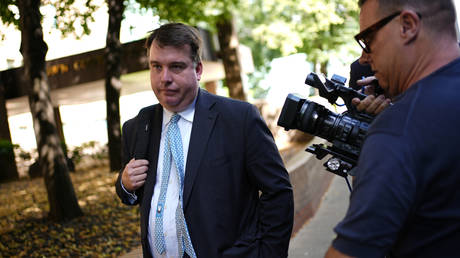
The collective moral meltdown over Craig Williams pleading guilty to cheating at gambling is a masterclass in political theater. For months, the commentariat has treated the revelation that a handful of Westminster insiders placed a few hundred quid on a July election date as if it were the greatest democratic crisis since the regularities of the voting system itself were established. It is not. It is a pathetic, low-stakes distraction that masks a much deeper structural absurdity.
The mainstream press wants you to look at Williams, the former parliamentary private secretary to Rishi Sunak, and see a systemic rot in the halls of power. They want you to gasp at the sheer audacity of an insider using a privileged Downing Street planning meeting to pocket a tiny payout from a Ladbrokes app.
They are wrong. The real scandal is not that a few low-level political operators lacked basic self-control. The real scandal is that our financial, legal, and regulatory systems are set up to throw the book at a £100 novelty bet while ignoring the industrial-scale insider trading that drives modern governance every single day.
We are hyper-fixating on a shoplifter while the central bank gets cleared out through the back door.
The Comedic Math of the Corporate Outrage Machine
Let us look at the actual numbers involved in this historic criminal prosecution. When Southwark Crown Court heard the guilty pleas of Craig Williams and Amy Hind, the figures presented were not the stuff of high-rolling international syndicates. Williams wagered a combined total of less than £400 across three separate bets. Hind successfully placed a single £100 bet after having larger amounts blocked by automated compliance filters.
The state apparatus has mobilized an entire multi-year criminal task force, dubbed Operation Scott, involving both the Metropolitan Police and the Gambling Commission, to prosecute individuals over sums of money that would barely cover a decent dinner in central London.
Consider the resources consumed. We have high-court judges, highly paid prosecutors, and specialized regulatory investigators building cases that will drag on into trials scheduled for late 2027 and early 2028 for the remaining defendants. The taxpayer bill for this enforcement action will comfortably run into millions of pounds. All to punish a handful of political hangers-on who tried to scam a bookmaker out of a corporate payout equivalent to a mid-tier television set.
This is performative governance at its finest. By turning a petty compliance failure into a grand moral crusade, the state can pretend it possesses teeth. It allows the regulatory framework to look tough on corruption without ever having to confront the actual mechanisms of institutional influence that matter.
The Reality of Policy Leaks and Market Manipulation
I have spent years watching how information moves through the corridors of power and into the financial markets. If you truly believe that an election date is the most valuable piece of inside information floating around Westminster, you are fundamentally naive.
Every week, decisions are made in private government rooms that shift billions of pounds in equity markets.
- A sudden shift in green energy subsidies.
- The unexpected delay of a major infrastructure project.
- A subtle tweak to corporate tax codes or defense procurement contracts.
This information does not find its way onto a retail betting app. It moves through whispers to institutional asset managers, hedge fund consultants, and corporate lobbyists. When a major policy change leaks twelve hours before an official announcement, causing a sudden, inexplicable spike in the trading volume of a specific FTSE 100 stock, there is rarely a multi-agency police task force deployed to hunt down the source. The City of London accepts this as the friction of doing business.
Imagine a scenario where a political aide informs a hedge fund manager that a specific environmental regulation is about to be dropped. The fund shorts the affected sector and clears a profit of seven figures. That is viewed as sophisticated political intelligence gathering. But if that same aide uses their phone to bet £100 that the prime minister will hold an election in July rather than October, they face a two-year prison sentence under Section 42 of the Gambling Act 2005.
The hypocrisy is stark. We have criminalized the trivial while professionalizing the systemic.
Why Novelty Betting Markets Are an Inherent Security Flaw
The narrative completely ignores the true enablers of this entire mess: the commercial gambling operators themselves.
Why do bookmakers offer public betting lines on state secrets in the first place? An election date is not a sporting event. It is not an objective contest determined by skill, strategy, or athletic performance. It is a unilateral executive decision made by a single individual behind closed doors.
By setting odds on a date known only to a tight circle of public servants, gambling companies are effectively creating a financial incentive for corruption. They are hanging a sign outside Downing Street offering free money to anyone willing to breach confidentiality.
[Government Council Room] ---> Holds Private Election Date Decision
                                      |
                                      v
[Inside Personnel] ------------> Breaches Confidentiality
                                      |
                                      v
[Commercial Bookmaker] --------> Offers Retail Novelty Lines
                                      |
                                      v
[Financial Payout] ------------> Creates Systemic Corruption Incentive
The bookmakers like to play the victim here. They point out that their automated systems flagged Williams as a Politically Exposed Person (PEP), leading to the investigation. But they knew the risks when they opened the market. They offer these novelty lines purely for marketing purposes, to generate cheap headlines and social media engagement. When the inevitable happens and someone with actual knowledge takes the bait, the bookies cry foul and demand that the criminal justice system protect their corporate profit margins.
If the state were serious about protecting the integrity of political processes, it would not just prosecute the idiots who place the bets. It would ban commercial operators from offering markets on non-sporting, state-controlled announcements entirely. You cannot leave a suitcase full of cash on a street corner and then demand a police escort to protect it.
The Broken Logic of the Gambling Act 2005
The legal mechanism used to secure these convictions reveals just how skewed our priorities have become. The prosecution relies on a broad interpretation of "cheating" under the Gambling Act.
To prove cheating, the prosecution does not need to prove that the democratic process itself was subverted or that voters were harmed. They merely need to prove that the bettor used an unfair advantage to extract money from a private corporation. The legal harm being addressed here is not a crime against the public interest; it is a crime against Ladbrokes and Paddy Power.
Contrast this with the laws governing actual political corruption. Trying to prove that a politician accepted a donation in exchange for altering a piece of planning legislation requires an incredibly high bar of evidence. You must prove an explicit quid pro quo, a direct causal link between the money and the policy action. Because that threshold is so difficult to meet, actual political bribery is rarely prosecuted in British courts.
Yet, because the victims in this instance are corporate bookmakers with sophisticated tracking algorithms, the state can secure an easy win. The Gambling Commission gets to justify its budget, the government gets to pretend it is cleaning up its act, and the public gets a sacrificial lamb to satisfy their generalized anger at the political class.
Dismantling the People Also Ask Mythos
Look at the standard questions that dominate the public conversation around this event. The answers usually provided by media outlets are designed to comfort you. They are wrong.
Did the election betting scandal change the outcome of the 2024 election?
The conventional wisdom says yes. Commentators argue that the scandal completely derailed Rishi Sunak’s campaign, confirming the narrative of Tory sleaze and sealing their electoral fate.
This is a complete inversion of cause and effect. The Conservative Party did not lose because Craig Williams placed a bet. They lost because they had spent years presiding over economic stagnation, crumbling public services, and internal factional warfare. The betting scandal was a symptom of a dying administration, not the cause. It provided a neat, easily understood metaphor for a party that had lost its grip on reality, but it did not shift the underlying tectonic plates of public opinion one bit. The outcome was locked in long before anyone opened a gambling app.
Is this a sign that UK politics needs stricter ethics laws?
The standard response is an emphatic yes. Activists are already calling for independent ethics overseers with the power to monitor the personal finances of all political staffers.
This solution completely misunderstands human behavior. You cannot pass a law that magically eliminates human stupidity or petty greed. Westminster is already suffocating under a mountain of compliance forms, declarations of interest, and bureaucratic oversight. More rules will not stop a reckless individual from making a bad decision in the privacy of their own home. What it will do is create a bloated, hyper-cautious bureaucracy that makes governance even slower and more ineffective than it already is. The focus should be on reducing the opportunities for corruption—such as banning novelty political markets—rather than building an panoptic surveillance state around underpaid junior staff.
The Actual Actionable Shift Nobody Wants to Talk About
If we want to stop these ridiculous spectacles from occurring every few years, we have to change the structural incentives. That requires steps that will anger both the political establishment and the corporate lobby.
First, the government must pass legislation that completely outlaws commercial betting on any political event that relies on non-public executive decisions. This includes election dates, cabinet appointments, and honor lists. If a market cannot be priced using publicly available statistical data, it should not exist as a legal gambling product.
Second, the financial penalties for leaking market-moving policy information must be brought into alignment with the severity of the crime. If we are willing to threaten a junior aide with two years in prison for a £100 bet on an election date, we must be prepared to hand down ten-year sentences to senior officials who leak regulatory decisions to corporate entities.
Third, the media needs to stop treating these minor ethical lapses as if they are structural crises. By devoting endless front-page coverage to a minor instance of personal greed, the press allows major, institutional failures to go completely unexamined.
We are currently watching a system that is entirely content to waste millions of pounds of public money chasing down low-level offenders to protect the financial interests of multi-billion-pound gambling conglomerates. It is a farce. And the fact that the public is cheering it on is the biggest joke of all.