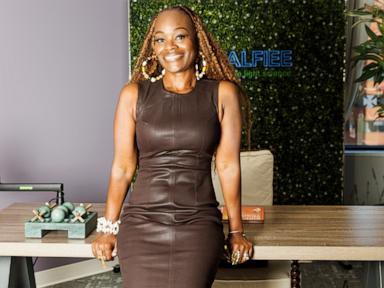
Every philanthropy reporter in America just wrote the exact same puff piece. They saw Melinda French Gates hand twenty million dollars each to high-profile leaders with zero strings attached, watched those leaders redistribute the cash to grassroots nonprofits, and declared a moral victory for modern charity.
They missed the entire story.
Giving away someone else's money is not leadership. And cutting blank checks without accountability is not a revolution in giving. It is an abdication of strategic responsibility disguised as humility.
When a billionaire hands a celebrity, an academic, or a non-profit executive a massive pile of cash and walks away, the media applauds the lack of friction. The prevailing consensus in the charitable sector right now—championing unrestricted, "trust-based" philanthropy—argues that traditional grants strangle local organizations with paperwork and arbitrary metrics. That part is true. Traditional foundation bureaucracy is broken.
What the cheerleaders refuse to admit is that swinging the pendulum to total, unmonitored capital distribution creates a brand-new set of systemic failures. By outsourcing the hard work of due diligence to famous proxies, mega-donors buy themselves public relations insulation while leaving the hardest structural problems untouched.
The Myth of the Frictionless Billionaire
Let us look closely at the mechanics of the "no strings attached" mega-gift.
In May 2024, Melinda French Gates announced a one-billion-dollar commitment to advancing women's power globally through her organization, Pivotal Ventures. A centerpiece of that rollout involved selecting a dozen prominent figures—including former New Zealand Prime Minister Jacinda Ardern, filmmaker Ava DuVernay, and economist Raj Chetty—and giving each of them a twenty-million-dollar fund to distribute entirely as they saw fit.
The mainstream coverage treated this like an egalitarian miracle. Look at these brilliant leaders bypassing the gatekeepers! Look how fast the money moves!
Here is the reality from inside the sector. I have spent fifteen years auditing foundation portfolios, sitting on grant-making boards, and watching nine-figure endowments evaporate into thin air because nobody wanted to hurt a recipient's feelings with a spreadsheet. When you remove all guardrails from capital, you do not eliminate gatekeeping. You merely privatize it inside the personal Rolodex of a single famous individual.
Think about what actually happens when an individual—no matter how brilliant or well-intentioned—suddenly has twenty million dollars to give away on a compressed timeline without an institutional vetting apparatus behind them.
- Network bias takes over immediately. Humans give to people they know, organizations they have heard of, and causes that align with their personal brand. The obscure, unglamorous grassroots group in a rural county that lacks a slick communications director never makes it onto a celebrity's radar.
- absorptive capacity gets ignored.* Dumping two million dollars overnight onto a local nonprofit with an annual operating budget of four hundred thousand dollars does not save them. Often, it destroys them. They lack the financial controls, human resources infrastructure, and operational maturity to absorb a five-fold budget expansion without imploding.
- The "one-and-done" cliff. Unrestricted windfalls create artificial hiring booms. Organizations bring on full-time staff, sign multi-year leases, and launch ambitious programs. Eighteen months later, when the celebrity proxy moves on to their next project and the billionaire's one-off fund is depleted, those nonprofits fall off a fiscal cliff.
Why Institutional Philanthropy Exists in the First Place
To understand why the current obsession with proxy-giving is flawed, you have to understand the actual purpose of an institutional foundation.
At its core, institutional philanthropy is not just a bank account. It is a specialized risk-assessment and capacity-building engine. When done correctly—which is admittedly rare—a foundation uses its permanence to absorb long-term risk that governments and private markets will not touch.
Compare this to trust-based philanthropy, a framework championed by groups like the Whitman Institute and popularized at massive scale by MacKenzie Scott. Trust-based philanthropy operates on the premise that multi-year, unrestricted funding combined with streamlined reporting shifts power back to the communities doing the work.
MacKenzie Scott proved that speed matters. By deploying billions of dollars rapidly through Yield Giving without forcing nonprofits through year-long application gauntlets, she injected life-saving liquidity into thousands of underfunded organizations during a global crisis.
Melinda French Gates is attempting a variation of that model, with one critical difference. Instead of hiring a massive team of anonymous sector analysts to scour tax filings and community outcomes like Scott did, French Gates deputized public figures as her distribution nodes.
This is where the strategy turns from bold to lazy.
A former prime minister, an Academy Award-nominated director, and a tenured Harvard economist possess extraordinary talents in their respective fields. None of those fields is professional grant-making. Assessing the financial health, governance stability, and long-term scalability of dozens of grassroots nonprofits is a technical discipline. Treating it like a side hustle you can hand off to accomplished friends signals to the world that expertise in capital allocation does not actually matter.
Did Those Leaders Actually Solve Anything
Let us examine how the recipients of these twenty-million-dollar funds actually deployed the capital.
When details emerged about where the money went, the press celebrated the diversity of the grants. Funds flowed to maternal health initiatives, reproductive rights groups, economic mobility research labs, and local community centers. Some leaders spread the money thin across dozens of organizations in small tranches. Others placed larger bets on established institutions they already trusted.
Ask yourself a simple question: What happens in five years?
If you distribute twenty million dollars across forty organizations, each group receives five hundred thousand dollars. In the world of systemic social change, half a million dollars is a rounding error. It buys a year of breathing room. It pays down some operational debt. It funds a pilot study. It does not alter the structural incentives of a broken healthcare system, rewrite state-level labor laws, or build permanent economic power for marginalized women.
Imagine a scenario where a venture capital firm raised a two-hundred-million-dollar fund, handed twenty million each to ten famous actors and economists, told them to invest in whatever startups they liked without running financial audits, and explicitly forbade them from taking board seats or requiring quarterly updates. Institutional investors would pull their money and sue for breach of fiduciary duty before the ink dried.
Yet in the non-profit world, we call that exact behavior visionary.
Why? Because philanthropy suffers from a soft bigotry of low expectations. We are so thrilled when billionaires part with their money at all that we refuse to interrogate whether the capital is deployed effectively. When a billionaire uses a famous proxy to distribute cash, the media gets two rounds of glowing press coverage instead of one: first when the billionaire makes the pledge, and second when the famous proxy announces their curated list of grantees.
What People Get Wrong About Accountability
Whenever you critique unrestricted, proxy-driven giving, defenders immediately accuse you of wanting to return to the dark ages of philanthropic micromanagement. They conjure images of arrogant program officers forcing overworked shelter directors to fill out eighty-page binders just to pay for diapers and utilities.
That is a false binary. You do not have to choose between suffocating bureaucracy and blindfolded check-writing.
The real battle in modern capital allocation is between performative generosity and disciplined catalytic capital.
| Feature | Performative Proxy Giving | Disciplined Catalytic Capital |
|---|---|---|
| Decision Maker | High-profile public figures and celebrities | Domain specialists and affected community boards |
| Due Diligence | Network-based, reputational, informal | Rigorous operational, financial, and governance audits |
| Funding Structure | One-off windfalls, unpredictable timelines | Multi-year commitments with clear step-down schedules |
| Accountability | Zero metrics required; success defined by deployment | Shared milestones co-designed with the grantee |
| Primary Outcome | Positive press cycles and short-term liquidity | Durable institutional capacity and systemic reform |
Look at the difference between those two columns.
Disciplined catalytic capital respects the autonomy of the nonprofit leader without abandoning them to figure out complex scaling problems alone. If you want to fund maternal health, you do not hand twenty million dollars to a famous acquaintance and tell them to follow their heart. You assemble a consortium of midwives, hospital administrators, public health economists, and local mothers. You give them the capital, backed by dedicated operational support to ensure the money builds permanent clinics rather than temporary PR campaigns.
The Heavy Hitters Who Actually Understand Leverage
If you want to see what serious, high-leverage capital deployment looks like, look at how organizations like GiveWell or The Robin Hood Foundation operate under the hood—or even better, look at participatory grant-making models like the FRIDA Young Feminist Fund.
GiveWell does not care about famous names or compelling narrative arcs. Their analysts spend thousands of hours calculating the exact cost-per-life-saved of malaria nets, vitamin A supplementation, and direct cash transfers. When they move money, they demand rigorous randomized controlled trials and transparent financial tracking. Critics call them cold. The result of their "coldness" is hundreds of thousands of human lives demonstrably saved per dollar spent.
On the other end of the spectrum, FRIDA actually fulfills the promise that billionaire proxy-giving only pretends to make. Instead of asking elite figures to guess what grassroots groups need, FRIDA puts the decision-making power directly into the hands of young feminist activists around the globe through a peer-review voting process. The people living inside the problem decide who gets the money.
Compare that to Melinda French Gates' model. Having a former prime minister or a Hollywood director choose which grassroots groups deserve funding is not shifting power to the marginalized. It is simply moving power from one elite dining room to another.
The Uncomfortable Truth About My Own Approach
Now, let us be completely honest about the downside of demanding rigor, metrics, and institutional discipline in philanthropy.
It is slow. It is expensive. And it frequently fails in its own right.
When you insist on rigorous due diligence, multi-year strategic planning, and measurable outcomes, you inevitably create friction. Brilliant, scrappy grassroots leaders who lack formal grant-writing training get filtered out. Foundations end up spending twenty percent of their budgets on consultants, evaluators, and program officers—money that could have gone directly to buying food, medicine, or legal defense. Worse, chasing quantifiable metrics often pushes funders toward safe, easily measurable interventions (like counting how many brochures were printed) while starving messy, long-term political organizing that takes decades to show results.
I have seen hyper-analytical foundations paralyze themselves for three years studying a housing crisis while people froze on the streets outside their glass headquarters. Speed has value. Trust has value. Sometimes, putting cash in the hands of a good leader immediately is the only sane move.
Admitting that traditional philanthropy is too slow does not excuse replacing it with celebrity parlor games.
How Billionaires Should Actually Deploy Twenty Million Dollars
If you are sitting on a massive fortune—or running a mid-sized family foundation—and you want to move capital fast without falling into the bureaucratic trap, stop copying the celebrity proxy model. Do this instead:
- Fund the infrastructure, not just the spotlight. Stop forcing nonprofits to spend every dime on direct programming. Explicitly earmark thirty percent of every unrestricted grant for internal capacity: better accounting software, competitive salaries for operational staff, and legal counsel. A nonprofit cannot fight systemic injustice if its payroll system collapses every Friday.
- Use milestone-based tranches instead of blind lump sums. Give an organization five hundred thousand dollars today with zero restrictions on how they spend it. Simultaneously, lock in another million dollars over the next two years, unlocked not by tedious fifty-page essays, but by three simple, mutually agreed-upon operational health metrics—such as staff retention, board diversification, or reserve fund growth.
- Replace celebrity proxies with pooled community funds. If you do not have the staff to vet hundreds of local organizations, do not ask your famous friends to do it. Wire the twenty million dollars to established intermediary funds—like local community foundations or regional rapid-response funds—that already employ full-time, rooted experts who know every legitimate organizer in their zip code.
- Build the exit ramp on day one. Never hand a small organization a massive windfall without a three-year step-down plan. Structure the payout as fifty percent in year one, thirty percent in year two, and twenty percent in year three. Force the organization to use year one to hire a development director who can replace your capital before it vanishes.
Stop Confusing Press Releases With Progress
The media loves a tidy story about generosity. A billionaire writes a check. A famous leader passes it along. A grassroots nonprofit smiles for the camera. Everyone goes home feeling wonderful about the state of the world.
Meanwhile, the underlying systems that created the poverty, the maternal mortality rates, and the economic disenfranchisement remain entirely intact.
Philanthropy is the only sector on earth where people are praised simply for spending money, regardless of what that money actually buys. Until we stop applauding billionaires for the sheer speed at which they offload their responsibilities onto famous proxies, mega-giving will remain what it has always been: an expensive public relations exercise masquerading as social change.