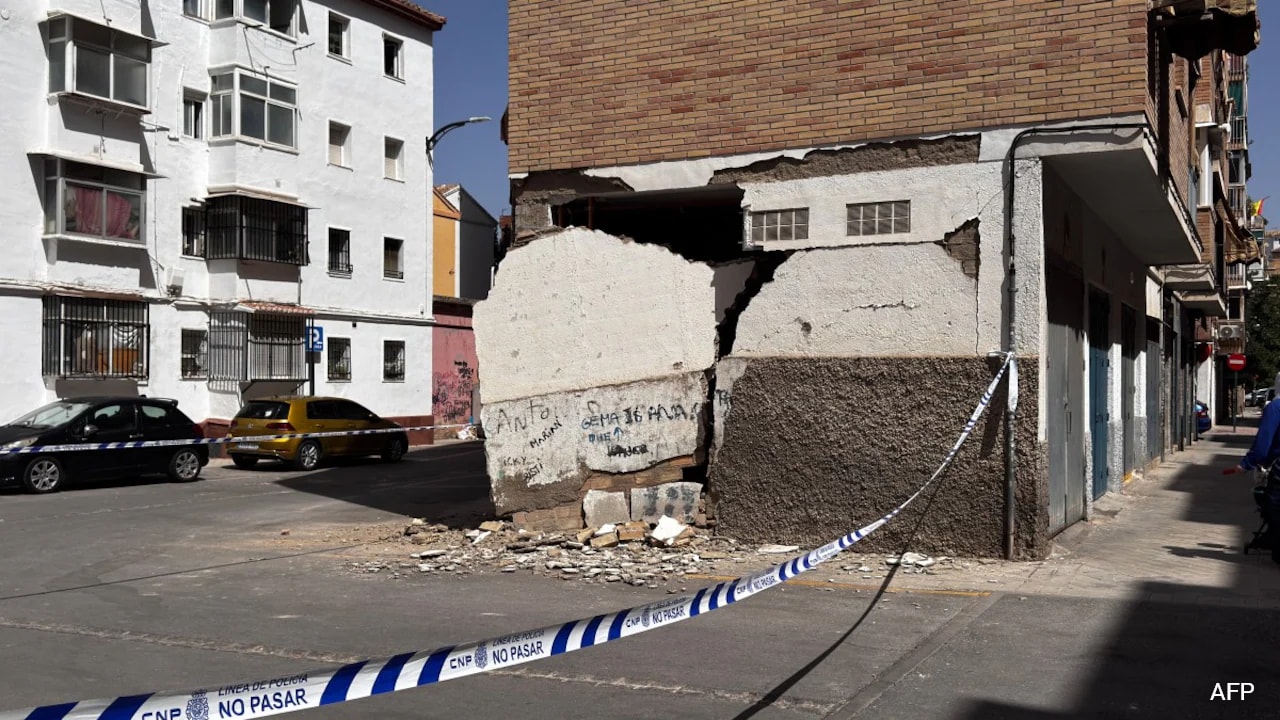
Another tremor rattles Granada. Another news cycle screams about injured children, panic in the streets, and a region supposedly sitting on a ticking geological time bomb.
The standard media playbook writes itself. They trot out seismologists to talk about tectonic plates, publish dramatic stock photos of cracked plaster, and feed you a steady diet of helpless fatalism. Mother Nature is angry. We are defenseless. Cue the ominous music.
It is lazy journalism, and it is actively dangerous.
Granada is not experiencing an unprecedented catastrophe. It is experiencing a completely normal, predictable release of minor seismic energy in a region that has handled these geological realities for centuries. The real scandal is not that the earth shook. The scandal is that every time a modest magnitude-three or four tremor hits, we act surprised, blame the tectonic plates, and completely ignore the human choices that turn minor structural settling into headline news.
I have spent two decades walking through European historical districts after minor seismic events. I have watched municipal leaders throw up their hands, blame the physics of the Earth, and quietly sweep structural negligence under the rug.
Let us dismantle the narrative right now.
The Myth of the Unpredictable Monster
The lazy consensus in modern disaster reporting treats earthquakes like lightning strikes from an angry god. They happen to us. We endure them.
This is a profound misunderstanding of risk. Earthquakes do not kill people. Bad mortar does. Outdated municipal codes do. Landlord negligence in retrofitting 1960s concrete block apartments does.
When a child is injured by falling debris during a minor swarm in Granada, the media points a trembling finger at the Alpujarras fault system. That is a convenient dodge. The fault system did not fail the building inspection. A human being did.
Seismology is a hard science, but disaster management is a political choice. We treat minor tremors as unavoidable acts of God because holding local authorities accountable for structural integrity requires actual work. It is much easier to run a headline about terrified residents fleeing into public squares than it is to audit the seismic reinforcement of every residential block built during Spain's mid-century housing boom.
What Structural Engineering Actually Tells Us
Let us look at the mechanics. A typical tremor in this region registers on the lower end of the moment magnitude scale. These are surface-level energy releases. They are not subduction zone mega-thrusts capable of reshaping coastlines.
Yet, buildings crack. Why? Because of deferred maintenance and structural laziness.
Imagine a scenario where a municipality spent half the money it allocates for post-disaster PR campaigns on mandatory carbon-fiber wrapping for vulnerable masonry joints. The injuries would drop to zero overnight.
When you study regional building stock across Andalusia, you see a distinct split. Modern commercial construction, engineered under strict Eurocode 8 standards, handles these shakes with barely a rattle. The buildings shrug off the energy because the physics were respected during the design phase.
The casualties and injuries always trace back to legacy infrastructure. Unreinforced masonry, unanchored cornices, and unconstrained partition walls turn minor ground acceleration into flying shrapnel. When a falling tile hits someone in the street, the seismograph is not to blame. The zoning board that refused to enforce retrofitting deadlines is to blame.
The Cost of Manufactured Panic
Every time the press hyperventilates over a minor seismic swarm, three things happen:
- Real estate panic destabilizes local economies.
- Insurance premiums spike for working-class families who can least afford them.
- Actual emergency response resources are squandered on public relations panic control rather than structural mitigation.
This is a market failure disguised as natural drama. We have built an entire media ecosystem that profits off catastrophic framing. If a minor tremor does not come with a side of existential dread, nobody clicks.
We need to stop treating Granada like a disaster zone and start treating it like a modern urban area with specific, manageable engineering requirements.
The Uncomfortable Solution
If you own property in a seismic zone, stop waiting for the government to save you with a retroactive subsidy. They will not. They will wait for a headline, express deep concern, and move on to the next crisis.
Hire an independent structural engineer. Inspect your load-bearing walls. Check your parapets. Secure heavy interior fixtures. The earth beneath Spain is going to keep shifting because that is what tectonic plates do. They do not care about your real estate value or your evening news broadcast.
The next time the ground rolls beneath your feet in Andalusia, do not run outside looking for a scapegoat in the mantle of the Earth. Look up at the building code compliance of the structure you are standing in. That is where the real damage is done.