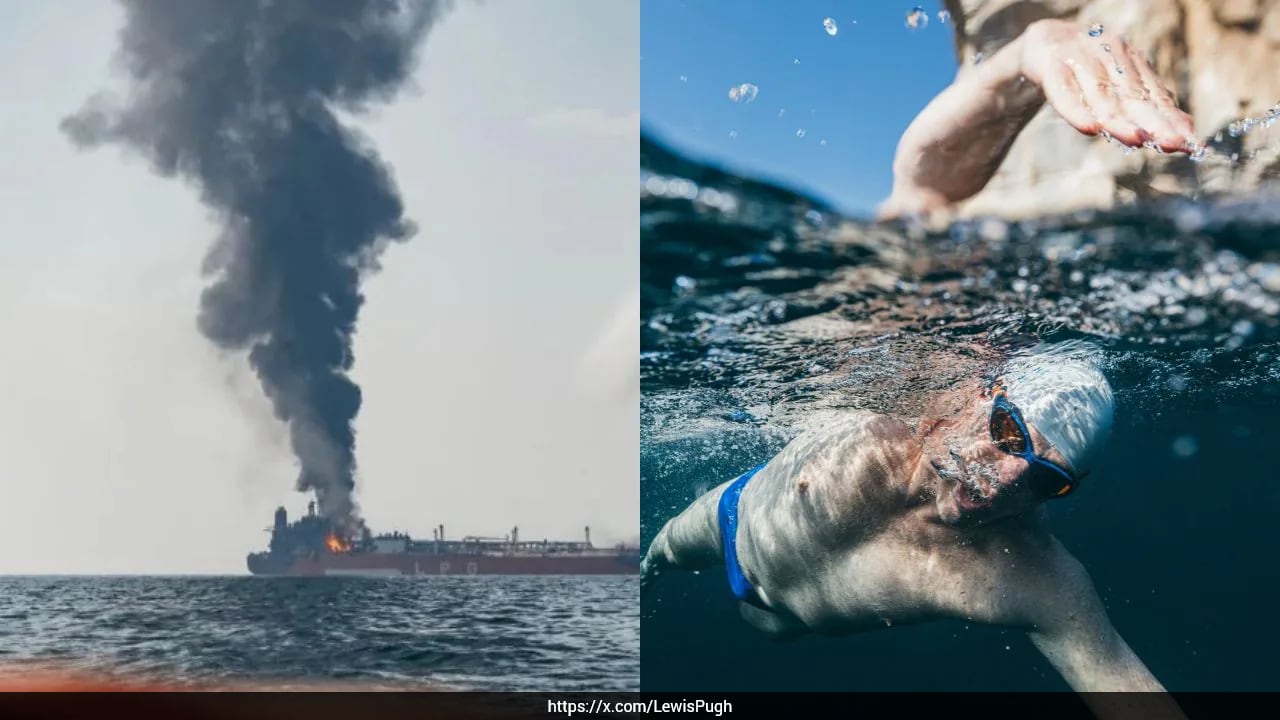
Media outlets love a tidy hero narrative. Take a geopolitical flashpoint—like naval tension and conflict in the Strait of Hormuz—drop an ultra-endurance athlete into open water with a press release about marine life, and watch the clicks roll in.
It makes for great television. It makes for terrible conservation. Learn more on a related issue: this related article.
When a swimmer enters a volatile maritime chokepoint to "raise awareness" for coral reefs, whale sharks, or sea turtles, the press treats the stunt like an act of ecological salvation. Readers applaud the grit. Sponsors slap logos on neoprene. Everyone feels better about a dying ocean without changing a single behavior that actually kills marine life.
Here is the uncomfortable truth that marine biologists and maritime security experts know but rarely say out loud to journalists: extreme endurance stunts in active conflict zones do almost nothing to protect wildlife. Worse, they actively distort how public attention, security resources, and philanthropic dollars get allocated. More analysis by The Athletic delves into related perspectives on this issue.
The Myth of "Awareness" in Geopolitical Chokepoints
Let us look at the geography and mechanics of the Strait of Hormuz. At its narrowest point, this waterway between Oman and Iran is roughly 21 nautical miles wide. Roughly a fifth of the world's petroleum liquids pass through it. When conflict flares in the region, the water is not a pristine nature reserve waiting for a spokesperson. It is a heavily mined, radar-swept, high-traffic industrial corridor.
The lazy consensus in sports journalism is that putting a human body in danger forces the world to look at the fragile ecosystem beneath the waves.
That logic fails on contact with reality.
First, no naval commander or shipping conglomerate reroutes a supertanker or alters rules of engagement because an endurance athlete is doing freestyle nearby. Maritime conflict operates on state-level deterrence, insurance premiums, and energy security. An awareness swim has zero operational friction on the forces actually threatening the waterway.
Second, "raising awareness" is the single most overvalued currency in modern environmentalism. Nobody watching news coverage of naval strikes in the Persian Gulf is confused about whether explosions and oil spills are bad for fish. The public does not suffer from an information deficit. Conservation suffers from a governance and enforcement deficit.
I have spent years watching well-meaning campaigns burn through six-figure logistics budgets to stage dramatic visual stunts—open-water crossings, desert ultramarathons, ice swims—only to leave behind zero permanent monitoring infrastructure, zero policy changes, and zero protected marine acreage once the camera boats return to port.
What War Actually Does to Marine Ecosystems (And Why Stunts Miss It)
If you want to understand how conflict affects wildlife in the Strait of Hormuz and the broader Persian Gulf, stop looking at the swimmer and look at the acoustics, the hull chemistry, and the shipping lanes.
Marine ecologists who study conflict zones focus on specific, measurable mechanisms:
- Chronic Acoustic Trauma: Naval sonar, underwater detonations, and increased merchant vessel speeds create low-frequency noise pollution that disrupts cetacean navigation and masks communication for dolphins and whales.
- Sub-lethal Hydrocarbon Exposure: Even without a catastrophic tanker sinking, heightened military activity increases bilge dumping, fuel leaks, and localized chemical runoff that settles into shallow coral habitats.
- Displaced Fishing Pressure: Paradoxically, active war zones sometimes trigger temporary ecological rebounds. When commercial trawlers avoid contested waters out of fear of mines or seizure, fish stocks briefly recover—a phenomenon marine historians documented in the North Atlantic during World War II.
Notice what is missing from that list. None of those variables respond to a press conference on a beach.
When media coverage frames a lone athlete as "fighting to protect wildlife," it reduces complex marine ecology to a motivational poster. It replaces hard questions about ballast water regulations, coastal dredging, and regional fisheries treaties with a human-interest story about chaffing, jellyfish stings, and personal willpower.
The Hidden Ecological and Security Tax of Extreme Stunts
Endurance athletes like to believe their footprint is minimal. One person, a pair of goggles, a swimsuit. What could be cleaner?
Everything required to keep that person alive in open water.
An open-water expedition in a contested or high-traffic strait is never a solo endeavor. It requires escort vessels burning marine diesel for hours or days at a stretch. It requires support crews, chase ribs, medical personnel, media boats, and satellite communications. In a conflict zone, it also demands coordination with coast guards, naval patrols, or private maritime security contractors—pulling monitoring assets away from actual vessel interdiction or spill response.
Imagine a scenario where a support boat experiences engine failure or drifts into a restricted naval lane during heightened tensions. Suddenly, military assets have to divert to rescue a PR stunt. The risk is asymmetric: the athlete gets the documentary footage, while local authorities and ecosystems absorb the operational hazard.
Even outside conflict zones, the carbon and logistical math of expedition-style advocacy rarely adds up. Flying a crew of ten people, camera gear, and safety equipment across the globe so one person can swim twenty miles to protest ocean warming is performance art, not environmentalism.
Why Sponsors and Media Love the "Eco-Warrior" Playbook
If these stunts are so ineffective at protecting marine habitats, why do they keep happening? Because the incentives for every party involved—except the wildlife—are aligned.
- For the Athlete: Adding an environmental cause transforms a vanity athletic feat into a moral crusade. It unlocks corporate sponsorships, speaking fees, and documentary distribution that pure sports records never could.
- For Brands: Funding an "ocean advocate" is the cheapest form of greenwashing available. It costs a fraction of supply-chain reform and generates immediate, photogenic content.
- For Newsrooms: Complex environmental policy is dry and hard to illustrate. A swimmer battling waves against a backdrop of warships gives editors an instant visual hook.
The casualty in this arrangement is public literacy. Readers walk away believing that individual heroism is a substitute for institutional enforcement.
What Real Marine Protection in High-Risk Waters Looks Like
You might be asking the wrong question if you are wondering how an athlete can make a difference in a war zone. The real question is how conservationists protect marine ecosystems when diplomacy breaks down and borders close.
Organizations like the International Union for Conservation of Nature (IUCN) and regional marine science institutes operate through mechanisms that never make the evening news because they lack a single photogenic protagonist:
- Transboundary Scientific Data Sharing: Even when nations are at odds, marine scientists often maintain back-channel data exchanges on migratory species—like whale sharks and green turtles—that ignore maritime borders.
- Satellite and Acoustic Monitoring: Remote sensing, Synthetic Aperture Radar (SAR) for detecting illegal oil discharges, and passive acoustic buoys collect continuous data without putting human lives in the water.
- Port-State Enforcement: The most effective way to protect the Strait of Hormuz is not inside the strait itself, but in the ports of Fujairah, Muscat, and Bandar Abbas—enforcing strict inspections on ship hulls, ballast tanks, and fuel quality before vessels ever enter the bottleneck.
This work is slow, bureaucratic, and entirely unglamorous. Nobody makes a Netflix special about a port inspector checking an oil record book. Yet that single inspection prevents more toxic discharge than a thousand charity swims.
The Trade-Off You Have to Accept
To be fair to open-water swimmers, there is one narrow scenario where extreme physical stunts generate real value: when they are explicitly tied to a binding financial or legal mechanism.
If an athlete uses a swim to pressure a specific ministry into signing a delayed marine protected area designation, or if every mile swum unlocks verified escrow funding directly wired to local reef restoration labs with public audits, the stunt acts as a useful lever. Without that direct contractual link, "awareness" evaporates within forty-eight hours of the news cycle moving on.
The downside of rejecting feel-good adventure journalism is obvious. Pure policy and marine biology are harder to sell to a distracted public. Stripping away the romantic myth of the lone eco-athlete leaves us staring at slow, frustrating geopolitical realities that cannot be solved by swimming faster.
Good. Stop looking for heroes in wetsuits to save complex ecosystems. Start demanding receipts from anyone who claims their personal endurance record is protecting the ocean.