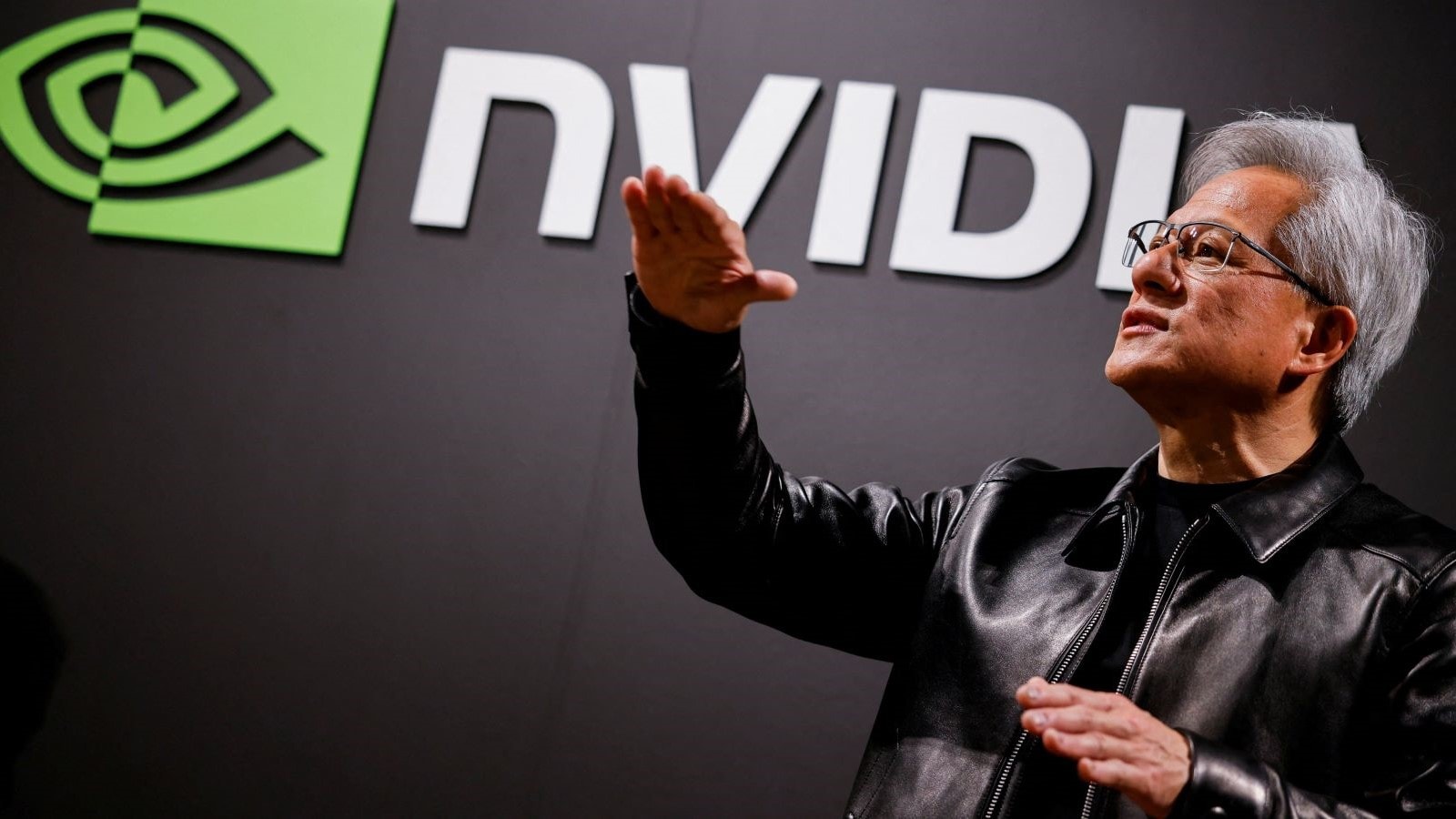
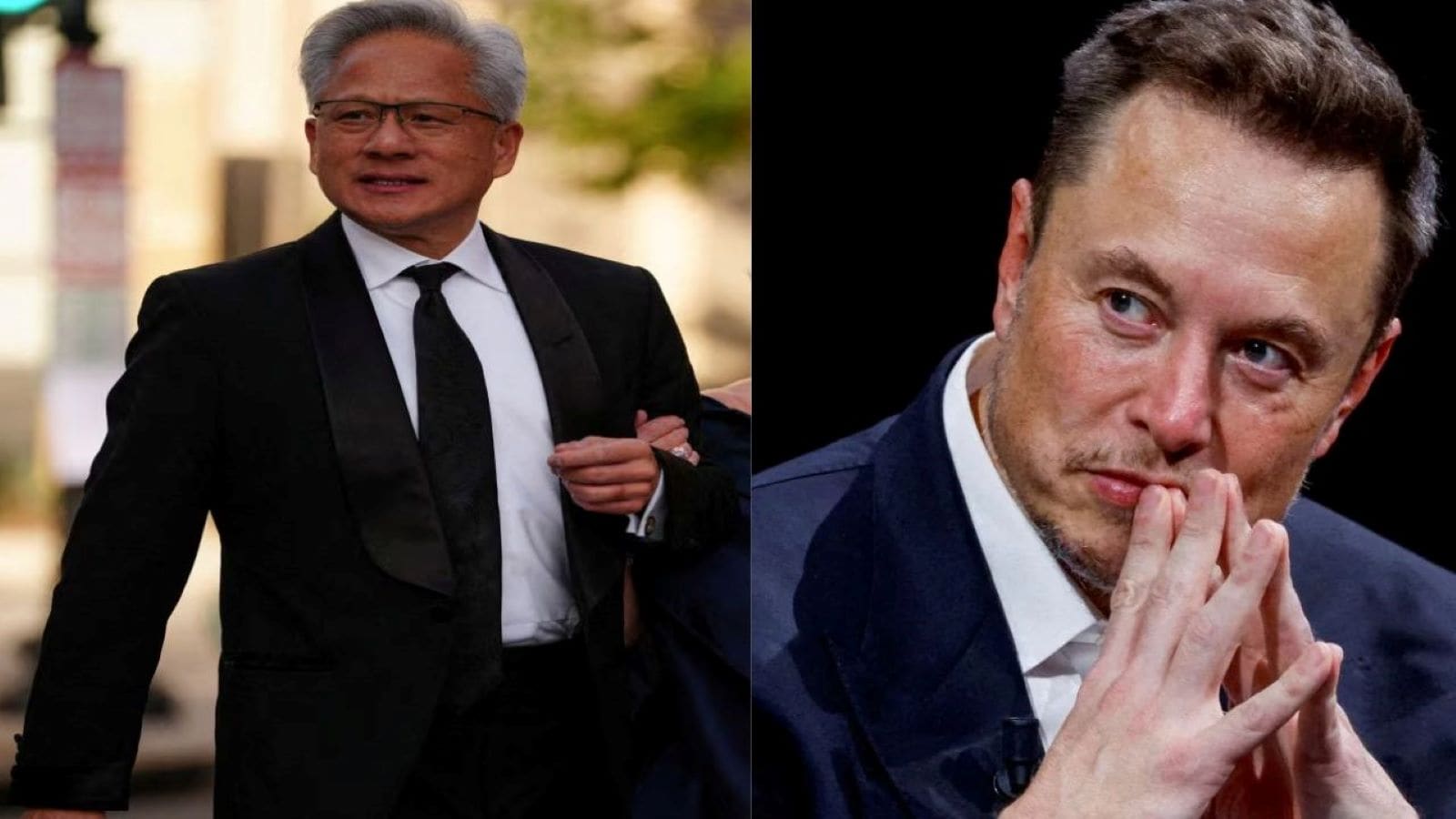
Every few months, a breathless headline tries to turn Silicon Valley supply chain friction into a John le Carré novel. The latest trigger—framing China’s Ministry of State Security as newly "thrust into the spotlight" by rumors, scrutiny, or entanglement surrounding Nvidia’s leadership—is peak geopolitical clickbait. It sells subscriptions to people who think global semiconductor policy operates like a cloak-and-dagger movie. It also completely misses how Beijing actually exerts control over American chipmakers.
If you think the Ministry of State Security (MSS) suddenly stepped out of the shadows because of executive drama or high-profile visits, you have not been paying attention to how statecraft works in the semiconductor sector. The MSS was never in the shadows to begin with. Worse, obsessing over tabloid-style espionage angles blinds investors, board members, and analysts to the far more methodical, legalistic, and crushing mechanisms Beijing uses to squeeze Western tech giants.
The lazy consensus in business media loves a single villain and a dramatic spark. A headline implying that an "affair" or sudden executive controversy pulled China’s premier intelligence agency into the Nvidia orbit relies on two flawed assumptions: first, that the MSS operates reactively to Western media cycles, and second, that covert intelligence drama is the primary threat facing Nvidia in China. Both premises collapse under five minutes of real-world scrutiny.
The Myth of the Sudden Spotlight
Let’s dismantle the basic premise immediately. China’s Ministry of State Security is not a reactive PR shop that wakes up when a Western CEO makes headlines. Founded in 1983 through the merger of the Central Investigation Department and counterintelligence elements of the Ministry of Public Security, the MSS handles both foreign intelligence and domestic political security. Unlike the CIA, which is legally barred from domestic law enforcement, the MSS operates inside and outside China’s borders with sweeping statutory authority.
To suggest the MSS was "thrust into the spotlight" by a single episode around Nvidia ignores a decade of systematic, documented regulatory and intelligence architecture. Since the passage of China’s National Intelligence Law in 2017 and the sweeping updates to the Counter-Espionage Law in 2023, any foreign enterprise operating on the mainland—especially one holding the keys to artificial intelligence compute—already sits directly under the MSS microscope.
I have sat in boardrooms with hardware executives who treated Beijing’s intelligence apparatus like an abstract weather risk—something that only rains on you if you make a splashy mistake in the press. They burned millions on compliance theater, hiring former diplomats to smooth over relationships while ignoring the structural reality on the ground. In China, advanced compute is not a commercial product category. It is a core pillar of national defense. Nvidia didn't enter the MSS’s field of vision because of a sensational headline; Nvidia entered it the moment H100 and A100 GPUs became the bottleneck for large language model training.
Why Tabloid Geopolitics Misses the Real Chokehold
When commentators fixate on spycraft tropes or personal intrigue around C-suite leaders, they misdiagnose how Beijing actually disciplines foreign tech firms. The MSS rarely needs to stage dramatic covert operations against a publicly traded American company when administrative warfare works cleaner, faster, and with total deniability.
Look at how Beijing actually moves against Western semiconductor players when it wants to apply pressure:
- Antitrust as a Geopolitical Scalpel: The State Administration for Market Regulation (SAMR) routinely holds mergers hostage or launches sudden probes into historic acquisitions. Nvidia’s own abandoned $40 billion bid for Arm in 2022 died largely because global regulators—with Beijing standing firmly in the back row—made the timeline impossible. Later antitrust scrutiny into Nvidia’s Mellanox acquisition proves that regulatory paperwork is far deadlier than any cloak-and-dagger rumor.
- Procurement Bans Disguised as Security Reviews: When Beijing went after Micron Technology in 2023, it didn't leak salacious rumors to the press. The Cyberspace Administration of China (CAC) simply declared Micron’s products a "network security risk" to critical information infrastructure. Overnight, major state-backed buyers were barred from purchasing Micron chips. No spy thriller required.
- Informal Customs and Grey-Market Taps: The MSS and customs authorities exercise granular control over grey-market smuggling channels through Hong Kong and Shenzhen. Beijing knows down to the pallet how many restricted GPUs enter the mainland via third-party distributors. They tolerate the leak when domestic AI labs need the hardware, and they choke it off when they want to force local firms onto Huawei’s Ascend chips.
Focusing on sensational "affair" narratives around Nvidia’s leadership treats Beijing like a gossip columnist rather than a ruthless industrial strategist. It flatters Western observers into thinking the conflict is personal or accidental, rather than coldly structural.
What People Are Actually Asking—And Why the Questions Are Wrong
When news breaks linking Nvidia, its leadership, and Chinese state security, search engines light up with predictable questions. Most of them start from a broken premise.
"Is Nvidia compromised by Chinese intelligence?"
This is the wrong question. Framing the issue around whether a $3 trillion American company is "compromised" assumes a binary world of loyal patriots versus double agents. Publicly traded semiconductor companies do not get "compromised" in a movie sense; they get caught in structural irreconcilability. Nvidia is legally obligated to maximize shareholder value within U.S. Department of Commerce export controls, while simultaneously trying to defend billions of dollars in data center revenue from a market that represented roughly a fifth of its data center sales prior to the 2022–2023 export tightening. You don't need an intelligence compromise to create friction when Washington tells you to stop selling your best product and Beijing tells you that compliance with Washington is an act of economic hostility.
"Did executive missteps trigger MSS scrutiny?"
No. Even if every rumor circulating in financial chatrooms about executive entanglement or missteps were proven tomorrow, it would change the MSS’s strategic posture toward Nvidia by zero percent. Intelligence agencies do not allocate counterintelligence resources based on viral headlines. They allocate resources based on target value. As long as CUDA remains the dominant software moat for AI development globally, every engineer, distributor, joint venture partner, and executive tied to Nvidia who sets foot in Greater China is a permanent intelligence priority.
"Can Jensen Huang’s personal diplomacy insulate Nvidia from Beijing?"
Here is where the conventional wisdom gets completely inverted. Business press loves portraying Jensen Huang as a master tightrope walker—a charismatic founder who can charm Beijing officials in a leather jacket one week and brief Washington policymakers the next. That charisma bought Nvidia time, not immunity. In Beijing’s system, personal goodwill from a foreign CEO carries zero weight once the Politburo decides a sector must achieve indigenous self-sufficiency. Ask the executives at Qualcomm, Intel, or Apple how much decades of goodwill protected them once Beijing issued directives to purge foreign silicon from government and state-owned enterprise systems.
The Mechanism Nobody Wants to Admit: Symbiotic Hostage-Taking
To understand what is actually happening between Nvidia and Beijing’s security apparatus, drop the espionage thriller framework and look at mutually assured supply-chain dependence.
Right now, both sides are locked in a cold calculation where the MSS acts as the enforcement arm of industrial policy, not a rogue spy ring.
- Beijing still needs Nvidia’s ecosystem. Despite massive state subsidies funneled into Huawei’s HiSilicon and domestic foundry champions like SMIC, Chinese AI developers overwhelmingly prefer Nvidia hardware because of CUDA’s software maturity. If Beijing banned Nvidia outright tomorrow, it would kneecap its own domestic AI champions—from ByteDance to Alibaba—in their race against U.S. frontier labs.
- Beijing uses security pressure to tax Nvidia’s compliance with Washington. Every time the U.S. Bureau of Industry and Security (BIS) tightens export rules—forcing Nvidia to design nerfed, China-specific chips like the A800, H800, and later the H20—Beijing responds by making life subtly harder for Nvidia on the mainland. Regulatory inquiries, warnings from state-affiliated industry associations telling domestic firms that American chips are "no longer safe," and heightened MSS scrutiny of local offices are all calibrated signals. The message to Santa Clara is simple: If you obey Washington too enthusiastically, we will dismantle your remaining market share before Huawei even catches up.
- The intelligence value is in the supply chain, not the boardroom. The MSS does not need to infiltrate Nvidia’s executive suite to get what it wants. Far richer intelligence sits in the middle tiers: logistics providers, cloud rental brokers in Southeast Asia, server OEMs in Taiwan, and academic researchers publishing optimization papers. Watching how hardware moves around export controls gives Beijing a real-time map of Washington’s enforcement blind spots.
The Contrarian Playbook: How Tech Leaders Should Actually Operate
If you run a semiconductor, AI infrastructure, or enterprise hardware company with exposure to China, swallowing the media’s spy-drama framing will lead you to make terrible capital allocation decisions. You will spend money on executive security theater while leaving your intellectual property and balance sheet wide open.
Stop Treating China Revenue as Core Valuation
Wall Street analysts still model "recovered China data center revenue" as an upside catalyst whenever Nvidia releases a new export-compliant SKU. That is delusional. Any revenue derived from selling restricted-tier AI hardware into China is transient cash flow with an expiration date stamped by both Washington and Beijing. Treat it like a depleting oil well, not a recurring SaaS subscription. Ring-fence the P&L, stop forecasting multi-year growth on the mainland, and price geopolitical write-downs into your margins today.
Audit the Edges, Not Just the C-Suite
Companies obsessed with high-profile executive risk routinely neglect their regional distribution networks. If your chips, boards, or software licenses move through distributors in Hong Kong, Singapore, or Malaysia, assume every step of that chain is visible to both U.S. export enforcement and Chinese state intelligence. Implement strict end-user verification—not the rubber-stamp questionnaires that compliance teams love, but actual cryptographic telemetry and hardware-level activation checks where legally permissible.
Separate PR Narrative from Operational Reality
When sensational headlines hit—whether about an alleged affair, an antitrust probe, or an MSS investigation—amateur communications teams scramble to issue denials that sound defensive and invite deeper digging. Veteran operators say nothing about rumors and over-communicate on compliance architecture. Your only real audience in a dual-use tech standoff is your institutional investor base and your primary domestic regulator.
The Downside of Cold Realism
There is a real cost to adopting this stripped-down, unsentimental view of Beijing’s security apparatus, and any honest operator has to admit it. If you treat your China business strictly as a managed wind-down and build hard walls against regulatory and intelligence spillover, you will cede near-term market share faster than competitors who keep playing the diplomacy game. You will walk away from lucrative quarters while rivals squeeze every last dollar out of compliant SKUs. Worse, visible defensive posturing can itself provoke retaliatory audits from Chinese ministries that prefer foreign executives to keep smiling for the cameras while their market share is quietly transferred to domestic champions.
That is the trap. Playing along preserves short-term numbers at the expense of sudden, catastrophic write-offs. Pulling back hurts this quarter’s earnings call but saves the company from waking up one morning with frozen assets and a subpoena from both capitals.
Stop Reading Spy Novels and Read the Statutes
The next time a headline claims China’s Ministry of State Security was "thrust into the spotlight" by some sudden scandal or executive drama at Nvidia, recognize the framing for what it is: entertainment for people who don't read regulatory filings.
The MSS has been sitting at the center of the global semiconductor chessboard for years, backed by the 2017 National Intelligence Law, the 2023 Counter-Espionage Law, and a state industrial policy explicitly designed to replace Western silicon. Nvidia isn't caught in a sudden thriller plot. It is caught in the middle of two superpowers deciding who owns the compute layer of the twenty-first century—and neither side cares how good the headlines look.