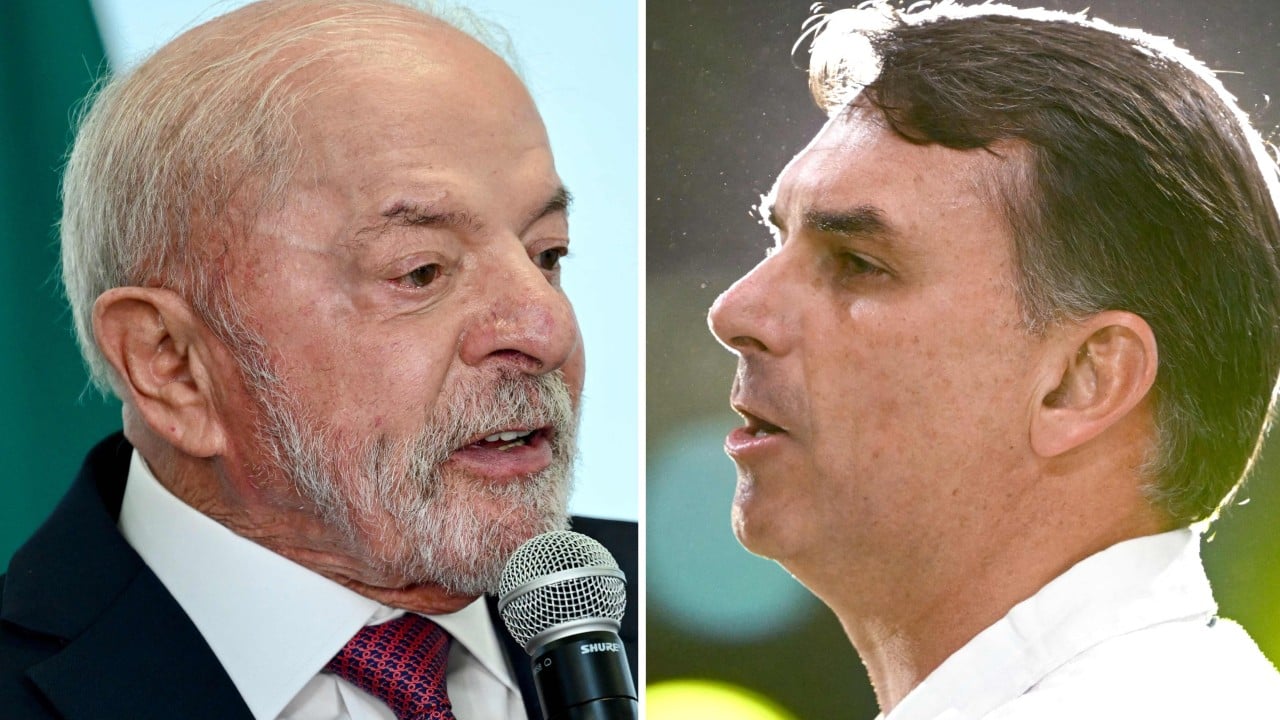
Every major newsroom on the planet is recycling the exact same lazy script about Brazil. They want you to believe the fate of Latin America’s largest economy comes down to a cinematic cage match between Luiz Inácio Lula da Silva and Jair Bolsonaro.
It is a seductive story. The aging leftist icon against the firebrand right-wing populist. Good versus evil, depending on which ideological echo chamber you prefer. Meanwhile, you can read related events here: Inside the Brutal Logistics of the Abby Choi Murder Trial That Shocked Hong Kong.
There is just one problem with this narrative. It is completely divorced from how power actually works in Brasília.
Mainstream political coverage obsesses over presidential rallies, televised debates, and razor-thin polling margins because personalities sell clicks. Structural legislative gridlock does not. Yet, while international correspondents chase motorcades around São Paulo and Rio de Janeiro, they are entirely missing the true power broker that will dictate every single policy outcome in Brazil for the next four years. To understand the complete picture, check out the excellent analysis by NPR.
The presidency in Brazil is no longer an imperial throne. It is a gilded cage. And whoever wins the runoff will spend the next 48 months begging the exact same group of entrenched politicians for permission to govern.
The Myth of the All-Powerful Brazilian President
If you read standard coverage of the final scramble for the Brazilian presidency, you would think the winner gets to rule by decree. Pundits warn that a Bolsonaro victory means unchecked authoritarian dismantling of environmental protections, while a Lula win guarantees an immediate, radical return to heavy-handed state intervention and runaway spending.
Both predictions ignore the brutal reality of Brazil’s political architecture.
I have spent over a decade watching foreign investors, multinational executives, and political analysts lose millions of dollars betting on Brazilian presidential rhetoric. They listen to campaign speeches, model out aggressive policy shifts, and get blindsided six months later when nothing passes Congress. They make the exact same mistake every single cycle. They confuse the person sitting in the Palácio do Planalto with the people who actually hold the keys to the treasury.
To understand Brazil, you have to understand a system known locally as coalition presidentialism (presidencialismo de coalizão).
Unlike the United States, which operates with two dominant parties, Brazil has a hyper-fragmented legislature with roughly two dozen parties represented in the Chamber of Deputies. No president’s party ever wins a mathematical majority on its own. Not even close. To pass a single bill, confirm a cabinet member, or survive an impeachment threat, the president must assemble a sprawling, expensive coalition of mercenary lawmakers.
Meet the Centrão, Your Actual President
At the heart of this legislative labyrinth sits the Centrão (the "Big Center").
The Centrão is not a political party. It is not an ideology. It is a loose, transactional bloc of pragmatic, non-ideological parties—such as the Progressistas (PP), the Liberal Party (PL), and Republicanos—whose sole operating principle is political survival and access to state patronage.
Think of the Centrão as the ultimate swing vote, permanently up for auction.
- When Lula ran Brazil in the 2000s, he governed with the Centrão.
- When Dilma Rousseff refused to play their game and withheld pork-barrel funding, the Centrão impeached her.
- When Bolsonaro took office promising to destroy "old politics," he lasted less than two years before handing over his cabinet ministries and budget control to the Centrão to avoid his own impeachment.
The competitor’s narrative frames this election as a binary choice between two radical visions. In reality, the ideological spectrum in Brazil has been effectively neutralized by a conservative, patronage-driven Congress. Whoever wins on Sunday will wake up on Monday morning staring at a legislature that is overwhelmingly center-right, fiercely protective of its own financial autonomy, and completely indifferent to presidential campaign promises.
Why Voters Are Asking the Wrong Question
If you look at what people are searching for right now—Will Lula wreck the economy? Will Bolsonaro end democracy? Who is better for the Amazon?—you see the exact same flaw embedded in every question. They all assume the president acts in a vacuum.
Let’s dismantle these premises one by one with cold, hard political mechanics.
1. The Fiscal Panic Over Lula
Wall Street and Faria Lima (São Paulo’s financial district) routinely hyperventilate over the prospect of Lula piercing the constitutional spending cap (teto de gastos) to fund massive social programs.
Here is what they miss: Lula cannot spend a dime without congressional approval.
Even if he wants to expand welfare programs like Auxílio Brasil (or rebrand it back to Bolsa Família), he has to negotiate every billion reais with Arthur Lira, the Speaker of the Lower House, and Rodrigo Pacheco, the President of the Senate. Furthermore, Lula’s own campaign has been forced to pull in centrist heavyweights—most notably his running mate Geraldo Alckmin, a longtime rival and market-friendly conservative—just to signal to the establishment that he will not go rogue.
Lula is a master negotiator, not a suicidal ideologue. He knows that blowing up the fiscal framework triggers immediate inflation, which destroys his core working-class base faster than any right-wing attack ad ever could.
2. The Authoritarian Panic Over Bolsonaro
On the flip side, international media treats a potential Bolsonaro second term as an imminent coup d'état. They point to his relentless attacks on Brazil’s electronic voting machines and his clashes with Supreme Federal Court (STF) Justice Alexandre de Moraes.
This reading mistakes performative outrage for institutional capacity.
Bolsonaro’s rhetoric is designed to keep his base in a state of permanent mobilization. It is an electoral strategy, not a viable governing blueprint. Brazil’s institutions—specifically the Supreme Court, the electoral court (TSE), and the upper echelons of the military—have spent the last four years actively boxing him in.
More importantly, the Centrão despises instability. Institutional crises tank the Brazilian real, spike interest rates, and dry up the economic growth that local politicians rely on to get re-elected in their home states. The very allies keeping Bolsonaro afloat in Congress would abandon him in a heartbeat if he attempted an actual extra-constitutional rupture.
3. The Secret Budget Changed Everything
If you want to understand why the presidency has been hollowed out, you need to look at the single biggest structural shift in Brazilian politics over the last three years: the secret budget (orçamento secreto).
Historically, the Brazilian executive branch held a massive trump card. Congress could propose budget amendments to fund local bridges, hospitals, and tractors in their districts, but the president decided when and if that money was actually released. That gave the president immense leverage to whip votes.
During the Bolsonaro administration, Congress stripped that power away. Through a mechanism known as rapporteur amendments (RP9), lawmakers seized direct control over tens of billions of reais in discretionary spending, allocating funds with virtually zero transparency and zero presidential veto power.
Imagine a scenario where a CEO still gets the corner office and the company jet, but the board of directors quietly transfers the corporate checkbook to middle management. The CEO can give inspiring speeches at the annual conference, but if they want to buy a box of paperclips, they have to ask middle management for a loan.
That is the modern Brazilian presidency.
Whether Lula or Bolsonaro wins, they are inheriting a severely diminished office. Congress now controls the purse strings. And Congress has zero intention of giving that power back.
The Real Stakes Nobody Is Talking About
When commentators fixate on the personality clash between Lula and Bolsonaro, they completely miss the genuine structural battles that will actually move markets and shape society over the next four years.
If you want to actually understand what happens next in Brazil, stop watching the presidential debates and start tracking three specific flashpoints.
The Central Bank Autonomy Test
In 2021, Brazil finally granted formal autonomy to its Central Bank (Banco Central do Brasil). Under the leadership of Roberto Campos Neto, the bank acted aggressively to hike the benchmark Selic interest rate to 13.75% well ahead of the US Federal Reserve, taming inflation while major Western economies were still calling it "transitory."
Campos Neto’s term runs through 2024. This means whoever wins the presidency is stuck with an independent central banker who cannot be fired at will.
- If Lula wins: Watch for intense friction between the Planalto Palace and the Central Bank. Lula’s allies will scream for lower interest rates to stimulate growth, while Campos Neto holds the line to protect currency stability.
- If Bolsonaro wins: The pressure shifts toward fiscal discipline, as the Central Bank will refuse to cut rates if the government keeps passing election-year tax cuts and spending packages.
This institutional tug-of-war between monetary policy and fiscal policy is vastly more important than any campaign slogan.
The Privatization vs. State-Capitalism Stalemate
The competitor’s narrative treats economic policy as a light switch: Bolsonaro equals free-market privatization; Lula equals state-owned monopolies.
The reality is far messier. Bolsonaro promised sweeping privatizations in 2018, yet he managed to privatize very little—most notably Eletrobras, the state electricity giant, and even that required massive concessions and pork-barrel riders to get through Congress. Meanwhile, he repeatedly interfered with Petrobras, firing multiple CEOs because he did not like fuel price hikes ahead of the election.
Conversely, Lula is not going to renationalize Eletrobras. He does not have the political capital or the fiscal headroom to buy back privatized assets. Instead, expect a subtle shift in how state-controlled banks like BNDES (the Brazilian Development Bank) deploy capital. Rather than outright nationalization, Lula’s team will use subsidized credit and public-private partnerships to steer industrial policy toward green energy and domestic manufacturing.
The Geopolitical Tightrope
Global analysts love to pigeonhole Lula as anti-American and Bolsonaro as a Trump-style nationalist. Both labels fail to capture Brazil’s deeply ingrained diplomatic DNA.
Brazil’s foreign ministry, Itamaraty, is one of the most professional, autonomous diplomatic corps in the world. Regardless of who sits in the presidential chair, Brazil’s core economic survival depends on a delicate balancing act:
- China is Brazil’s largest trading partner, buying massive amounts of soy, iron ore, and beef. Neither candidate can afford to alienate Beijing.
- The United States and Europe remain critical sources of foreign direct investment, high-end technology, and institutional legitimacy.
If Bolsonaro wins, Brazil faces continued diplomatic isolation from Western Europe and the Biden administration over Amazon deforestation, complicating trade deals like the EU-Mercosur agreement. If Lula wins, he gets an immediate red-carpet welcome in Washington, Paris, and Berlin, unlocking billions in international climate financing—even if his views on the war in Ukraine or Latin American dictatorships irritate Western diplomats.
What You Should Actually Do With This Information
If you are an investor, a business operator, or simply someone trying to make sense of global politics without getting swept up in partisan hysteria, you need a completely different playbook for analyzing Brazil.
Stop reading headlines that treat the election like the season finale of a soap opera. The election is just the opening bell of a four-year legislative grind.
For Investors and Capital Allocators
- Ignore campaign rhetoric; track congressional committee assignments. The real signal on fiscal discipline won't come from the president's inauguration speech. It will come in February when the new Congress elects its leadership and assigns the chairs of the Constitution and Justice Committee (CCJ) and the Joint Budget Committee (CMO).
- Bet on structural resilience, not political favors. Brazilian blue-chip companies have survived hyperinflation, military dictatorships, multiple impeachments, and massive corruption scandals like Operation Car Wash (Lava Jato). Focus on sectors insulated from domestic fiscal drama—agribusiness, energy exporters, and established financial institutions—rather than companies dependent on government subsidies.
For Policy Watchers and Analysts
- Follow the money in the secret budget. Keep your eyes on how the Supreme Court rules on the constitutionality of the RP9 budget amendments. If the Court strikes down the secret budget, the presidency instantly regains massive leverage over Congress. If the Court upholds it, the president remains a figurehead on domestic spending.
- Watch the governors, not just Brasília. Brazil is a massive federation. The governors of powerhouse states like São Paulo, Minas Gerais, and Rio de Janeiro wield enormous political and economic clout. Often, state-level privatization and infrastructure projects move forward seamlessly regardless of ideological gridlock in the capital.
The Uncomfortable Truth About This Contrarian View
Does my thesis have a blind spot? Yes, and you should account for it.
While Congress controls the purse strings and blocks radical legislative overhauls, the Brazilian president still possesses immense unilateral power over regulatory agencies, state-owned enterprises, and enforcement bodies.
A president does not need congressional approval to slash funding for environmental enforcement agencies like IBAMA, nor do they need a new law to stack the board of Petrobras with loyalists. Executive decrees, diplomatic tone, and regulatory appointments can drastically alter the operating environment for specific industries overnight.
Furthermore, extreme polarization takes a quiet, corrosive toll on institutional norms. Even if a coup never happens and fiscal collapse is avoided, four more years of trench warfare between the executive branch, the judiciary, and the legislature creates a chronic uncertainty premium that keeps Brazil growing at a sluggish 1% to 2% instead of realizing its true potential.
Stop Watching the Circus
The final scramble between Lula and Bolsonaro is great theater. It has everything modern media craves: bitter personal animosity, massive street rallies, algorithmic outrage, and existential stakes.
Just do not mistake the theater for the business.
Once the confetti settles and the winner takes the oath of office in January, the campaign slogans will go straight into the shredder. The new president will walk into the Palácio do Planalto, pick up the phone, and call the leaders of the Centrão to ask what it will cost to pass their very first bill.
In Brazil, presidents come and go. The machine stays in charge.