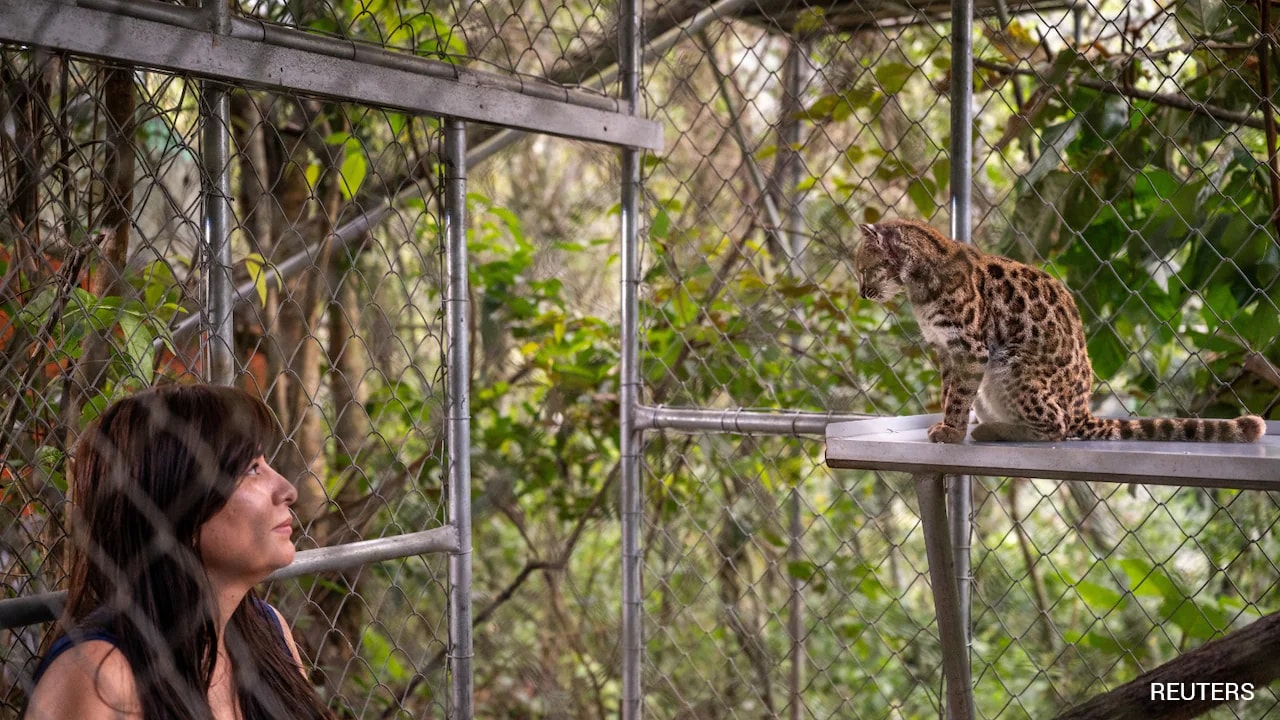
Every few years, the media machine gets high on its own supply. A headline drops claiming scientists have identified a brand-new wild cat species, breathlessly announcing it as the first such discovery in over a century. The public swoons. Conservation groups cash donation checks. Everyone high-fives over a supposed triumph of modern science saving nature from the brink.
It is complete nonsense.
The animal was already there. It did not materialize out of thin air because a guy in a lab coat ran an extra PCR cycle on a hair sample. What actually happened is that a cabal of taxonomic splitters got bored, reinterpreted old genetic data through a hyper-specific lens, and decided that a regional population with slightly different cheek markings deserves a brand-new Latin name.
We are not discovering nature. We are bureaucratizing it.
The lazy consensus in modern conservation and biology journalism is that taxonomy is an objective treasure hunt. The narrative goes like this: brave researchers trek into uncharted jungles, dodge razor-sharp claws, collect elusive biological samples, and unveil a magnificent creature previously unknown to science. It makes for great television. It gets clicks. It fills grant applications.
It also bears almost zero resemblance to how biological classification actually works in the twenty-first century.
Let us look at the mechanics of how these "new species" are manufactured. For decades, field biologists operated under biological species concepts rooted in reproductive isolation. If Population A could breed with Population B and produce fertile offspring, they belonged to the same species. Simple. Clean. Functional.
Then came the geneticists with sequencing machines and infinite computer power. Suddenly, every local population with a slightly distinct mitochondrial haplotype became a candidate for elevation. Taxonomists split into two warring camps: lumpers and splitters. Right now, the splitters are winning every institutional war because naming a new species guarantees press coverage, institutional prestige, and a fresh pipeline of funding.
Imagine a scenario where a regional population of leopards or wild cats has been separated by a river or a highway for five thousand years. Over millennia, genetic drift occurs. Alleles shift. When you sequence their DNA today, you find statistical divergence. Does that make them a distinct species? Not biologically. They would still readily breed if you removed the barrier. But under the phylogenetic species concept favoured by modern academic bureaucrats, any monophyletic group gets promoted.
You are not looking at a new animal. You are looking at an old animal with a new paperwork status.
I have watched research institutions blow millions of dollars on DNA extraction projects that accomplish nothing for the actual preservation of wildlife on the ground. While academics sit in air-conditioned offices arguing over single-nucleotide polymorphisms, the actual habitat where these cats live is being bulldozed, fragmented, and poisoned.
Naming a cat a distinct species on a spreadsheet does not protect its hunting grounds. In fact, it often achieves the exact opposite.
When you fragment a widespread species into a dozen micro-species, you create administrative nightmares. Conservation priorities get splintered. Funding gets diluted across dozens of micro-management plans instead of concentrating on broad ecosystem health. Poachers do not care about taxonomic revisions. Deforestation does not pause while taxonomists debate whether a regional subspecies merits full-species status.
The obsession with novelty blinds us to the mundane, grinding reality of ecological collapse. We want the dopamine hit of a discovery. We want to say we witnessed history. We want to believe that science is constantly expanding our map of the world, finding hidden treasures just out of reach.
The truth is far more boring and far more depressing. We are not finding new things; we are carving up existing things into smaller and smaller pieces because our classification models have become hyper-sensitive obsessions driven by publication metrics.
Consider the criteria used to elevate these populations. Often, the sample sizes are absurdly small. Researchers pull DNA from museum pelts or hair traps collected across a fraction of the animal's range. They run the sequences through proprietary algorithms, spot a statistical divergence threshold, and declare a monumental breakthrough.
Try running those same algorithms on human populations across different continents or isolated island communities. You would end up classifying dozens of distinct human species. But we do not do that because we intuitively understand that geographic variation within a species is normal. Animals exhibit phenotypic plasticity and local adaptation. A cat living in a dry scrubland looks and acts slightly different from a cat living in a dense, wet forest a few hundred miles away. That is not speciation; that is biology doing what biology has always done.
Yet, when it comes to wild cats, every localized adaptation is treated like a biological miracle.
The media loves it because it feeds the narrative of an infinite, mysterious planet waiting to be unzipped. The academic establishment loves it because citation counts and grant renewals depend on flashy, paradigm-shifting claims—even when the paradigm hasn't actually shifted, only the nomenclature.
Let us address the common counter-argument: that splitting species helps target conservation efforts more precisely. The premise is that if we recognize a micro-population as a unique species, governments are forced to protect it.
That theory sounds great in a university seminar. In the real world, it collapses under its own weight.
When conservationists designate a population as a critically endangered new species, local communities often bear the brunt of the sudden regulatory crackdown. Land use gets restricted. Tourism dollars get funneled into bureaucratic oversight rather than community-led stewardship. Meanwhile, the core threats—habitat loss, illegal trade, and climate disruption—continue unchecked because no amount of paperwork stops a bulldozer.
Worse still, hyper-splitting creates a perverse vulnerability. If a species is defined by a tiny, localized gene pool, its extinction risk on paper skyrockets. Instead of viewing the animal as a resilient, widespread lineage with local variants, we lock it into a fragile box where any localized dip in numbers triggers a panic.
We are managing spreadsheets, not ecosystems.
The field biologists who spend decades in the mud tracking these animals know the truth. They watch the academics swoop in for a two-week expedition, collect a few tissue samples, write a paper that reclassifies the local fauna, and then leave. The field researchers are left dealing with angry landowners, depleted budgets, and fragmented conservation strategies engineered by people who haven't smelled predator urine in years.
Taxonomy used to serve ecology. Now, taxonomy is an independent industrial complex designed to manufacture headlines.
Every time you read about a groundbreaking new species of wild cat discovered after a century, look past the PR-friendly prose. Look at the sample sizes. Look at the political pressure behind the institution funding the study. Look at how many times the authors of the paper have relied on taxonomic splitting to justify their ongoing grants.
You will find a pattern of professional self-preservation disguised as exploration.
We need to stop rewarding this taxonomic inflation. True conservation respects the messy, continuous flow of nature instead of trying to freeze it into rigid, artificial categories for the sake of a press release.
Nature does not care about your Latin names. The cats certainly do not care. Only the humans writing the grants do.
Stop funding the paperwork. Start funding the forests.