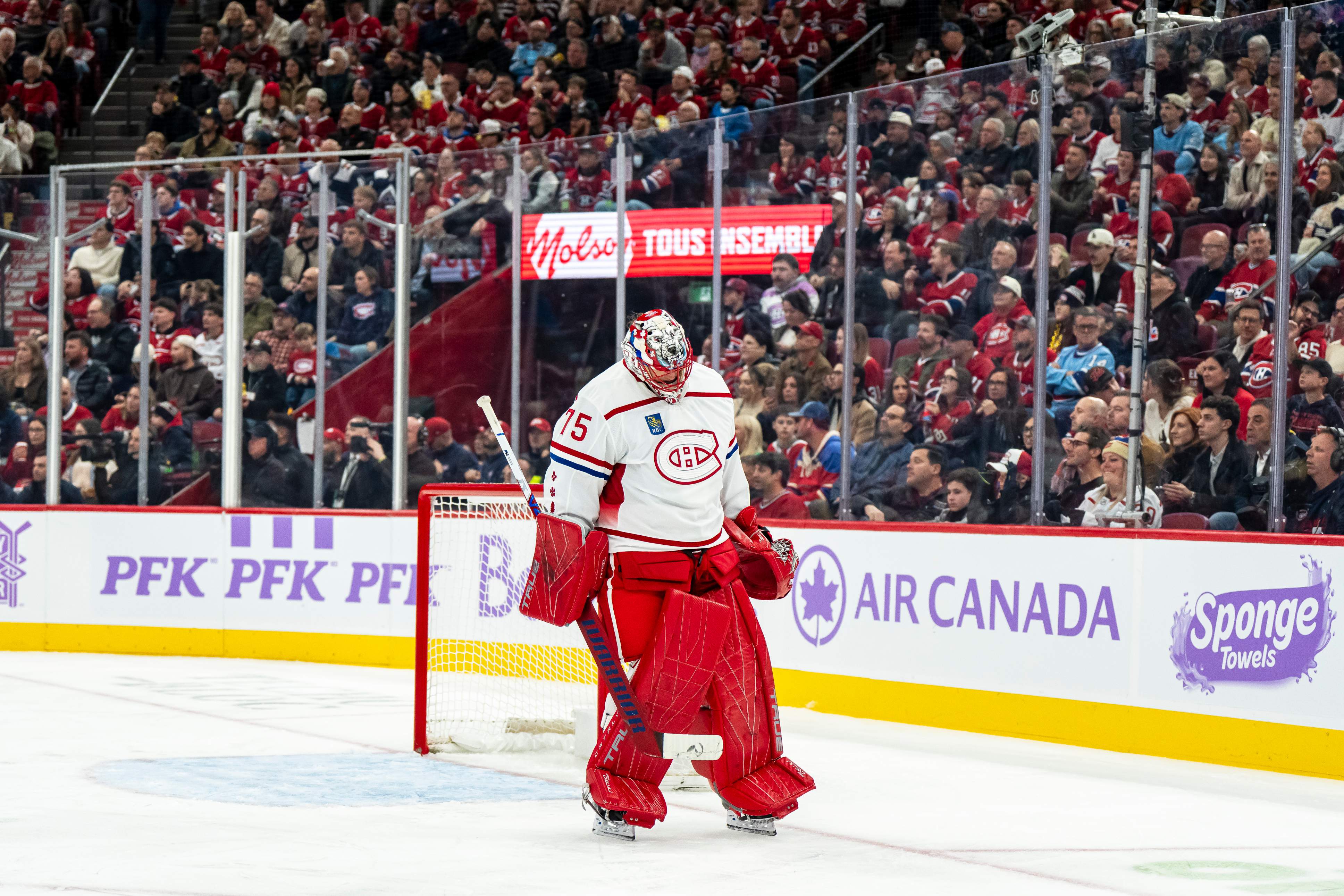
Two points in the standings. A highlight-reel sequence from Yegor Sharangovich. A gritty, white-knuckle finish from Dustin Wolf in the crease.
If you read the standard post-game recaps after the Calgary Flames held off the Los Angeles Kings for a 3-2 victory, you would think the organization just unlocked the blueprint for sustainable NHL success. The local media is practically throwing a parade for a gutsy divisional win. Fans are refreshing the Western Conference wildcard standings with renewed optimism.
They are all celebrating a mirage.
I have spent over a decade dissecting NHL front-office cycles, salary cap purgatory, and underlying possession metrics. I have watched dozens of franchises mortgage their future for a two-week dopamine hit in the middle of the regular season. When a rebuilding or retooling roster survives a 3-2 game against a heavyweight possession club like Los Angeles on the back of goaltending heroics and timely finishing, that is not a sign of arrival. It is a warning siren.
The Illusion of the 3-2 Box Score
The lazy consensus surrounding a 3-2 win is simple. You look at the box score, see your young goaltender standing tall under heavy third-period pressure, credit your top-six sniper for finding the back of the net, and call it a "character win."
That narrative is intellectually bankrupt.
In modern hockey, single-game outcomes are heavily dictated by variance—specifically, shooting percentage and goaltending save percentage over a sixty-minute sample. When the Flames edge out the Kings by a single goal while surrendering sustained zone time, the scoreboard tells a lie. It rewards the process of survival rather than the process of domination.
Look at how the Kings operate under their system. Los Angeles plays a suffocating, structured neutral-zone trap designed to bleed the life out of rush offenses and grind opponents down below the hash marks. They do not beat you with dazzling east-west highlight plays; they beat you by owning the puck for 60 percent of the night and forcing you to defend until your legs turn to concrete.
When Calgary escapes that environment with a 3-2 victory, the instinct is to praise their resilience. Here is the reality nobody in the building wants to admit: relying on your goaltender to bail out structural breakdowns in your defensive zone is not a repeatable strategy over an 82-game schedule, let alone a four-round playoff gauntlet.
Why Dustin Wolf's Brilliance Is Actually a Red Flag
Let us talk about Dustin Wolf. Every scouting report from his days dominating the WHL with the Everett Silvertips to his back-to-back AHL Goaltender of the Year awards with the Stockton Heat and Calgary Wranglers pointed to the exact same trait. He is an elite, hyper-athletic reader of the play who compensates for his smaller frame with generational edgework and hockey IQ.
Watching him lock down the third period against Los Angeles is thrilling. It validates every ounce of hype surrounding his progression.
It also masks a glaring organizational failure.
When a young goaltender has to play like a Vezina Trophy finalist just to preserve a one-goal lead in a standard regular-season matchup, the skaters in front of him are failing their primary assignment. I have seen this exact movie play out in Montreal with Carey Price, in New York with Henrik Lundqvist, and in Anaheim with John Gibson. You draft and develop a generational netminder, throw him into the fire behind a porous, transitional blue line, and applaud every time he steals two points.
Then, five years later, you wonder why your franchise goalie is physically broken down by age 30 and why the team never got past the second round.
The High-Danger Shot Trap
To understand why Wolf's performance is a double-edged sword, you have to look beyond raw save percentage. In hockey analytics, Expected Goals (xG) measures the quality of a shot based on distance, angle, shot type, and whether it came off a rebound or a rush. A slap shot from the blue line through no traffic has an xG value of roughly 0.02. A cross-crease one-timer from the inner slot has an xG value exceeding 0.35.
Teams that win sustainably suppress inner-slot looks. They box out forwards, tie up sticks, and force opponents to settle for perimeter shots that a goalie can swallow without giving up a rebound.
When you watch the Flames hold off a desperate third-period push from a veteran team like the Kings, pay attention to where the pucks are coming from. Too often, Calgary collapses too deep into their own zone, forming a passive box around Wolf that concedes the blue line and allows Los Angeles defensemen to walk down the walls uncontested. Wolf is forced to track pucks through layered screens and react to second-chance whacks at the top of the crease.
Winning a game like that feels incredible in the locker room. On a spreadsheet, it looks like a ticking time bomb.
The Yegor Sharangovich Paradox
On the other side of the ledger, Yegor Sharangovich continues to do what he was acquired to do. He finds soft spots in coverage, releases the puck with deceptive velocity, and punishes defensive lapses. When he scores a critical goal to tilt a tight game in Calgary's favor, fans immediately point to the trade that brought him over from New Jersey as a masterclass in asset management.
Slow down. Let us apply some actual rigor to this evaluation.
Sharangovich is an elite finishing talent, no question. His shot mechanics—specifically his ability to change the angle of his blade right before release—make him lethal from the circles. However, pure goal-scorers are the most volatile assets in professional sports.
- Shooting Percentage Regression: Over a career, even elite NHL snipers hover around a 13% to 15% shooting percentage. When a player rides a hot streak where 20% of his shots hit the twine, the box score inflates his overall impact. When that percentage inevitably regresses to the mean over a 15-game stretch, what is left?
- Play-Driving vs. Play-Finishing: Championship rosters are built around play-drivers—centers and defensemen who carry the puck through the neutral zone with possession, gain the offensive blue line cleanly, and generate volume shots. Sharangovich is a play-finisher. He relies on linemates to retrieve pucks, win board battles, and feed him in space.
- The Cap Allocation Trap: When a mid-tier team falls in love with a streaky scorer's highlight-reel goals during a 3-2 win, they inevitably overpay for those goals on the next contract extension. You end up paying top-line money for middle-six possession metrics.
Imagine a scenario where Sharangovich's shooting percentage drops by four points over the next month. If Calgary's underlying possession numbers do not improve, those 3-2 wins instantly flip into 3-1 losses. The exact same effort, the exact same defensive structure, the exact same goaltending—just a fraction of an inch difference on two wrist shots.
What Everyone Is Asking vs. What Actually Matters
Whenever a team pulls off a gritty win against a superior opponent, the post-game discourse floods with predictable questions. Fans and pundits alike get trapped in the micro-narratives of the night. Let us dismantle the most common talking points surrounding this matchup.
"Does this win prove the Flames are ready to contend in the Pacific Division?"
No. Contending in the Pacific Division requires surviving a physical meat grinder against Edmonton, Vegas, and Los Angeles over seven-game series. A single regular-season victory where your goalie bails you out does not prove readiness; it proves you had a good night. Contenders dictate pace. They impose their will on the opponent for 45 minutes a night. Until Calgary can consistently out-chance the Kings at 5-on-5 without relying on miracle saves, talking about contention is pure fantasy.
"Should Calgary buy at the trade deadline to reward this roster?"
This is the single most dangerous question a general manager can entertain, and it has ruined more franchises than bad draft picks ever could.
I have watched front offices talk themselves into "rewarding the room" after a string of gutsy one-goal wins in November and December. They trade away second-round picks and B-level prospects for a 32-year-old rental winger to give the boys a boost. They sneak into the eighth seed, get swept in four games by a legitimate powerhouse, and end up with the 16th overall draft pick instead of a top-ten selection.
If Calgary's management looks at a 3-2 victory over Los Angeles and decides they are only one piece away, they have learned nothing from the past decade of mediocrity.
"How do you build a sustainable winner around pieces like Wolf and Sharangovich?"
You stop treating every regular-season game like Game 7 of the Stanley Cup Final, and you start ruthlessly auditing your roster's 5-on-5 Corsi and Expected Goals For Percentage (xGF%).
You use Sharangovich's hot streaks to maximize his value, deploying him in heavily sheltered offensive-zone starts alongside your best puck-retrieving center. Simultaneously, you shield Wolf from burnout by fixing the breakout mechanics in front of him. You cannot ask a young goaltender to face 35 high-leverage shots a night and expect him to be fresh in April.
The Structural Fix Nobody Wants to Talk About
If you want to turn a lucky 3-2 win into a dominant 4-1 victory, you have to fix how the Flames exit their defensive zone. Right now, Calgary's breakout is far too predictable, which is music to the ears of a structured team like the Kings.
When a Calgary defenseman retrieves a dump-in behind his own net, the opposing forecheckers already know where the puck is going. The strong-side winger sits stationary on the half-wall, waiting for a rim around the boards. Los Angeles pinches their defenseman down the wall, seals off the exit, and forces a turnover inside the blue line. Suddenly, Wolf is back under siege.
To disrupt that cycle, the Flames need to overhaul three specific habits immediately:
- Center Support Below the Dots: The center cannot blow the zone early looking for a stretch pass. He has to curl low, below the faceoff dots, offering a short, five-foot outlet pass to the defenseman under pressure. Speed through the middle backs off the opposing defense; stationary wingers on the boards invite pinching.
- Middle-Ice Activation: Defensemen must stop defaulting to the safe glass-and-out clear. When you chip the puck off the glass to the neutral zone, you are simply handing possession back to Los Angeles for another wave of attack. Defenders have to eat the hit, hold the puck for an extra half-second, and hit the slashing center in the middle of the ice.
- Ruthless Line Matching: Against a heavy top-six unit like the Kings roll out, you cannot afford to get caught with your fourth line pinned in the defensive zone after an icing. Coaching has to prioritize clean line changes over chasing low-percentage offensive zone faceoffs.
The Uncomfortable Truth About "Culture Wins"
There is a massive caveat to this entire critique, and intellectual honesty demands we address it. Hockey is not played on a spreadsheet by robots. Momentum, belief, and locker-room chemistry are real psychological forces.
When a team going through a transitional phase beats a perennial playoff squad like Los Angeles, it builds trust. Young players look at Dustin Wolf and realize they can take calculated offensive risks because the guy behind them can erase a mistake. Veterans look at Yegor Sharangovich and know that if they grind out a hard shift along the boards, he has the lethal touch to finish the play. You cannot quantify the value of a young roster learning how to close out a tight game in the final two minutes without panicking.
That psychological boost is valuable—right up until the moment management mistakes it for structural soundness.
The history of the NHL is littered with teams stuck in the "mushy middle." They are never quite bad enough to draft generational franchise cornerstones at the top of the lottery, and never quite good enough to survive the second round of the playoffs. They live off 3-2 wins in the fall, celebrate grit and character in the winter, and clean out their lockers in April while the real contenders play for silver.
Enjoy the two points. Appreciate the individual brilliance of Wolf's athleticism and Sharangovich's release. Just do not confuse surviving a storm with learning how to control the weather.
Take the video from the third period, lock the doors to the film room, and start fixing the breakout before the math catches up to you.