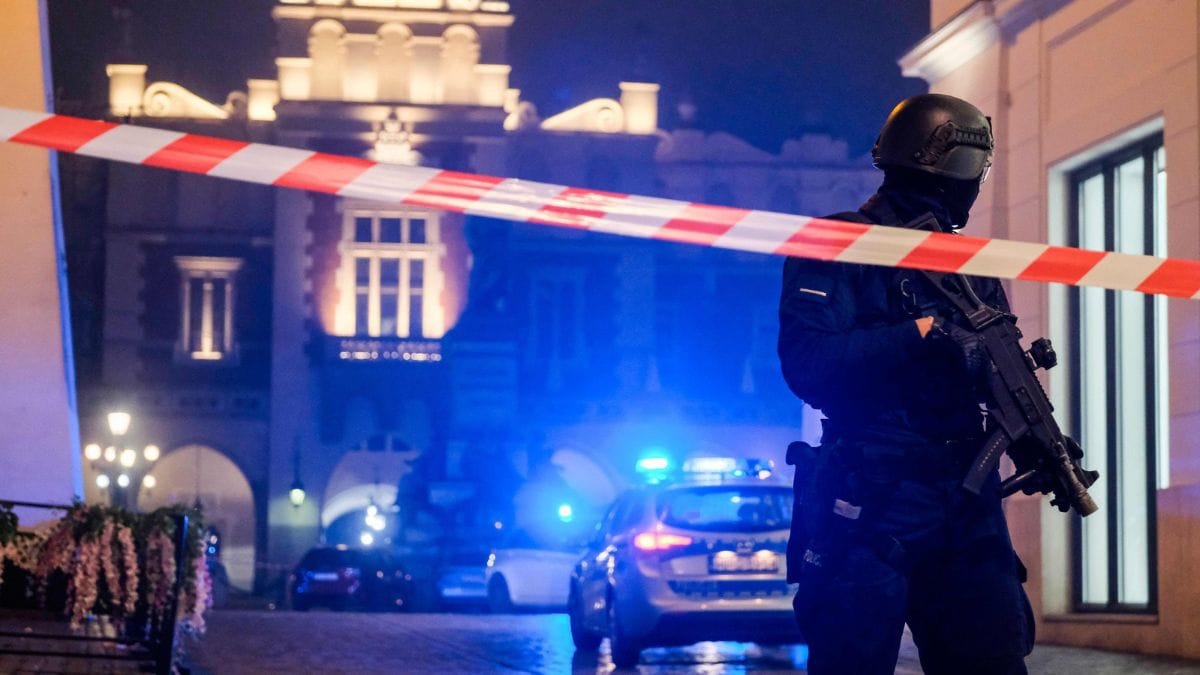
The press loves a dying hero because a bleeding badge keeps you from asking why six innocent people are dead in a Polish tourist town.
Look at the standard headline formula after a mass casualty event. A 24-year-old opens fire. Six dead. Fifteen injured. One officer takes the shooter down and fights for his life in an ICU. Immediately, the narrative locks into a predictable, comforting groove. We canonize the officer. We demonize the 24-year-old. We send thoughts, prayers, and medals.
And we completely ignore the catastrophic systemic failure that allowed a young man to turn a vacation spot into a shooting gallery in the first place.
That is the lazy consensus of modern crime reporting. By turning a mass shooting into a simple morality play of "Hero Cop vs. Evil Gunman," journalists and politicians get a free pass. Nobody has to audit police response times. Nobody has to examine regional intelligence failures. Nobody has to explain how a weapon ended up in the hands of a 24-year-old in a country with some of the strictest firearm regulations in the European Union.
Let’s strip away the emotional sedative of the "hero" narrative and look at the cold mechanics of what actually happens when public security collapses.
The "Hero" Narrative is a Distraction Mechanism
I have spent years consulting on municipal crisis response and post-incident security audits across Europe and North America. I have sat in windowless rooms watching municipal leaders spend millions on public relations campaigns after a tragedy while starving their tactical units of basic scenario training.
When an officer runs toward gunfire, that is individual courage. Nobody disputes that. Taking rounds to stop a killer requires a level of nerve most civilians cannot fathom.
But courage is not a strategy. Heroism is what happens when planning fails.
When a security apparatus relies on a single officer’s willingness to absorb bullets to stop an active shooter, the system has already broken down. In tactical doctrine, the gold standard is deterrence and interdiction—stopping the threat during the planning or mobilization phase. The moment a shooter pulls a trigger in a crowded tourist square, the primary mission has already failed. Everything after that first shot is just damage control measured in body bags.
Yet, media coverage flips this reality upside down. By focusing entirely on the officer's hospital bed, the press transforms a failure of public safety into a triumph of individual bravery. It satisfies the public’s emotional need for a protagonist, while quietly burying the institutional incompetence that set the stage.
The Myth of the European Gun-Free Utopia
Whenever a mass shooting happens in Central Europe—especially in a nation like Poland—North American and Western European commentators immediately trip over their own talking points.
If you ask the average reader, "How do mass shootings happen in countries with strict gun laws?" you are already asking the wrong question. You are assuming that statutory prohibition equals physical impossibility.
Poland operates under the Act on Weapons and Ammunition (Ustawa o broni i amunicji). To legally own a firearm there, you do not just walk into a shop with an ID. You need a documented, valid reason—such as competitive sport shooting, hunting, or verified personal protection due to an extraordinary, permanent threat to your life. You undergo psychological evaluations, psychiatric screenings, background checks by the police, and strict licensing exams. As a result, Poland consistently ranks near the bottom of European gun ownership per capita, hovering around 2.5 civilian firearms per 100 residents.
So how does a 24-year-old massacre 21 people in a tourist hotspot?
Security experts like Dr. Jacek Raubo and analysts at the Polish Institute of International Affairs have long pointed out that Central and Eastern Europe sit directly atop major historical and modern trafficking corridors. The collapse of the Soviet Union left millions of untracked military-grade weapons floating across the region. The Balkan wars of the 1990s flooded the continent with surplus Zastava rifles and Tokarev pistols. Since 2022, the full-scale war right across Poland's eastern border in Ukraine has created the largest active conflict zone in Europe since World War II.
When a nation shares a 535-kilometer border with an active warzone, domestic gun control laws only regulate the compliant. They do nothing to stop black-market leakage, modified blank-firing pistols (a massive loophole across the EU for years), or illicitly reactivated "decommissioned" firearms.
Treating a Polish mass shooting like an isolated anomaly caused by a "lone wolf" ignores the geopolitical reality of the region. It is a refusal to look at border security, black-market enforcement, and the glaring gaps in European intelligence sharing.
Why "Tourist Hotspots" Are Tactical Nightmares
Think about the geography of a classic Polish tourist destination—whether it is the Baltic coast in Sopot, the historic market square in Kraków, or the mountain trails of Zakopane.
Imagine a scenario where you are tasked with securing a medieval town square on a Saturday afternoon. You have narrow cobblestone alleys built for horse carts, dense crowds of distracted vacationers, outdoor café seating blocking vehicle access, and zero natural cover.
In physical security, we call this a high-density, low-visibility soft target.
- Acoustic Confusion: Narrow stone streets bounce gunfire off every wall. Witnesses cannot tell which direction the shots are coming from. Crowd panic moves in contradictory waves, trampling people and blocking first responders.
- Access Bottlenecks: The very features that make a tourist town charming—pedestrian-only zones, bollards, tight alleyways—prevent armored response units from reaching the scene quickly. Patrol officers on foot become the only immediate line of defense.
- The Tourist Blindspot: Tourists do not know the local emergency numbers. They do not know the street names. When they call dispatch, they scream descriptions of landmarks instead of coordinates, costing paramedics and tactical teams precious minutes.
Local municipalities love the tax revenue that pours into these hotspots. They spend fortunes marketing the "charm" and "safety" of their historic districts. Almost none of that revenue goes into modernizing urban tactical response, installing acoustic gunshot detection systems, or training beat cops in solo-officer active-shooter engagement.
Instead, they put two regular patrol officers on foot with standard-issue service pistols—usually Walther P99s—and hope nothing bad happens. When a 24-year-old shows up with an ambush plan, those beat cops are forced to improvise a gunfight in the middle of a crowd with zero tactical advantage.
The "Lone Wolf" Fallacy
The other massive blind spot in mainstream crime coverage is the obsession with the shooter's age and individual psychology. "Gunman, 24."
Readers immediately search for a motive. Was he radicalized? Was he mentally ill? Did he have a grudge?
Here is the uncomfortable truth that forensic psychologists like Dr. Reid Meloy—who pioneered the study of threat assessment and targeted violence—have proved for decades: motive is irrelevant to prevention.
Mass attackers rarely snap out of nowhere. They follow a predictable behavioral trajectory known as the Pathway to Violence:
- Grievance: A perceived personal, political, or ideological injustice.
- Ideation: Deciding that violence is the only way to resolve the grievance.
- Research and Planning: Surveilling the target, studying past attacks, mapping exits.
- Preparation: Acquiring weapons, ammunition, and gear.
- Breach: Testing security at the target location.
- Attack: Execution.
By the time a 24-year-old steps into a tourist crowd and opens fire, he has been broadcasting warning signs—known in threat assessment as leakage—for months. He talked to someone. He searched specific terms online. He bought gear. He visited the site beforehand.
When a mass shooting succeeds, it means the surrounding community, local law enforcement, or digital monitoring systems missed the leakage during the Research, Planning, and Preparation phases. Calling the perpetrator a "lone wolf" is just a convenient excuse for authorities to claim the attack was undetectable. Nobody is truly a wolf in a vacuum.
The Uncomfortable Downside of Hardening Soft Targets
Let’s be brutally honest about the trade-offs here. If you want to stop six people from being murdered in a tourist square, you have to accept consequences that nobody wants to pay for.
If you harden tourist hotspots—installing biometric surveillance, deploying heavily armed tactical patrols on every corner, setting up bag checks at pedestrian zones—you destroy the exact atmosphere people pay to experience. Nobody goes on vacation to feel like they are walking through an airport security checkpoint in a conflict zone.
Furthermore, aggressive pre-crime threat assessment—monitoring online leakage, flagging young men exhibiting behavioral warning signs, expanding police powers to seize suspected contraband—inevitably tramples on civil liberties and privacy. You will generate false positives. Innocent people will get investigated.
There is no clean, painless solution. Societies have to choose which failure they are willing to tolerate: the friction and intrusion of proactive security, or the occasional, devastating shock of a mass casualty event followed by a state funeral for a brave cop.
Right now, the establishment wants to have it both ways. They want open, unguarded, profitable tourist zones and zero responsibility when a predator exploits that openness.
What Actually Needs to Change (And Why It Won't)
If municipal leaders and police commanders actually cared about preventing the next massacre rather than just issuing press releases praising fallen officers, they would execute three immediate shifts:
- Dismantle the "Wait for Backup" Culture: Standard European patrol officers are still largely trained for de-escalation, traffic stops, and administrative policing. Every single patrol officer working a high-density zone needs mandatory, quarterly solo-engagement active-shooter drills. If you are the first gun on the scene, your job is immediate suppression—not perimeter containment.
- Audit the Black-Market Pipeline, Not Just Legal Owners: Stop tightening bureaucratic screws on licensed sport shooters who already pass psychiatric checks. Redirect investigative budgets entirely toward cross-border smuggling networks, dark-web parts trafficking, and illegal firearm conversions.
- Deploy Behavioral Threat Assessment Teams (BTATs): Follow the model pioneered by the US Secret Service's National Threat Assessment Center. Combine local police, mental health professionals, and community leaders to intervene when young men exhibit leakage—before they ever touch a trigger.
Will any of this happen after the headlines fade? Probably not.
It is much cheaper to pin a medal on a hospital gown, lower the flags to half-mast, and wait for the next news cycle to wash the blood off the cobblestones.