Mainstream editors love a tidy generational label. Put "Gen Z" in a headline next to a German water cannon, and the clicks practically print themselves.
It is lazy journalism. Worse, it actively obscures what is happening on the streets of Berlin, Hamburg, and Frankfurt.
When German riot police roll out the Wasserwerfer 10000—a ten-ton tactical vehicle capable of blasting freezing water at pressures exceeding 16 bar—they are not reacting to a spontaneous TikTok trend or a sudden burst of youthful angst. They are engaging with some of the most disciplined, legally sophisticated, and tightly organized protest networks in Western Europe. Calling these clashes "Gen Z protests" reduces structural political warfare to a generational mood swing.
If you want to understand why German streets keep turning into tactical battlegrounds, stop looking at birth certificates and start looking at organizational mechanics.
The Generational Label Is a Distraction
Media outlets default to demographic framing because it avoids taking a stance on the underlying mechanics of civil unrest. Saying "young people are angry" requires zero investigative work. It frames complex political friction—whether over climate policy, housing expropriation, anti-fascist counter-mobilizations, or foreign policy—as an inevitable rite of passage.
I have spent fifteen years analyzing European public order operations and grassroots mobilization networks, and the pattern never changes. Whenever an establishment press corps fails to map the organizational infrastructure behind a street movement, they slap a generational sticker on it. They did it with Millennials during Occupy and the Indignados movement. Now they are doing it with people born after 1997.
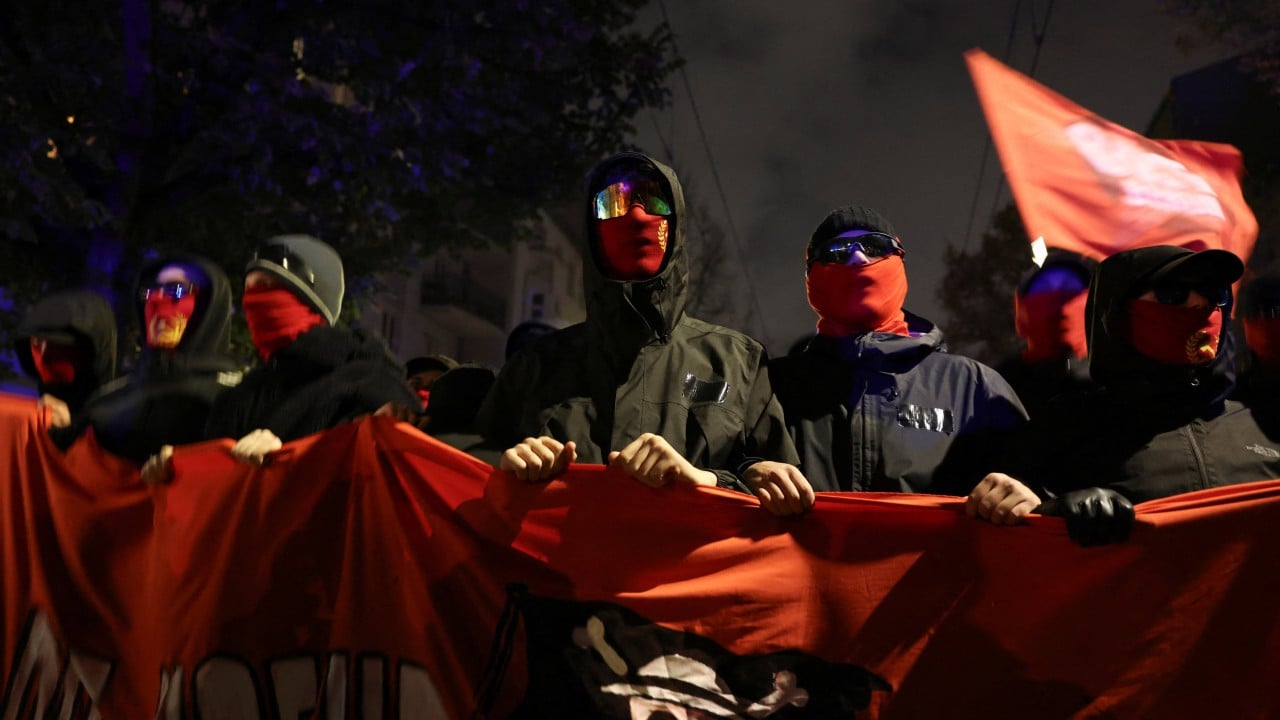
Here is the reality on the ground in Germany. A twenty-two-year-old standing in the front line of a blockade in Lützerath or outside a party convention in Essen is rarely acting as an atomized individual expressing generational frustration. They are operating inside an Bezugsgruppe—an affinity group.
How the Affinity Group Actually Works
To understand German street tactics, you have to understand the Bezugsgruppe model, inherited directly from the West German anti-nuclear movements of the 1970s and 1980s.
- Cell-Based Autonomy: A massive demonstration is not controlled by a single megaphone at the front. It is broken down into autonomous cells of five to fifteen people who know each other intimately, share legal defense contacts, and agree on their exact threshold for risk before leaving their apartments.
- Division of Tactical Labor: Within a single demonstration, different groups execute entirely different functions. One block handles legal observation (Ermittlungsausschuss). Another manages medical response (Demokids or street medics). A third executes passive blockade tactics, while a smaller, black-clad contingent manages physical buffer zones.
- Decentralized Logistics: Food, warm clothing, replacement goggles, and encrypted communications are distributed through pre-arranged supply points, not improvised on the fly.
When an international headline describes this as a "Gen Z protest," it erases half a century of institutional memory. You are not watching kids figure out activism for the first time. You are watching young recruits step into a pre-built, battle-tested organizational machine run by veteran organizers in their thirties, forties, and fifties.
Why German Police Reach for Water Cannons So Fast
To an outside observer, deploying high-pressure water cannons against young demonstrators looks like disproportionate brutality. To anyone who understands German policing doctrine, it is an entirely predictable escalation built into the country's legal architecture.
Germany does not police protests the way Anglo-Saxon countries do. Under the Versammlungsgesetz (Assembly Act) and state-level police laws, German law enforcement operates under the Legalitätsprinzip—the principle of mandatory prosecution. Unlike British or American police commanders, who frequently exercise broad discretionary tolerance to let minor infractions slide in order to keep a crowd calm, German officers are legally obligated to intervene when they witness a criminal offense, including Landfriedensbruch (breach of the peace) or Nötigung (coercion via sit-down blockades).
Once a commander declares a gathering dissolved (Auflösung), the state is legally bound to clear the space.
The De-Escalation Paradox
German police doctrine officially revolves around the Deeskalationsstrategie, developed after the disastrous 1986 Brokdorf protests and refined through the early 2000s. The theory relies on communication teams (Konfliktmanager) in bright vests talking to protest leaders to prevent violence before it starts.
Yet that strategy collapses the moment a protest refuses to negotiate.
- No central leadership: You cannot negotiate a dispersal route with an affinity-group network that intentionally refuses to appoint a single spokesperson.
- Physical anchoring: When protesters lock arms using concrete-filled PVC pipes (Lock-ons) or glue themselves to asphalt, dialogue hits a hard wall.
- The tactical middle ground: German commanders view the water cannon as a less-lethal intermediate tool. In their operational matrix, spraying a crowd with cold water is preferable to sending in squads with Tonfa batons and pepper spray, which inevitably produces close-quarters brawls, broken bones, and viral footage of officers striking teenagers.
Does the water cannon actually de-escalate? Almost never. In practice, soaking a crowd in sub-ten-degree weather triggers immediate physical panic, fractures crowd discipline, and turns passive sit-ins into chaotic street skirmishes. It is a blunt instrument designed to satisfy a legal requirement for clearing a street, regardless of the political blowback.
Dismantling the Common Myths About German Street Clashes
If you rely on cable news chyrons or surface-level wire reports, you end up asking all the wrong questions about what happens when German riot squads clash with youth-led movements. Let's strip away the bad assumptions.
Are Gen Z protesters more violent than previous generations?
No. By every measurable metric, modern German street protests are significantly less violent than those of the 1970s, 1980s, or even the May Day riots in Berlin's Kreuzberg district during the late 1990s.
In 1987, violent clashes in Kreuzberg forced police to retreat completely from an entire neighborhood for hours, leaving dozens of burned-out vehicles and looted supermarkets. During the 2001 anti-nuclear Castor transports, protesters routinely dug up railway tracks and fought pitched battles with thousands of federal officers.
Today, the overwhelming majority of confrontations involve passive resistance: sitting on roads, breaching perimeter fences, or refusing dispersal orders. The perception of extreme violence comes from high-definition smartphone video capturing the exact second a water cannon hits a front line, stripped of the three hours of static standoff that preceded it.
Does state crackdowns deter young protesters from returning?
The exact opposite happens. Nothing recruits new members into radical political networks faster than getting blasted off a public square by a state-owned armored vehicle.
Sociologists who study European protest cycles—most notably Donatella della Porta in her foundational work on policing and social movements—have documented this mechanism for decades. Harsh, indiscriminate crowd control validates the protesters' core thesis: that the state is fundamentally hostile to their survival and only responds to disruption.
Imagine a scenario where a nineteen-year-old university student attends their second-ever demonstration because they are worried about climate targets or rising rent. They stand twenty rows back from the front line. Suddenly, police declare the assembly illegal over a loudhailer they can barely hear, and a water cannon drenches their entire block. That student does not go home and abandon politics. They go home, dry off, and join a formal organizing committee the next Tuesday.
Why do these protests happen in Germany more than elsewhere in Northern Europe?
Because Germany's constitutional framework simultaneously protects the right to assembly with fierce rigor and enforces public order with rigid intolerance.
Article 8 of the German Basic Law (Grundgesetz) guarantees all Germans the right to assemble peacefully and without weapons without prior permission. Even spontaneous demonstrations (Spontandemonstrationen) enjoy constitutional protection. This creates a low barrier to entry for rapid mobilization.
At the same time, Germany's federalism divides policing power across sixteen individual Länder (states). A protest in Berlin faces a completely different tactical culture than one in Bavaria or Saxony. When major political summits or party conferences happen in conservative-governed states, local interior ministries frequently deploy overwhelming force to project law-and-order strength to their domestic voters. The street becomes a stage for regional political signaling.
The Strategic Blind Spot Both Sides Refuse to Admit
If you want the unvarnished truth about these confrontations, you have to acknowledge the fatal flaws on both sides of the barricade. Neither the state nor the protest organizers are operating at peak efficiency.
Where the Protest Networks Fail
Modern youth-heavy movements in Germany have mastered rapid digital mobilization and horizontal organizing, yet they suffer from severe strategic rigidity.
- Tactical Fetishism: Many groups confuse the method of protest with the outcome. Blocking a highway or occupying a building becomes an end in itself, even when polling data shows the tactic is alienating the exact working-class demographic the movement needs to win over.
- Moral Absolutism: By framing every policy dispute as an immediate existential apocalypse, organizers strip themselves of the ability to bank partial victories. If anything short of total systemic overhaul is labeled betrayal, politicians have zero incentive to negotiate.
- Generational Echo Chambers: While veteran organizers provide the infrastructure, the public-facing messaging is heavily skewed toward hyper-online university demographics. Language that plays well on encrypted Telegram channels or Instagram infographics sounds completely alien to a factory worker in North Rhine-Westphalia.
Where the German Interior Ministries Fail
On the other side of the line, German security officials are fighting yesterday's war with bloated budgets and zero political imagination.
- Over-reliance on Hardware: Investing millions in upgraded water cannons, drones, and riot armor treats a political legitimacy crisis as a crowd-control engineering problem.
- Intelligence Blindness: Security agencies routinely overestimate the threat of coordinated insurrection from disorganized street groups while missing genuine ideological shifts happening right under their noses.
- Criminalizing Dissent: Aggressively applying anti-organized-crime statutes (such as Section 129 of the German Criminal Code, forming a criminal organization) against climate and anti-fascist activists hands defense lawyers a massive propaganda win and clogs courts for years without changing street behavior.
How to Actually Read the Next Headline
The next time a wire photo shows a twenty-year-old in a rain poncho bracing against a wall of water in central Berlin, ignore the generational commentary.
Look at the helmets, goggles, and ear protection—that tells you whether the crowd anticipated state escalation. Look at the banners behind the front line—that tells you which veteran political factions are supplying the logistical backbone. Look at the state insignia on the police vehicles—that tells you which regional interior minister is trying to look tough ahead of a state election.
Generations do not fight governments. Organized political networks do. Until the press stops treating disciplined street politics like a youth culture trend, every water cannon deployed in Germany will continue to look like a surprise when it is actually clockwork.