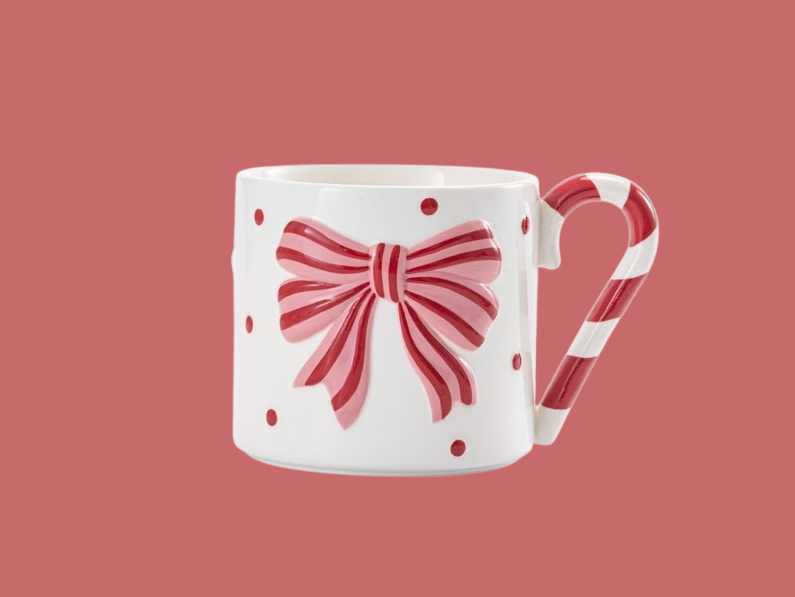
Every November, the retail industrial complex convinces millions of rational adults to bankrupt their emotional bandwidth and their bank accounts in the name of obligation. They publish tidy little matrices categorized by price tier—Gifts Under $25, Gifts for the Hard-to-Shop-For Dad, Stocking Stuffers for Coworkers—and you dutifully click, add to cart, and ship boxes of future landfill to people you barely speak to.
Stop it. The conventional holiday gift guide is an affiliate-marketing engine disguised as helpful curation. Its primary function is not to deepen your relationships; its primary function is to move inventory and generate commissions. When you follow a "something for everyone" checklist, you are optimizing for transaction volume rather than human connection. You are trading genuine thoughtfulness for the illusion of generosity, and the recipients know it.
The Deadweight Loss of Obligation Gifting
In 1993, economist Joel Waldfogel published a seminal paper in the American Economic Review titled "The Deadweight Loss of Christmas." His premise was simple, ruthless, and backed by empirical survey data: when you buy a gift for someone else, you almost always value it less than the cash you spent to acquire it. Waldfogel estimated that holiday gift-giving destroys between 10% and 33% of the economic value of the items purchased.
Why does this value destruction happen? Because information asymmetry is insurmountable at scale. You do not know what your brother-in-law actually wants, what he already owns, or what will quietly sit in his closet until a spring garage sale. Yet, societal pressure—amplified by endless "curated" shopping lists—demands that a physical object change hands.
I have spent over a decade watching consumer behavior, retail psychology, and affiliate publishing from the inside. I have seen brands manufacture artificial urgency around mediocre products simply to capture Q4 gift-guide placements. Those $30 novelty kitchen gadgets and generic "self-care" candle sets are not chosen because they are exceptional. They are chosen because they fit cleanly into a $25-to-$50 price bracket and offer a 15% commission rate to the publisher.
When you buy from these lists, you are participating in a wealth transfer from your savings account to logistics companies, ending with a piece of plastic that creates guilt for the recipient. Now they have to store it, dust it, or figure out how to donate it without offending you. That is not a gift. That is a chore wrapped in shiny paper.
The Myth of the "Every Budget" Tier
The most insidious lie in holiday shopping is the idea that you must scale your gift budget to match every tier of your social circle.
- $15 for the neighbor.
- $30 for the cousin.
- $50 for the friend.
- $150 for the spouse.
This tiered approach treats human relationships like a loyalty rewards program. Worse, it forces you into the "cheap gift trap." When you commit to buying a physical object for under $25, you are almost exclusively purchasing low-margin, high-waste goods. A $20 sweater is made of synthetic fibers that pill after two washes. A $15 tech accessory breaks by February.
Behavioral economists call this "mental accounting." You allocate a lump sum for the holidays, divide it by the number of names on your list, and end up buying twenty mediocre things instead of three extraordinary ones. You dilute your impact to achieve broad coverage.
Consider the alternative: radical pruning.
What happens if you cut your gift list by 70%? You immediately free up capital—both financial and cognitive—to focus on the people who actually shape your life. Instead of buying fifteen forgettable items at $30 each, you have $450 to spend on the three people who matter most, or you keep $350 in your pocket and buy one deeply personal, high-utility item for someone you love.
What People Actually Mean When They Ask for Gift Ideas
If you look at what people search for every December, the questions reveal a deep anxiety about social compliance:
"What do you get someone who has everything?"
Nothing. The premise of the question is flawed. If an adult has the disposable income to buy whatever they want, when they want it, your attempt to out-shop them is futile. Any physical object you buy for someone who "has everything" will either be a duplicate or inferior to the version they would have chosen for themselves. Instead of buying them an object, give them friction removal or shared time. Pay for a service they hate doing, or book an experience where the only requirement is showing up.
"How much should I spend on a coworker or acquaintance?"
Zero dollars. Workplace gift exchanges are a classic coordination failure—a prisoner's dilemma where nobody wants to buy a generic mug, yet everyone does because they fear being the only person empty-handed. Break the cycle early. In November, send a brief message to your immediate team: "Let's skip the gift swap this year and just grab lunch together on the last Friday before break." Nine times out of ten, you will be met with audible relief.
"Is giving cash or gift cards tacky?"
Only if you lack the confidence to explain why you are doing it. Behavioral research by Nicholas Epley and Ayelet Gneezy shows that givers obsess over the "thoughtfulness" of a physical item, while recipients overwhelmingly prefer cash or unrestricted gift cards because of their utility. If you feel awkward handing over cash, attach it to a specific, hyper-local recommendation: "Go get the ribeye at that new place downtown on me." You provide the intent; they retain the agency.
The Four Rules of Anti-Consumerist Gifting
If you are going to buy a gift this year, abandon the "for everyone on your list" mentality and run every potential purchase through a strict filter.
1. Buy Consumables, Never Clutter
If an item cannot be eaten, drunk, burned, or applied to the skin, think twice before buying it. High-end olive oil, single-origin coffee beans, artisanal chocolates, aged bourbon, or luxury bath salts deliver immediate sensory pleasure and then disappear. They do not demand shelf space. They do not require maintenance. Even if the recipient doesn't love the specific flavor profile, they can serve it to guests and move on with their life.
2. Upgrade Their Daily Friction
The best physical gifts are not novelties; they are vastly superior versions of things the recipient already uses every single day, yet would never splurge on for themselves.
Nobody buys themselves a $40 pair of merino wool socks, a $60 Japanese chef's knife sharpener, or a heavy-duty, commercial-grade umbrella. They buy the $12 version at a big-box store and tolerate its mediocrity for years. When you replace a daily point of minor friction with an object of undeniable craftsmanship, they think of you every single morning they use it.
3. The "Zero-Obligation" Rule for Extended Circles
Draw a hard line between your inner circle (immediate family, partner, best friends) and everyone else. For everyone outside that inner circle, replace physical gifts with high-effort, zero-cost communication.
Write a physical letter on heavy cardstock detailing a specific memory from the past year and why you appreciate them. Send a voice note. Make a ten-minute phone call while walking the dog. In an era of automated texts and algorithmically served Amazon boxes, undivided human attention is the scarcest luxury good on the market.
4. Reject the Reciprocity Trap
The hardest part of dismantling your holiday shopping list is the fear of asymmetry. What if your aunt buys you a sweater, and you didn't buy her anything?
Let it happen. Accept the gift with genuine gratitude, write a prompt thank-you note, and refuse to apologize for not having a box to hand back. True generosity does not keep a ledger. If someone gives you a gift solely to extract a reciprocal purchase from you, that wasn't a gift—it was an invoice.
The Downside of Being the Contrarian
Taking this stance has a real social cost. Let's be honest about the friction it creates.
If you opt out of the traditional gift-giving economy, some people will interpret your minimalism as stinginess or coldness. Retail culture has spent a century equating the volume of boxes under a tree with the volume of love in a household. When you show up empty-handed to a family gathering where everyone else is tearing through wrapping paper, you will feel a brief spike of social discomfort.
You also lose the easy social lubricant that physical gifts provide. Picking out a gift box is a low-effort way to check the "I thought of you" box without having to exercise real emotional vulnerability. Writing a sincere letter or planning an actual dinner requires far more effort than clicking "Buy Now" on a curated list of stocking stuffers.
Burn the Spreadsheet
Imagine a scenario where you wake up on January 2nd with zero credit card hangover, zero cardboard boxes stacked by the recycling bin, and zero guilt about the three plastic trinkets sitting in your hallway closet waiting to be returned.
You can have that reality right now. Close the browser tabs filled with "50 Best Gifts Under $50." Delete the spreadsheet where you track who got what last year so you don't repeat yourself.
Take your list of thirty people, cross off twenty-five of them, and go buy something extraordinary for the five who remain.