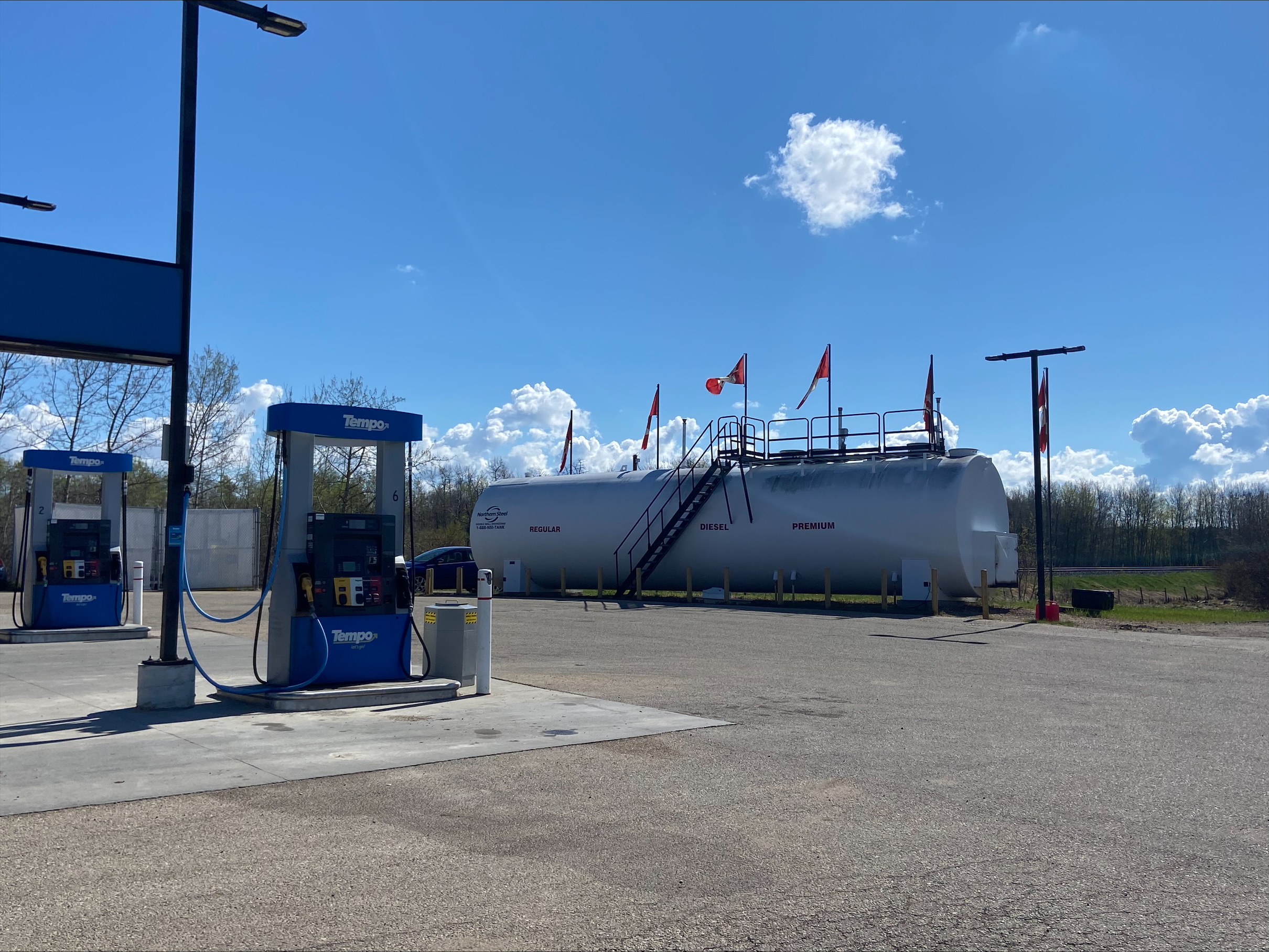
A midnight raid at an Edmonton-area gas station rolls across the news wire, and the response is instantly predictable. Outrage. Calls for more police patrols. Hand-wringing over an "environmental disaster" because a few hundred litres spilled into the treeline.
When thieves hit the Tempo Gas station on Wye Road in Uncas, Alberta, walking away with 5,000 litres of diesel and premium fuel, the media served up its usual boilerplate narrative: bold criminals exploiting a quiet night, leaving a local business to suffer.
It is a comfortable narrative. It is also entirely wrong.
The standard commentary surrounding retail fuel theft treats these incidents like unpredictable natural disasters. They are not. If someone manages to siphon 5,000 litres of liquid asset out of an underground storage tank over a four-and-a-half-hour window, that is not a criminal mastermind at work. That is an institutional failure of basic operational security. The hard truth nobody in the retail petroleum space wants to admit is simple: the station practically handed them the keys.
The Myth of the Sophisticated Fuel Heist
Local news reports focused heavily on the shock of the station's staff and the subsequent RCMP investigation. Investigators revealed that the thieves ripped physical vents and hoses directly from the station infrastructure to drain the tanks.
Let's look at the mechanics of what actually occurred. Five thousand litres of fuel weighs roughly four metric tonnes. You do not carry that away in plastic jerrycans in the back of a Honda Civic. This operation required a heavy-duty commercial vehicle, a high-volume industrial pump, and an immense amount of uninterrupted time.
Yet, the initial internal flag at the station was that the "fuel sensors were not working properly."
Imagine running a banking facility where thousands of dollars are slowly walked out the front door, and your internal audit team shrugs it off as a temporary software glitch. I have spent years auditing supply chains and physical commercial assets. When an enterprise allows four tonnes of highly volatile, high-value product to vanish from its primary storage containers between midnight and 4:30 a.m. without triggering an immediate, hard stop alarm, the primary vulnerability is not the guy holding the siphon. It is the corporate complacency that allowed the sensors to be ignored.
Why Liquid Assets Are Left Unguarded
Petroleum retailers operate on razor-thin margins, frequently losing money on the fuel itself while trying to claw back profitability through high-margin convenience store items like coffee and cigarettes. Because of this upside-down economic model, the physical infrastructure keeping the actual fuel secure is treated as a secondary priority.
Standard station monitoring relies on Automatic Tank Gauging systems. These systems are designed to track inventory levels and detect slow, long-term environmental leaks. They are not built as active, real-time anti-theft defense mechanisms. When a system reads a massive, rapid drop in fuel volume outside of business hours, it should immediately trigger a localized lockdown and alert dispatchers. Instead, standard operating procedures at many independent stations allow these alerts to sit in a digital queue, dismissed as routine calibration errors or faulty telemetry.
The thieves did not crack a sophisticated digital vault. They targeted an asset class that is fundamentally exposed. Underground storage tank fill caps and vent pipes are frequently secured by nothing more than standard industrial padlocks that can be bypassed in thirty seconds with a $40 pair of bolt cutters.
The False Economy of Low-Cost Security
The immediate corporate reaction to a major fuel loss is always an appeal to local law enforcement. Station owners want more RCMP presence in rural and suburban zones. They want the public to flag suspicious vehicles.
This is a complete abdication of operational accountability. Expecting public law enforcement to act as private security guards for unsecured commercial fuel tanks is a losing strategy. A standard police patrol cannot be everywhere at once, especially along suburban stretches like Wye Road during dead hours.
The alternative that actual asset protection specialists deploy involves hard, preventative engineering:
- Active Telemetry Interlocks: Upgrading tank monitoring software to treat after-hours volume drops as a critical breach, triggering instant remote monitoring intervention.
- Physical Vault Shrouding: Replacing exposed fill caps and vent lines with reinforced, alarmed steel enclosures that require heavy angle grinders to penetrate.
- Seismic and Vibration Sensors: Installing low-cost acoustic monitoring on the actual tank lids to detect physical tampering long before a hose ever drops into the liquid.
Yes, these upgrades cost capital up front. But losing 5,000 litres of premium fuel and diesel—combined with the inevitable thousands of dollars in environmental remediation fees for the resulting soil spills—dwarfs the cost of proper physical security.
The Environmental Scapegoat
The employee commentary following the Edmonton incident hit another predictable note, calling the fuel spill along the nearby treeline an "environmental disaster."
While any fuel spill is toxic and requires strict cleanup, using environmental outrage to deflect from infrastructure failure is a classic corporate defensive maneuver. The spill did not happen because the fuel was inherently unmanageable. It happened because the station's physical asset design allowed unauthorized actors to rip away hoses and vents without a mechanical dry-disconnect safety valve cutting off the flow.
In industrial chemical transport, if a line is severed, automated valves snap shut to minimize product loss and environmental contamination. In retail fuel delivery, we are still relying on basic gravity and hope. If your retail setup allows an amateur thief to create an environmental hazard on your property because your physical connections lack basic breakaway protection, you share the liability for that damage.
Stop looking at the Edmonton gas heist as a sign of rising, unstoppable crime waves. Look at it for what it really is: a wake-up call for an industry that continues to store thousands of dollars of liquid currency under a piece of asphalt, protected by nothing more than a cheap piece of brass and a sensor that nobody bothers to check until the morning shift walks in.
Fuel theft trends explained provides additional industry context regarding how convenience store networks view the financial and operational pressure of rising fuel crime across regional markets.


