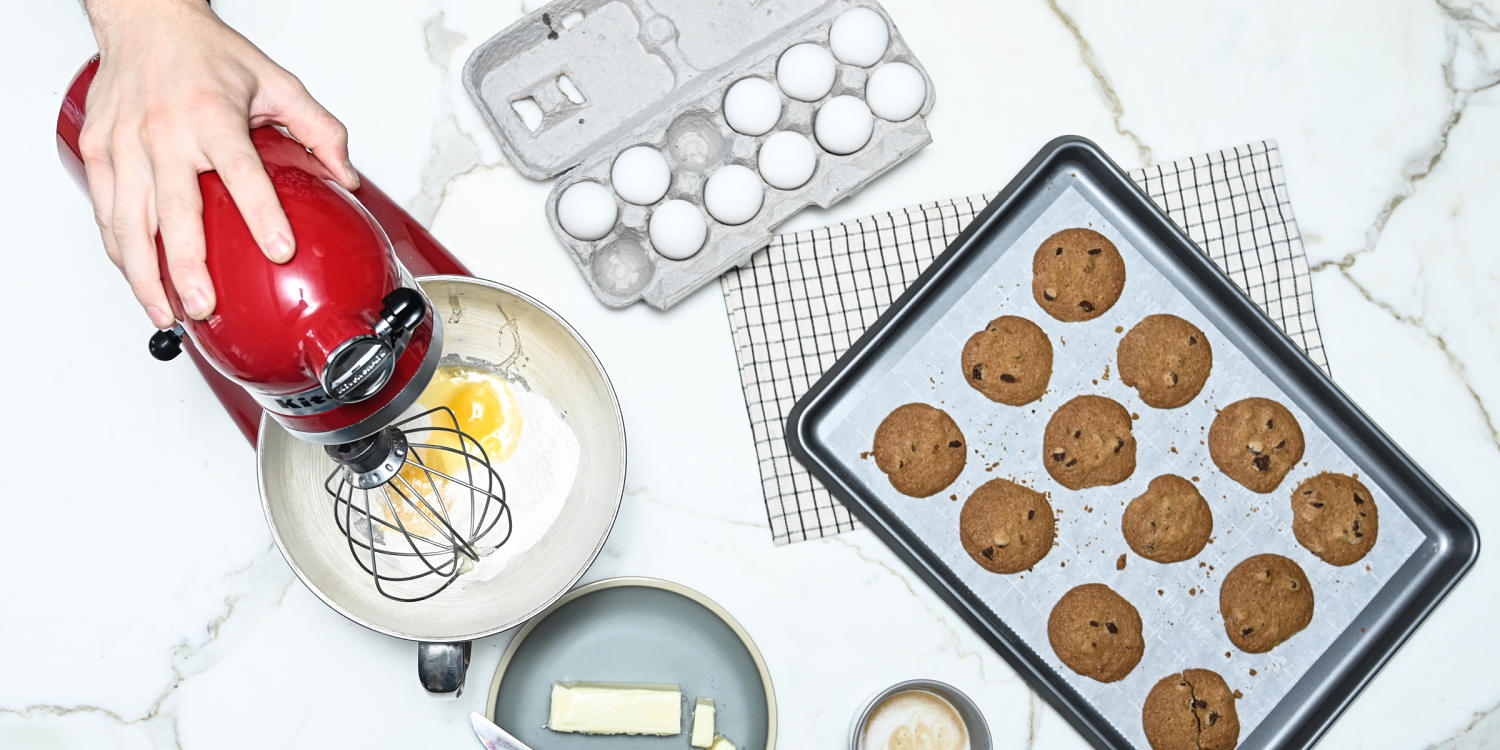
Most bad cookie batches aren't caused by a bad recipe. They happen because your gear lied to you.
You scoop flour with a cup, trust a dial on an oven that runs thirty degrees hot, and bake on a warped pan that scorches the bottom before the center sets. Then you shrug and say baking just isn't your thing. Honestly, that's backwards. When you look at the tools you need to bake cookies from a pastry chef's perspective, consistency stops feeling like luck and starts looking like basic physics.
Let's get straight to the point. You don't need a drawer stuffed with single-use gadgets shaped like mini rolling pins or novelty cookie stampers. What you actually need are reliable measuring gear, heat-smart pans, and a few tactile tools that control dough temperature, portion size, and spread. Once you fix those variables, even an average recipe gets way better.
Why Measuring by Volume Ruins Cookie Texture
Ask any working pastry chef what trips up home bakers first, and weight vs. volume comes up fast. A standard cup of all-purpose flour can swing by roughly twenty to thirty grams depending on whether you scoop straight from the bag, fluff it first, or pack it down. Over a four-cup batch, that quiet drift adds enough extra starch and gluten to turn chewy centers into dry hockey pucks.
A digital kitchen scale solves that in five seconds. Look for one that reads in one-gram increments, has a clean tare function so you can zero out bowls as you go, and keeps its display clear even when your hands are dusted with sugar. King Arthur Baking has hammered this point home for years in its baking tests because weighing flour, butter, and sugar removes guesswork before the mixer even turns on.
You don't need to weigh every pinch of salt or teaspoon of vanilla if you don't want to, though weighing dry staples and sugars makes a night-and-day difference. What about butter? Stick butter usually has markings on the wrapper, which helps, yet weighing cold cubes on a scale keeps you honest when you're halving or doubling a batch.
Mixing Bowls and Spatulas That Actually Move Dough
A big bowl sounds obvious until you're creaming cold butter and sugar while flour sprays onto your counter. Go for heavy stainless steel or thick glass bowls with wide bases that won't spin wildly when you beat at medium speed. Stainless steel has one nice side effect too—it chills faster in the fridge if your dough gets too warm mid-mix.
Pairing the right bowl with a sturdy silicone spatula matters just as much. Cheap floppy spatulas bend backward against stiff cookie dough and leave streaks of unmixed flour stuck along the bottom curve. You want a one-piece heat-resistant silicone spatula with a firm core so you can scrape the bowl down cleanly and fold in chocolate chunks without snapping the blade.
Sheet Pans, Liners, and Oven Heat Control
Here's a hill I'll gladly die on. Dark, thin nonstick pans ruin more cookie edges than almost any other piece of cookware. Dark metal absorbs radiant heat aggressively, browning and sometimes burning the bottoms of cookies long before the tops set, while thin metal warps with a loud bang in a hot oven.
Heavy-gauge aluminum half-sheet pans—typically around 18 by 13 inches with rolled rims—distribute heat evenly and hold their shape batch after batch. Brands like Nordic Ware are staples in commercial and home kitchens for a reason, though any heavy uncoated aluminum sheet pan behaves predictably once you learn how it bakes.
Parchment Paper vs. Silicone Baking Mats
Walk into a bakery and you'll see sheets of parchment paper everywhere, plus silicone mats in plenty of stations. Neither one is "wrong," yet they bake slightly differently because heat moves through them at different rates.
Parchment paper lets a bit more moisture escape and encourages slightly crisper edges and deeper browning on the underside. Silicone mats insulate slightly more, which often yields softer bottoms and slightly more uniform spread across delicate doughs. Both prevent sticking, both make cleanup painless, and keeping parchment on hand is hard to beat when you're baking five trays back-to-back and want to slide finished sheets straight onto a cooling rack.
The Cheapest Upgrade for Better Cookies
If you bake cookies on a regular basis and don't own an inexpensive hanging or standing oven thermometer, you're flying blind. Home ovens drift. Sometimes they run twenty-five degrees cooler than the dial says; sometimes they spike hot during preheat and settle lower later.
A cookie baked at 375°F spreads differently than one baked at 350°F. Higher heat sets the exterior structure faster before the fat melts all the way out, giving you thicker cookies, while lower heat gives dough more time to flatten before setting. Checking real oven air temperature takes ten seconds and saves you from blaming sugar ratios when the oven itself was off.
Portioning, Dough Handling, and Cooling Gear
Even great dough bakes unevenly if every piece is a different size. A 40-gram dough ball finishes baking minutes before a 70-gram monster sitting right next to it on the same tray.
Spring-loaded cookie scoops—often called portion scoops or dishing spoons—solve this effortlessly. A #40 scoop holds roughly a tablespoon and a half to two tablespoons depending on how firmly you pack it, while a #24 or #20 scoop gives you bigger bakery-style cookies. Using a scoop isn't just about neatness either. Uniform weight means every cookie on the sheet hits that sweet spot of golden edge and soft center at the same moment.
Cooling Racks and Thin Metal Spatulas
Pulling hot cookies off a baking sheet sounds simple until your spatula tears the warm center right in half. A thin, flexible stainless steel turner or angled offset spatula slips cleanly under fragile cookies without chewing up the edges.
Once lifted, set the cookies on a sturdy wire cooling rack rather than leaving them trapped on a hot pan. Residual heat in a metal sheet keeps cooking the bottom of your cookies after they leave the oven. Air circulating under a wire rack lets steam escape so bottoms stay crisp or chewy as intended instead of turning soggy from trapped condensation.
Gadgets You Can Skip Without Regret
Let's be honest about kitchen clutter. You don't need a special cookie press just to make spritz cookies if you're barely going to use it once a year, and you definitely don't need five types of rolling pins when a simple straight wooden dowel pin or classic rolling pin handles roll-out sugar and gingerbread dough fine.
Hand mixers and stand mixers are convenient, sure—creaming cold butter with a hand mixer or stand mixer beats doing it by hand when you're tired after work—but plenty of classic drop cookies don't even require heavy creaming. Stirring melted butter, brown sugar, egg, and dry ingredients together with a sturdy wooden spoon or silicone spatula works great for chewy chocolate chunk cookies. Buy heavy-duty workhorses first, and let novelty gadgets earn their spot later.
Common Mistakes Even Experienced Bakers Make
One mistake I see all the time is baking warm dough on a hot pan. If you reuse a sheet pan straight from the oven, the butter on the bottom of your next batch starts melting before the tray even hits the rack, causing excess spread and flat cookies. Cool the pan briefly or rotate between two heavy sheet pans.
Another trap is overbaking because the centers still look pale and soft when you open the oven door. Cookies firm up as they cool on the sheet for a couple of minutes and finish setting on the rack. Pull them when the edges look set and lightly golden and the centers still look slightly underdone—unless you specifically want crisp, crunchy cookies all the way through.
What to Grab First for Your Next Batch
If your gear setup is pretty basic right now, don't buy everything at once. Pick up a digital kitchen scale, one or two heavy aluminum half-sheet pans, a roll of parchment paper, and an oven thermometer first. Those four pieces fix the biggest hidden culprits behind inconsistent batches without draining your wallet.
Next time you preheat the oven, weigh your flour and sugar, check the real temperature inside, and scoop evenly sized balls onto a cool lined sheet. You'll taste the difference on the very first warm cookie.