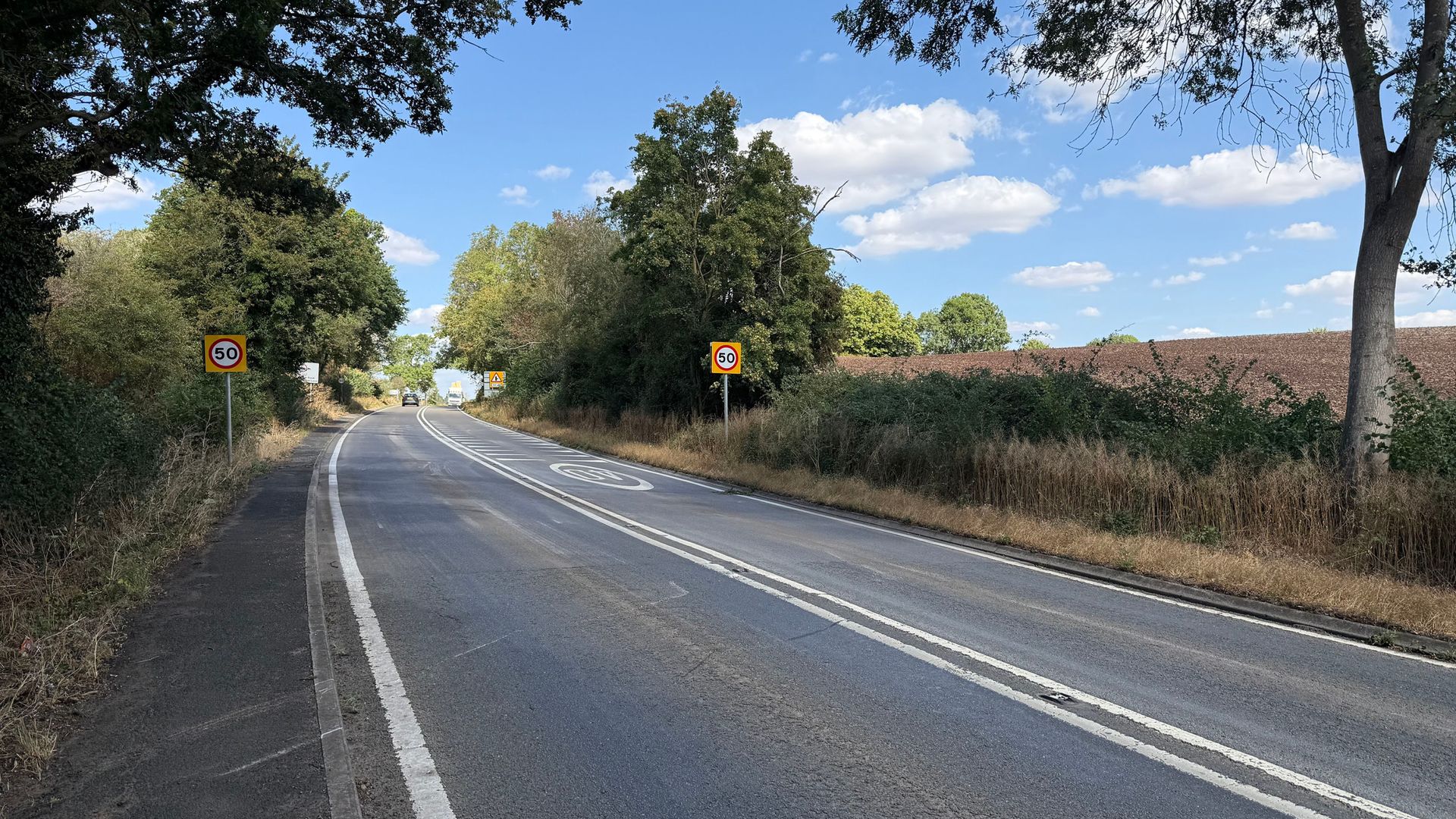
Another tragic headline drops, and the institutional reflex is immediate, predictable, and fundamentally dishonest. Karen Joseph, a 62-year-old mother driving innocently on Warwick Road, lost her life because a 19-year-old driving a stolen or fleeing vehicle decided to treat public tarmac like a video game. The media names the victims, the Independent Office for Police Conduct steps in to launch its mandatory probe, and the usual suspects begin their chorus of hand-wringing about whether law enforcement should ever chase anyone.
Let us dispense with the polite fiction right now.
The lazy consensus in every single mainstream report on high-speed pursuit fatalities is that the flashing blue lights bear equal or primary moral weight for the carnage. This is a dangerous inversion of cause and effect. Police do not create danger by pursuing suspects; suspects create danger by choosing flight over compliance. When society chooses to interrogate the officer’s six-minute pursuit rather than the felon’s refusal to yield, we incentivize urban lawlessness and guarantee more innocent bodies on the pavement.
The Calculus of Flight
Every time a policy restricts police pursuits under the guise of "public safety," crime analysts watch rates of failure-to-stop skyrocket. Criminals are rational actors within bounded systems. If a department adopts a strict no-pursuit policy for non-violent offenses, the getaway vehicle becomes an absolute get-out-of-jail-free card.
Imagine a scenario where every police department globally decides that chases are inherently too risky and bans them entirely. Within a month, property theft, vehicle hijacking, and drug running surge because the tactical friction of law enforcement disappears the moment a suspect steps on the gas pedal. The pursuit is not the catalyst of the crash; it is the friction applied to stop a rolling threat.
When Roman Kalas accelerated his Audi A3 away from officers on Birmingham Road, the chain of lethal choices was already initiated. He chose to run. He chose to tear down the A439. He chose to cross into oncoming traffic lanes. Pinning responsibility on the single-crewed cruiser trailing him with lights and sirens active is like blaming a fire engine for the destruction caused by an arsonist's blaze because its sirens woke up the neighborhood.
The Myth of Passive Policing
Critics love to argue that police should simply back off, take a license plate number, and catch the offender later through modern surveillance. This argument falls apart against basic urban reality.
Clamping Down on Accountability Shifting
- The Plate Problem: Most vehicles involved in high-speed evasion are either cloned, stolen, or entirely unregistered. A registration plate yields a piece of metal, not a suspect identity.
- The Escalation Timeline: Letting a dangerous driver vanish into traffic does not neutralize them; it merely defers their reckless driving to a moment when officers are no longer tracking them, often resulting in un-policed high-speed disasters deeper in residential zones.
- The Deterrence Void: Word travels fast in criminal subcultures. A department known for terminating pursuits is a department that invites open defiance.
I have watched local governments spend millions on civilian oversight boards and policy rewrites designed to sanitize police operations, while the baseline disorder on the streets compounds. The watchdog culture treats every bad outcome as evidence of procedural failure, assuming that if the police had done nothing, everyone would have lived happily ever after. That is a statistical fantasy.
Redefining the Responsibility Matrix
Why do we indulge the narrative that an officer executing their statutory duty to apprehend a non-compliant driver is morally equivalent to the person actively evading them?
When a driver refuses a lawful signal to pull over, they declare war on civil order. They signal that their immediate desire to escape outweighs the lives of every pedestrian, cyclist, and motorist sharing that stretch of road. The officer’s duty is to suppress that threat. To ask police to fold their cards the second a suspect shows a willingness to drive dangerously is to hand the keys of public safety directly to the most reckless elements of society.
The coroner will open the inquests. The watchdog reports will parse every second of dashcam footage. Bureaucrats will suggest tighter restrictions, more risk assessments, and further cooling-off periods for active patrols.
They will miss the point entirely. The solution to roadway carnage is not handcuffing the police; it is holding the fugitive entirely accountable for every single consequence of their flight. Stop coddling the perpetrators of flight, and stop treating law enforcement as the primary hazard on a street populated by lawbreakers.


