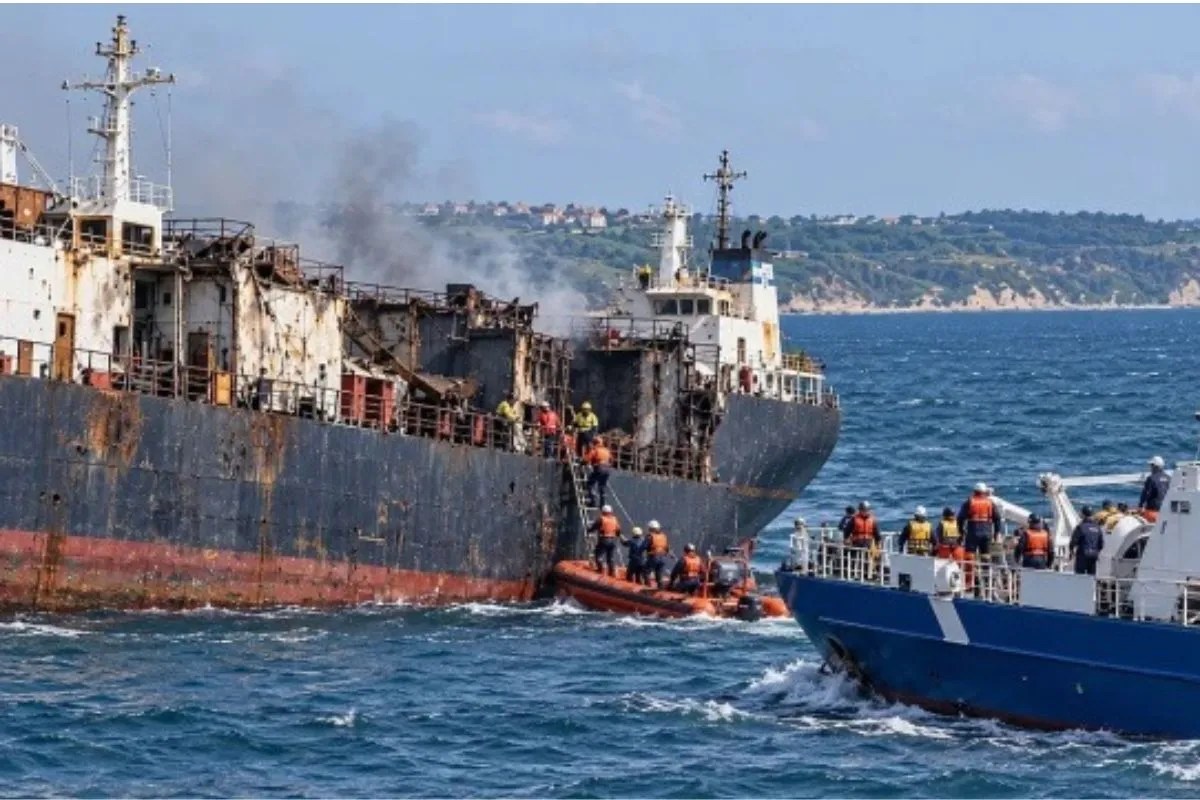
Every single mainstream news outlet is currently screaming about maritime destruction near Romania, pointing shaking fingers at drifting naval mines and missile debris from the ongoing eastern European conflict. They want you to believe that every cargo vessel sinking in those waters is a direct casualty of wartime collateral damage. It is a lazy, terrified narrative designed for maximum panic and zero analytical rigor.
Let us look at the structural reality beneath the surface. I have spent two decades analyzing maritime logistics, supply chain vulnerabilities, and geopolitical risk underwriting. I have watched underwriters panic, spike premiums, and abandon entire trade corridors overnight because a single headline terrified a board room in London. The cargo ship burning off the Romanian coast is not merely a victim of stray ordnance. It is a casualty of financial cowardice and a predatory insurance ecosystem that treats war zones like a Vegas casino.
The Lazy Consensus Of Maritime Collateral Damage
The standard reporting goes like this: war is bad, the Black Sea is a war zone, therefore any ship that goes down is a victim of the active combatants. Analysts nod solemnly on television, citing naval blockades and unmapped explosive drift.
This framing completely ignores the economic mechanics driving vessel operations in contested corridors. Shipowners do not sail blindly into active fire zones out of mere carelessness. They do it because the freight rates are astronomical, and the alternative is bankruptcy from idling capacity. But when a vessel goes down, the knee-jerk media reaction completely glosses over the operational decisions made months before the hull ever left port.
Let us examine the underwriting data. Following the escalation of hostilities, war risk insurance premiums for the Black Sea spiked by orders of magnitude. For many smaller operators, these rates became completely unsustainable. Instead of paying legitimate underwriters for comprehensive coverage, a alarming percentage of operators began cutting corners, relying on secondary-market insurers or sailing with inadequate navigational risk assessments.
When a ship burns and sinks near the Romanian maritime boundary, the primary culprit is often not a sophisticated missile strike or a targeted torpedo. It is a catastrophic failure of pre-voyage risk management, compounded by crews pushed past their operational limits to maximize profit margins in high-tariff lanes.
The Untold Story Of Phantom Navigational Hazards
Everybody talks about naval mines. They make for dramatic television footage. But let us look at the actual hydrographic data coming out of the Romanian and Turkish coast guard logs. Drifting mines are a genuine threat, yes, but they are tracked, swept, and broadcast via NAVWARN notices daily.
The real hazard isn't the explosive device you cannot see. It is the human element under extreme psychological duress. Imagine a scenario where a bridge crew has been awake for thirty hours straight, navigating a dark corridor with disabled automatic identification systems to avoid electronic tracking, while running on substandard maritime fuel. That is not a war casualty. That is a disaster engineered by operational neglect.
When we look at the crew manifest of these distressed vessels, a grim pattern emerges. We see skeletal crews, often sourced from nations with minimal training in high-threat kinetic zones, working under captains who are incentivized to ignore safety protocols to maintain schedule adherence. Blaming the war is a convenient shield for shipowners who cut every possible corner on maintenance, crew training, and safety equipment.
Dismantling The People Also Ask Fallacy
If you look up queries related to Black Sea maritime safety, you will find standard questions like "Are cargo ships safe in the Black Sea?" or "Who is responsible for sunken ships during the Russia-Ukraine war?"
The premise of these questions is fundamentally flawed. Asking if a war zone is safe is like asking if a thunderstorm is dry. Of course it is not safe. The correct question is: Why are commercial vessels allowed to gamble with human lives for grain and steel contracts?
The answer lies in international maritime law and the fragmented jurisdiction of maritime flags of convenience. Ships flying flags from nations with lax regulatory oversight operate with near impunity. When disaster strikes off Constanta or Sulina, the legal fallout bounces endlessly between flag states, port authorities, and shell-company owners who dissolve the moment a liability claim is filed. The system is designed to absorb human loss as an acceptable cost of doing business.
Unconventional Action For The Supply Chain Elite
If you are managing logistics that touch the Black Sea or any contested maritime choke point, stop relying on generic geopolitical risk assessments. They are written by desk analysts who have never smelled bunker fuel or stood a watch in heavy seas.
Here is what you actually need to do:
- Audit Your Underwriters Directly: Do not trust a broker's certificate. Demand transparency on reinsurance backing and geographical exclusion clauses. If your insurer cannot detail their exact exposure in the northwestern Black Sea basin, drop them.
- Enforce Zero-Tolerance Fatigue Rules: Override commercial pressures. If a master states the crew is exhausted, the voyage halts, regardless of demurrage penalties. Human error accounts for over eighty percent of maritime incidents in high-stress zones.
- Mandate Independent Vetting: Do not rely on flag-state inspections in corrupt jurisdictions. Hire independent marine surveyors to inspect hull integrity, navigational electronics, and emergency response readiness before entering any high-risk theater.
The burning hull off the coast of Romania is a warning flare. Ignore it at your own peril.


